August 31, 2009

B.O.B. Presents


Best Of the Blogs


Digial Diatribe: A Warm July in the Antarctic


Niche Modeling: Sea Level Acceleration


WUWT: New Ice Core Project in Greenland looks at Eemian period


JammieWearingFool: The Death of the Prius


Objectivist Individualist: 2007 Energy Bill Sends Light Bulb Jobs to China


More...


Tiny fish threatens to turn California’s Central Valley into Dust Bowl


To date, the Obama administration has shown little interest in reversing a policy that favors fish over farmers.

FROM-CFACT

Consumers around the country may soon be facing steeper prices for fruits, vegetables and nuts thanks to an obscure three-inch-long fish, called the Delta smelt, and the Endangered Species Act (ESA).

In California’s storied Central Valley, for decades one of the world’s most productive agricultural regions, an estimated 250,000 acres of prime farm land are lying fallow or dying. The parched area bears all the signs of a prolonged drought, but the acute water shortage confronting farmers and growers is largely manmade, the result of the Interior Department’s rigorous enforcement of the ESA.

Responding to a lawsuit brought by the Natural Resources Defense Council and other environmental groups, the Bush administration, in December 2008, agreed to divert more than 150 billion gallons of water this year from the fertile Central Valley to the San Joaquin Delta in an effort to protect the endangered Delta smelt. With the federal government withholding water from farmers, it didn’t take long for economic devastation to grip the Central Valley. Unemployment in the areas ranges from 20 percent to a staggering 40 percent in some agricultural communities. The Central Valley’s agricultural output is expected to decline by between $1 billion and $3 billion this year compared with 2008.

“Instead of stimulating jobs, federal environmental officials are turning recession into depression, and stimulating economic hardship for business, farms and families,” said Rob Rivett, president of the Pacific Legal Foundation. (Washington Times, August 18, 2009)

To date, the Obama administration has shown little interest in reversing a policy that favors fish over farmers. Interior Secretary Ken Salazar was asked on a recent visit to the area if he would convene a special panel, known under the ESA as the “God Squad,” to reconsider the diversion of water. Salazar left little doubt where the administration’s priorities lie. Convening the God Squad, he said, “would be to admit failure, it would defeat ecosystem restoration efforts. It has been rarely invoked and usually leads to litigation.”

Angered by what he calls a “regulatory-mandated drought,” Rep. Devin Nunes (R-California) believes the ESA has already failed both farmers and fish. “There are 130 animal species in California on the federal endangered list, including five salmon species, five steelhead species, and the North American green sturgeon,” Nunes wrote in the Wall Street Journal (August 15, 2009) “To date, not a single fish within the California water system has been removed from the Endangered Species list over the past 36 years. Despite massive amounts of water diverted to help them, the ‘protected smelt, sturgeon and salmon populations have continued to decline. It is hardly unreasonable to ask why farmers should continue to suffer if diverting water hasn’t even helped the fish.”

Bonner R. Cohen, Ph. D., is a senior policy analyst with CFACT.


More...


Spooky in Chicago


ht/Ice Age Now

FROM-CBS 2

August Ends With Near-Record Cold
Temperatures Close To Record Overnight Low Of 47 Degrees, Set In 1872

Usually, late August is time a when Chicagoans are thinking of hitting the beaches or lounging in the sidewalk cafes one last time, but this year, the temperatures have seemed more appropriate for Halloween.

The record low for Aug. 31 is 47 degrees, set in 1872. Overnight Sunday into Monday, the nippy readings were close, and in some areas even lower.

CBS 2's Ed Curran reported that the overnight low at O'Hare International Airport was 49 degrees.

At 5 a.m., it was 49 at Midway International Airport, 48 in Waukegan, and a mere 41 degrees in Aurora.

Skies were clear across most of the Midwest Monday morning, but the sun will do little to warm the temperatures.

Overall in Chicago, this August has hardly been what one would call the dog days of summer. There was only one day where the temperatures reached the 90s. On Aug. 9, temperatures climbed into the mid-90s.

Typically, the city issues cautionary messages for heat several times each summer – stay inside, run your air conditioner, drink lots of water. But the weekend of Aug. 8 and 9 was one of the only times the city issued any such warnings this year.

In fact, Aug. 9 was only one of four days this summer where the temperature exceeded 90 degrees. Temperatures also reached the 90s in June 23, 24 and 25. July had no 90-degree days at all.

Curran says there were several days with above normal readings in the first half of the month. But since Aug. 20, the Chicago area has seen only one day – Tuesday of last week – on which the temperature was above normal.

On average, temperatures in Chicago have been 6.67 degrees below normal since Aug. 20. Since Aug. 27, temperatures have run an average of 10.6 degrees below normal. The coldest day was Sunday, at 13 degrees below average, followed by Thursday of last week, at 12 degrees below.

The coldest August on record in Chicago was in 1915, when the temperature averaged a mere 66.6 degrees. But no record low overnight temperatures were set that year.

The second coolest August was in 1992, when on Aug. 27, the high temperature reached only 60 degrees.

This August is not on track to set any records for cold, nor is this summer as a whole. But this summer is on track to be the cloudiest summer ever recorded in the area.

Curran says normally at this time of year, available sunshine for the summer is 67 percent. This year, it was only 53 percent, meaning it was cloudy almost half the time.

.

More...


A policy to hurt Australia

FROM- Quadrant On Line

by Cory Bernardi

Just for a moment, suspend any semblance of critical thought and accept the cataclysmic version of anthropogenic climate change advanced by the likes of Penny Wong, Tim Flannery and Al Gore.

Ignore too, the tens of thousands of scientists who disagree with the political agenda of the IPCC and just accept the claims of those who have made increasingly alarmist predictions, yet have been proved wrong time and time again.

As you lie awake at night worried by the mere thought of ocean front land in Wagga Wagga, you realise that something needs to be done before it is too late. Australia needs to act now and introduce an emissions trading scheme because climate change is "the greatest moral issue of our time."

As an acquiescent disciple of the new religion, to save the planet you concoct a scheme that will tax every business and every family in the country. Sure, it will raise the cost of food, electricity, construction and transport but that is a price you are prepared for others to pay. You condemn any opponents of your plan as sceptics and heretics, while trying to convince the community that it won't hurt them too much.

In fact, so desperate are you to facilitate the introduction of your multi-billion dollar wealth redistribution system, that you promise to compensate some of those affected by more than it is going to cost them. Surely everyone can see the sense in taking from the wealthy and giving to those who pollute just as much but aren't as well off. Just think of it as spreading the socialist love to save the planet.

Despite the rejection of your scheme by farmers and environmentalists, businesses and families, you plough on regardless. What does it matter if hundreds of thousands of jobs are going to be lost and industries closed if it means we will have less carbon dioxide in the atmosphere?

Desperately looking for support, you enlist those notorious polluters in the investment banking, legal and financial markets to support your cause, conveniently forgetting only months ago you were blaming their excessive culture of greed for the failure of the world financial system. Ignore too, the billions of dollars they stand to make from the creation and administration of the unwieldy bureaucracy and carbon trading scheme you propose. Surely the opportunity to profit wouldn't be the reason they endorse your scheme, would it?

Such is the urgency of the matter at hand, you insist that the Parliament pass your legislation immediately, even though your new scheme won't actually commence for a couple of years. Worse still, you acknowledge that your scheme won't actually make any difference to the climate unless the rest of the world does something similar.

Of course the rest of the world won't be making up their minds for a few months yet. Undeterred, you make the 'decisive and tough' decision to act now, even though you know you are damaging the economic future of your own country.

Now back to reality.

Under any critical analysis, the above scenario would be considered the height of political madness, yet that is exactly what the advocates of Labor’s dishonestly named Carbon Pollution Reduction Scheme (CPRS) want to do.

Even the most devout anthropogenic climate change believer knows that Australia acting alone to reduce carbon emissions will not make a jot of difference to the climate. They also know that Australian industry and jobs will disappear overseas in the absence of a truly global agreement.

Under Labor's CPRS, prices for everyday goods will rise and every power point will be come a tax collection outlet for a rapacious Government with an insatiable appetite for interfering in our lives. Worse still, acting ahead of the rest of the world might actually mean that Australia is stuck with a scheme that won't make any difference except to damage our domestic economy.

It's time for a reality check of the political action attached to the climate change debate.

Labor's CPRS is so flawed that it should not be reintroduced into the Parliament until after the global climate change talks in Copenhagen later this year. To pass this Bill, or any incarnation of it ahead of the Copenhagen talks, is sheer folly. To do so, when Labor’s scheme is not even scheduled to commence until 2011, would suggest that politics and politicians have taken leave of their senses.

Any talk of accepting, amending, improving or adapting Labor’s scheme before then is to ignore our national interest.


Cory Bernardi Liberal Senator for South Australia

More...


"Notable Quotes"

"There is another reason for proposing the postponement of future global warming conferences. After 1998 or 2000, global temperature has stopped rising and shows a sign of cooling, in spite of the fact that the amount of CO2 in the atmosphere is still rapidly rising. This is an observed fact. Therefore, their temperature prediction for the year 2100 has already failed during the first 10 years. However, IPCC scientists have not recognized it, saying that it is just a temporal change; but 10 years of consistent change is considered climate change."


source
Dr. Syun-Ichi Akasofu-Founding Director of the International Arctic Research Center of the University of Alaska Fairbanks (UAF), its Director since its establishment in 1998 until January 2007. Previously he was director of the Geophysical Institute since 1986
More...


Climate Change Bill Gets Mixed Reviews


Since the flurry of activity surrounding its passage by the House in late June, little has been heard about the historic climate change bill aimed at curbing global warming. But the Senate will be tackling the controversial measure when it returns to Washington next week.

A new Rasmussen Reports national telephone survey finds that public sentiment on the bill, which opponents claim will have a negative overall impact on the U.S. economy, is largely unchanged over the last two months.


Thirty-five percent (35%) of Americans favor the climate change bill, while 40% are opposed to it. However, the antis feel more strongly: Twenty-six percent (26%) Strongly Oppose the bill versus 10% who Strongly Favor it.


Nearly one-in-four adults (24%) are not sure whether passage of the bill is a good idea or not. These findings are virtually the same as in late June.


Women favor the bill more strongly than men. Older voters are more likely to oppose it.Fifty-eight percent (58%) of Democrats support the climate control bill, while the identical number (58%) of Republicans and the plurality (47%) of adults not affiliated with either party oppose it. Thirty-nine percent (39%) of Republicans Strongly Oppose, while 20% of Democrats Strongly Favor the bill.


Given the limited coverage of the climate change legislation and the dominance of the health care debate over the summer, these numbers could change significantly as the legislative debate unfolds. ............

Skating on the Hudson ?


FROM- New Haven County Environmental Policy Examiner-Kirtland Griffin

Will the quiet Sun leave us with summer sea ice as far south as NYC by 2120?

During the past two summers a strange thing has happened in the Arctic that is made even stranger by the alleged global warming that is occurring. The point often missed in the media and political discourse is that the extent of sea ice at the summer minima in the Arctic is growing. There has been more ice than the year before by approximately 400,000 square kilometers per year for the past 2 years. Now we know that this is likely not a linear phenomenon but often the climate is projected to follow linear progressions to illustrate the possible man-made global warming alarmist outcomes that could occur. Now, this may be a simplistic approach, but it is interesting to note how that could be turned around to illustrate the point.

At the present time, according to http://www.cryospheretoday.com/ the current sea ice extent is approximately 3.6 million square kilometers. This is approximately 0.4 million square kilometers more than 2008 at this time last year and the same larger than the 2007 minimum. Thus we have a 0.4 square kilometer per year growth rate. The area of the Earth north of the latitude of New York City is approximately 47.5 million square kilometers. Subtracting the current ice area, 3.6 million square kilometers, the net difference comes to 43.9 million square kilometers. This represents the area of ice that would have to grow to have a frozen Hudson River in New York City. Dividing by the rate of increase of the Arctic Ice Cap of 0.4million square kilometers per annum we get a figure of 110 years plus or minus. So under these assumptions, Summer Sea Ice extent could engulf New York by 2120. That would likely mean that winter ice could extend further South but the data are not clear on that outcome. The formula for determining the surface area was 2piR^2(1-Cos A) for an included angle of 120 degrees. This is actually a conservative estimate since there is substantial land within this area that would not have to freeze. Also, once the ice reached a certain point, the ice rate of increase would likely increase dramatically. We could call this a tipping point beyond which reversal would be impossible. Sound familiar? This could shorten the time by as much as 50 years.

Figuring this backwards for a decreasing sea ice, using the same practice, an ice-free Arctic could occur within 20 years or so. I have seen projections of 25 to 30 years for this to happen and I suspect the logic is similar to mine.

So is skating across the Atlantic in 110 years out of the question? I think so. But then so is an ice-free Arctic.
More...


POWER TO THE PEOPLE


Letters to the Editor and other People Speak

FROM- Kansas City Star

Casting doubt on global warming

For a number of years, atmospheric scientists and the media informed us every time the Earth’s temperature was higher than the previous year that it was evidence of global warming, most likely man-made. Now that there have been several years of global cooling (8/23, National/World, “Cooler temps fueling more climate debate”), we are told by the same crowd to ignore the evidence and trust in the theory, instead. This is science?

In another context, we were constantly reminded that science is based on evidence and to ignore it and have faith in an unproven idea is really religion.

I realize it would be difficult and even harmful to the reputation for those people who promoted this view to consider that they might have been wrong all these years, but are they scientists or believers? They ought to at least have the humility to prevail on the president and Congress to postpone passing economically devastating measures until their theory is proven by a resumption of global warming.

Robert Reimers
Gardner

More...


"Notable Quotes"


"For us this is about survival. We need to put electricity into people's homes and do it cleanly. You in the west need to live with only one car rather than three. For you it is about luxury. For us survival....
...Once developed countries have shown demonstrable proof of their seriousness then India can think of going to next stage. At a time when every (rich) country is in violation of the Kyoto protocol obligation to ask China and India to take on legal targets smacks of hypocrisy."


source

India's environment minister
Jairam Ramesh
More...


August 30, 2009

B.O.B. Presents


Best Of the Blogs


The Blackboard: Science works…how?


Migrant Mind: How "'Correcting" the Data Heats the Earth


The Blog Prof: Liberal solution to global warming? Build a supercomputer that doesn't work and is one of the worst carbon polluters in all of Britain!
More...


Watch out Al here comes Evo !


I am sure that being awarded the Nobel Peace Prize for.....well.....something must rate as one the greatest accomplishments in Al Gore's wrong...uh long and distinguished carreer. But he has some serious competion in the International meanignless environmental awards competion. Worse yet it was awarded to a politician who was actually elected to head his country (we think) and could possibly be to the left of Al Gore on the political spectrum.

I know all this is hard to believe but true. The United Nations General Assembly no less,
has declared Bolivian President Evo Morales as “World Hero of Mother Earth”. The story does not say whether there was any monatary reward given to Evo (over the table) as was given to big Al for the Nobel, but he did recieve "a medal and a parchment scroll".

Our friendly Bolivian Dictator/Presidente was honored with the title of World Defender of the Mother Earth a title I am sure that our former Vice President covets and was sure belonged to him. After all who wouldn't want a UN parchment declaring you “the maximum exponent and paradigm of love for Mother Earth” .

Thios all is in keeping with the trilateral awards recently agreed upon in the General Assembly, honoring heroes of the Global Governing Body:

Besides Morales, the former Cuban head of state Fidel Castro has been named “World Hero of Solidarity” and the late ex-president of Tanzania, Julius Nyerere, will be honored as “World Hero of Social Justice


Perhaps Al should work towards that Solidarity parchment for next year, it would go good with his Grammy now that he has lost out at being “the maximum exponent and paradigm of love for Mother Earth”

ht/Urgent Agenda
More...


Killing the Goose


It is important to read the following short article carefully to see how disjointed and illogical the entire AGW (climate change movement has become). The CSE is a large and respected environmental institution in India whose Director, Sunita Narain, is quite influential and a "global democracy" proponent. If you ever wanted a perfect example of how the theory of man made global warming has morphed into the more ambiguous "climate change" which in truth is just a means by which many of its promoters can achieve their true goals of social justice-this little article is it. The title of the article actually says it all.

FROM- Kuensel Newspaper

Climate change is about economics and politics
Developed countries must reduce emissions by at least 40 percent to prevent irreversible climate change

30 August, 2009 - Climate change is not about science, and politics is about economic growth and politics, according to the centre for science and environment (CSE) in New Delhi, India.

The director of CSE, Sunita Narain, said that climate change is related to carbon dioxide and other emissions, and in turn related to economic growth. “It’s directly linked to economic growth; so, when you report climate change, you’re reporting economic growth,” she said.

CSE defines climate change as the changing trend of changing weather. “It’s not only about rising temperature but about the extreme and variable weather events,” the director said to some 115 media personnel from South Asia, who had gathered at the India Habitat Centre in New Delhi on Thursday for a two-day briefing workshop on climate change.

Although, industrialised countries contribute more to climate change through greenhouse gas emissions, they experience less of an impact than developing countries, said environmentalists. The south Asian region is the worst hit by climate change, according to them.

Experts on climate change said that this is because developing countries, which are dependent on monsoon, have less capacity to cope with changing climate.

They emphasised collaboration among countries and collective effort in addressing the issue. “The impact of climate change is more on us. We’re victims of climate change for things we haven’t done,” said the associate director of CSE Chandra Bushan.

This can be addressed through negotiations among countries, they said. Reduction of emissions by countries mainly responsible for climate change is the only alternative to address the impact of climate change, said the special envoy of the Indian prime minister on climate change, Shyam Saran.

The minimum requirement to prevent irreversible climate change is to reduce emissions at least 40 percent by developed countries,” said Shyam Saran.

CSE’s associate director, Chandra Bushan, said that emissions could be reduced by using renewable energy instead of fossil fuel and by increasing the efficiency of cars. Increasing forest cover, organic farming, and grassland management, replacing incandescent bulbs with fluorescent tubes and by making nuclear energy more affordable, could also reduce it.

But experts said that reducing emissions still remains a challenge, because solutions are very expensive, even for the developed world. Negotiations on reducing emissions have come to a standstill.

Citing an example on affordability of options to reduce emission, Sunita Narain said that a unit of electricity today costs Nu 3.50, while a unit of solar energy costs about Nu 17. “The industrialised world has still not learnt the first lesson of climate change – to share atmospheric space, so growth can be shared equally,” she said.
.......................................
Putting aside that the entire global warming mantra is at the least overblown the fact that the developing countries will soon overtake the developed countries in GHG emissions seems not to be relevant to the discussion of future restrictions. It is also irrelevant that the economic growth in developed countries is what has spurred the economic growth in developing countries. Without the economic growth in the developed countries their would have been and will be no market for developing countries.

The entire premise of this argument can be summarized in her final statement "so growth can be shared equally". The premise seems to be "let's kill the goose who laid the golden egg, so that we can all enjoy a litle meat with the omelette." The problem is that when you are finished with the omelette there is no more golden eggs and we all starve.

More...


August 29, 2009

B.O.B. Presents


Best Of the Blogs


WUWT: Study: Glaciers defied hotter temperatures 9000 years ago


Roger Pielke Jr.'s Blog : Scientific Arguments as Tribal Politics


Christopher Booker: Defra lacks power to ban our bulbs


Jennifer Marohasy: NOAA Blunder Explains Claims of Warming Oceans?


The Migrant Mind: Putting Sunshades on the Earth--Catastrophic Idea

More...


Makes Sense

This is they type of alternative energy projects that make sense, with a rational approach towards conversion to "renewable energy". Also a common sense approach to the reporting of the subject.


FROM-Denver Green Business Examiner-Michael Crist

Xcel to augment coal with solar


Xcel Energy's Cameo power plant is scheduled to become the first coal fired power plant to be linked to solar energy production. This $4.5 million pilot project is a partnership between Xcel Energy and Abengoa Solar. It will study how effective a field of parabolic mirrors can be as a means to reduce coal consumption and the feasibility of electricity generation to move in and out between solar production and coal generation without negatively affecting overall production and performance.

The 4 megawatt array of mirrors will focus the sun's rays on a central collection unit that will preheat water to be turned into steam to power electricity generating turbines. It is hoped this solar ability will reduce some 900 tons of coal consumption at the plant which burns approximately 230,000 tons per year.

Abengoa Solar is one of the world's leading solar technology development companies. They currently are in the planning stages of a 280 megawatt array in Arizona which would be the world's largest solar power plant. They have U.S. offices in Lakewood and San Francisco. Their current projects include the Jefferson County Detention Facility, the California Correctional Institution at Tehachapi, Cochise College in Douglas, Arizona, Ft. Sam Huston in Texas and the Frito Lay plant in Modesto, California.

If this pilot proves successful it will pave the way for a marriage between coal and solar which will be beneficial to both technologies. The transition to alternative energy technologies will take time, we cannot simply flip a switch, and we will need a mixture of energy production sources into the foreseeable future. Certainly the growth of solar and wind production will help to augment more traditional means of production, reducing the strain of demand on those means, while continuing the growth curve for these developing technologies.
More...


Small Fluctuations In Solar Activity, Large Influence On Climate


Who'd of thunk it? The Sun huh?

FROM-Science Daily

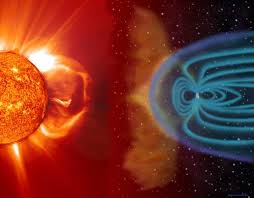
Subtle connections between the 11-year solar cycle, the stratosphere, and the tropical Pacific Ocean work in sync to generate periodic weather patterns that affect much of the globe, according to research appearing this week in the journal Science. The study can help scientists get an edge on eventually predicting the intensity of certain climate phenomena, such as the Indian monsoon and tropical Pacific rainfall, years in advance.


An international team of scientists led by the National Center for Atmospheric Research (NCAR) used more than a century of weather observations and three powerful computer models to tackle one of the more difficult questions in meteorology: if the total energy that reaches Earth from the Sun varies by only 0.1 percent across the approximately 11-year solar cycle, how can such a small variation drive major changes in weather patterns on Earth?

The answer, according to the new study, has to do with the Sun's impact on two seemingly unrelated regions. Chemicals in the stratosphere and sea surface temperatures in the Pacific Ocean respond during solar maximum in a way that amplifies the Sun's influence on some aspects of air movement. This can intensify winds and rainfall, change sea surface temperatures and cloud cover over certain tropical and subtropical regions, and ultimately influence global weather.

"The Sun, the stratosphere, and the oceans are connected in ways that can influence events such as winter rainfall in North America," says NCAR scientist Gerald Meehl, the lead author. "Understanding the role of the solar cycle can provide added insight as scientists work toward predicting regional weather patterns for the next couple of decades."More...
The study was funded by the National Science Foundation, NCAR's sponsor, and by the Department of Energy. It builds on several recent papers by Meehl and colleagues exploring the link between the peaks in the solar cycle and events on Earth that resemble some aspects of La Nina events, but are distinct from them. The larger amplitude La Nina and El Nino patterns are associated with changes in surface pressure that together are known as the Southern Oscillation.

The connection between peaks in solar energy and cooler water in the equatorial Pacific was first discovered by Harry Van Loon of NCAR and Colorado Research Associates, who is a co-author of the new paper.

Top down and bottom up

The new contribution by Meehl and his colleagues establishes how two mechanisms that physically connect changes in solar output to fluctuations in the Earth's climate can work together to amplify the response in the tropical Pacific.

The team first confirmed a theory that the slight increase in solar energy during the peak production of sunspots is absorbed by stratospheric ozone. The energy warms the air in the stratosphere over the tropics, where sunlight is most intense, while also stimulating the production of additional ozone there that absorbs even more solar energy. Since the stratosphere warms unevenly, with the most pronounced warming occurring at lower latitudes, stratospheric winds are altered and, through a chain of interconnected processes, end up strengthening tropical precipitation.

At the same time, the increased sunlight at solar maximum causes a slight warming of ocean surface waters across the subtropical Pacific, where Sun-blocking clouds are normally scarce. That small amount of extra heat leads to more evaporation, producing additional water vapor. In turn, the moisture is carried by trade winds to the normally rainy areas of the western tropical Pacific, fueling heavier rains and reinforcing the effects of the stratospheric mechanism.

The top-down influence of the stratosphere and the bottom-up influence of the ocean work together to intensify this loop and strengthen the trade winds. As more sunshine hits drier areas, these changes reinforce each other, leading to less clouds in the subtropics, allowing even more sunlight to reach the surface, and producing a positive feedback loop that further magnifies the climate response.

These stratospheric and ocean responses during solar maximum keep the equatorial eastern Pacific even cooler and drier than usual, producing conditions similar to a La Nina event. However, the cooling of about 1-2 degrees Fahrenheit is focused farther east than in a typical La Nina, is only about half as strong, and is associated with different wind patterns in the stratosphere.

Earth's response to the solar cycle continues for a year or two following peak sunspot activity. The La Nina-like pattern triggered by the solar maximum tends to evolve into a pattern similar to El Nino as slow-moving currents replace the cool water over the eastern tropical Pacific with warmer water. The ocean response is only about half as strong as with El Nino and the lagged warmth is not as consistent as the La Nina-like pattern that occurs during peaks in the solar cycle.

Enhancing ocean cooling

Solar maximum could potentially enhance a true La Nina event or dampen a true El Nino event. The La Nina of 1988-89 occurred near the peak of solar maximum. That La Nina became unusually strong and was associated with significant changes in weather patterns, such as an unusually mild and dry winter in the southwestern United States.

The Indian monsoon, Pacific sea surface temperatures and precipitation, and other regional climate patterns are largely driven by rising and sinking air in Earth's tropics and subtropics. Therefore the new study could help scientists use solar-cycle predictions to estimate how that circulation, and the regional climate patterns related to it, might vary over the next decade or two.

Three views, one answer

To tease out the elusive mechanisms that connect the Sun and Earth, the study team needed three computer models that provided overlapping views of the climate system.

One model, which analyzed the interactions between sea surface temperatures and lower atmosphere, produced a small cooling in the equatorial Pacific during solar maximum years. The second model, which simulated the stratospheric ozone response mechanism, produced some increases in tropical precipitation but on a much smaller scale than the observed patterns.

The third model contained ocean-atmosphere interactions as well as ozone. It showed, for the first time, that the two combined to produce a response in the tropical Pacific during peak solar years that was close to actual observations.

"With the help of increased computing power and improved models, as well as observational discoveries, we are uncovering more of how the mechanisms combine to connect solar variability to our weather and climate," Meehl says.

The University Corporation for Atmospheric Research manages the National Center for Atmospheric Research under sponsorship by the National Science Foundation.


--------------------------------------------------------------------------------

Journal reference:

Gerald Meehl, Julie Arblaster, Katja Matthes, Fabrizio Sassi, and Harry van Loon. Amplifying the Pacific Climate System Response to a Small 11-Year Solar Cycle Forcing. Science, 2009; 325 (5944): 1114 DOI: 10.1126/science.1172872
Adapted from materials provided by National Center for Atmospheric Research/University Corporation for Atmospheric Research.


The man who doubted Al Gore


FROM-National Post

To dissent on the man-made global warming ‘consensus’ is seen as evidence of mental deficiency


By Peter Foster


Dealing with acolytes of the Al Gore school of climate change (that is, virtually every government on earth, plus the chattering classes of the entire Western World) has always reminded me of a classic series of illustrations by Australian-born British cartoonist H. M. Bateman.

Mr. Bateman’s “Man Who…” series depicted people falling about, jaws dropping and eyes popping, while the surrounding buildings literally shook as some poor fool made a monumental social gaffe. They included “The Man Who Missed the Ball on the First Tee at St. Andrews,” and “The Man Who Lit His Cigar Before the Royal Toast.”

If one were to think of current candidates for the most disastrous of faux pas, surely none could be greater than “The Man Who Expressed Skepticism About Catastrophic Man-made Global Warming.” Not merely do mouths gape, but eyes roll at any dimwit’s failure to grasp that there is “consensus” on the issue. Indeed, to dissent is seen not merely as evidence of mental deficiency but moral turpitude.

I once attended a dinner party thrown by a corporate executive who — like his guests — was astonished at my apostasy, which was met by the requisite mime show of shock from other guests. The following day he e-mailed me a news item about melting Arctic ice. That, presumably, would put me straight.

Earlier this year I wrote an article for The Walrus magazine on the great Scottish philosopher and father of economics Adam Smith. I made a passing reference to the fact that Smith, as a student of the scientific method, might be skeptical about the notion that any science was “settled.” A letter was subsequently published in which a correspondent replied, somewhat testily: “[W]hat special qualifications does Foster have to assess the validity of climate change theory?... [W]e are being told by people who have spent their whole lives studying climate change that we need to be concerned, and that’s good enough for me.”

I entirely appreciate his point. We rely on authority for the vast majority of what we believe, but global warming theory does not rank as knowledge of the same order as whether Iceland exists or the moon is made of green cheese. My reason for believing in the existence of Iceland is that a conspiracy to conjure it out of geographical thin air is passing unlikely. But anthropogenic global warming is different. Far from being an established fact, it is a hypothesis whose allegedly disastrous consequences will occur sometime in the relatively distant future. It also comes attached to considerable psychic satisfactions and political advantages for its promoters.

It conforms to a broad view — long and fondly promoted by fans of Big Government — that capitalism is essentially short-sighted and greed-driven (just look at the subprime crisis!). This stance is not merely appealing to activist politicians and bureaucrats, it is pure gold for the vast and growing army of radical NGO environmental lobby groups, whose raison d’être — and fundraising — are closely related to the degree to which nature is seen to be “endangered.” It is also appealing to rent seeking businessmen who see the profit potential in the vast array of controls and subsidies.

Nevertheless, most ordinary people reasonably imagine in the face of such a weight of “authority” that the case must be closed. It isn’t. For a start, the weight of authority is based on the political doctoring of studies that are in any case designed to countenance no other conclusion than that man-made carbon dioxide drives the climate. Moreover, the very fact that the theory’s promoters are so reluctant to actually engage in scientific debate (No time to talk. Must act!) is highly suspicious.

However, once you get people believing in “authority,” then you’re pretty much home and dry. Authority relieves us of the anxiety of uncertainty and the pain of thought. If the issue can also be portrayed as “moral” (millions of poor people dying from biblical droughts and floods!) then to question it is not merely cause for rejection but censure. Skeptics must be either crackpots or in the pay of Big Oil or Big Coal.


I recently had what I tried to make a level-headed exchange with somebody who was visibly agitated at my daring to quote science, facts and sources. This person — dredging up material from the conventional noosphere — finally told me that I was like “a holocaust denier,” or somebody who believed in UFOs! Their conviction, like the Walrus correspondent, was based on the fact that “Nobel prize winners” had declared that catastrophic global warming was a fact.

Now it’s certainly true that Al Gore has a Nobel, but it is equally certain that it isn’t for science. The nations of the world are currently involved — ahead of the next giant climate shindig in Copenhagen in December — in rancorous discussions about sharing the economic self-mutilations that are claimed to be needed as part of a successor to the egregiously-failed Kyoto Accord. No issue has more divided the rich and poor, and pitted the West against India and China.

In case you don’t remember, the Nobel that Al Gore shared with the Intergovernmental Panel on Climate Change was for Peace. But mentioning that massive incongruity would probably cause people’s eyes to roll, or maybe even buildings to shake.


More...


If a tree falls....or stands


It never ceases to amaze me that in the effort to create alarm and panic the global warming aka climate change crowd are constantly finding themselves in contradiction to themselves. There are many examples of this, recently I remember the case of the "which way does the wind blow" but there have been countless examples of these contradictions.

Now we have the contradiction on whether CO2 induced global warming is good or bad for our forests. Common sense and
real science would seem to make this question seem silly, but silliness is the new reality in science when it comes to global warming. Let's take a couple of recent stories to illustrate the point.

The first is from the AP, an apocalyptic article on the future of forests called
A couple of highlights or low lights will give you the flavor of the article.
As far as the eye can see, it's all infested," forester Rob Legare said, looking out over the thick woods of the Alsek River valley.

Beetles and fire, twin plagues, are consuming northern forests in what scientists say is a preview of the future, in a century growing warmer, as the land grows drier, trees grow weaker and pests, abetted by milder winters, grow stronger.

Dying, burning forests would then only add to the warming.

It's here in the sub-Arctic and Arctic — in Alaska, across Siberia, in northernmost Europe, and in the Yukon and elsewhere in northern Canada — that Earth's climate is changing most rapidly. While average temperatures globally rose 0.74 degrees Celsius (1.3 degrees Fahrenheit) in the past century, the far north experienced warming at twice that rate or greater.

My God it makes you want to throw a rope around a branch of one of these poor creatures and hang yourself less your very breath continue to destroy the world. As you can see from the AP article we are destroying the northern forest with our greedy existence:
Dominoes may already be falling in western North America.

From Colorado to Washington state, an unprecedented, years-long epidemic of mountain pine beetle has killed 2.6 million hectares (6.5 million acres) of forest. The insect has struck even more devastatingly to the north, in British Columbia, where clouds of beetles have laid waste to 14 million hectares (35 million acres) — twice the area of Ireland. It is expected to kill 80 percent of the Canadian province's lodgepole pines before it's finished.

Farther north, in the Yukon, the pine beetle isn't endemic — yet. Here it's the spruce bark beetle that has eaten its way through 400,000 hectares (1 million acres) of woodland, and even more in neighboring Alaska, in a 15-year-old epidemic unmatched in its longevity and extent.

"It's a fingerprint of climate change," Aynslie Ogden, senior researcher for the Yukon Forest Management Branch, said in Whitehorse, the territorial capital. "The intensity and severity and magnitude of the infestation is outside the normal."

As you can see lest we do something soon the bugs which somehow are increasing in their devastating appetite due to mankind's lust for advancement will soon destroy our majestic forest, but it is worse:

In an authoritative 2007 assessment, the Intergovernmental Panel on Climate Change (IPCC), the U.N.-sponsored scientific network, cited multiple studies linking the spread of wildfires to warmer, drier conditions.

This June, in the latest such study, as early flames flared in California's wildfire season, Harvard scientists said the area burned in the U.S. West could increase by 50 percent by the 2050s, even under the best-case warming scenario projected by the IPCC.

In Siberia, "fire has been increasing, and there's an earlier fire season," Soja, of the U.S. National Institute of Aerospace, reported from the Sukachev Institute of Forestry in Krasnoyarsk. Her research this summer found that a warmer, drier climate appears to be stifling regrowth of burned-out areas on the Siberian forest's southern edge, turning them to grasslands.

In Canada, area burned is double what it was in the 1970s, despite greater firefighting capacity and some recent favorable weather, said Mike Flannigan, a fire researcher for the Canadian Forest Service.

He cited three key reasons: warmer temperatures are drying the forests, lengthening the fire season and generating more lightning, cause of the worst wilderness fires.

As you can plainly see man's inhumanity to....tree knows no bounds. Global warming is spiraling out of control causing the destruction of the worlds forest-right?

Well don't tie that hangman's knot quite yet. In an article from the BBC which I posted the other day it seems that perhaps the trees are doing a bit better than the AP article above would have you believe

Trees advance in a warming world

According to the BBC article:

Trees around the world are colonising new territories in response to highertemperatures.

From the US west coast to northern Siberia and south-east
Asia, trees are growing at higher elevations, and at higher latitudes as the
climate warms.

Of 166 sites studied, trees are advancing at more than
half, while they are receding at just two sites.

In fact they even have a nifty little map from the actual scientific study, showing that forests are either advancing in this warming world, or at least maintaining their normal territory.


Looking at the map and reading the previous AP article one wonders if they perhaps visited the wrong forests. Anyway, the BBC article scientists were surprised to find that a majority of the forests were doing just fine because of the warmer temperatures-especially in winter:


Most important, they found that treelines had advanced into previously inhospitable habitat at 87 sites.

The treelines remained stable at 77 sites, while trees had retreated at just two locations.

Crucially, the trees do not seem to be responding to warmer summer temperatures.

"We expected growing season warming to be the dominant driver," says Harsch.

"But we found that it was not, winter temperature was."

That could be because trees that have advanced during warm summers can more easily survive the odd cooler summer. Whereas those that advanced during warmer winters may not survive a particularly cold winter, making winter temperatures the limiting factor.

So it would seem that despite the beetles and fires, climate change is having an over all beneficial affect. I wonder if the BBC will call the AP and fill them in on this? I doubt it, the BBC will soon have a report on the devastation of trees by climate change, guarantee it.

More...


August 28, 2009

B.O.B. Presents


Best Of the Blogs


Master Resource: Waxman–Markey’s Gravy Train: Why the Electric Industry Got on Board (Getting favors, adding pages to H.R. 2454)


WUWT: Met Office supercomputer: A megawatt, here, a megawatt there, and pretty soon we’re talking real carbon pollution


Objectivist Individualist: NOAA's Sea Surface Temperature Data Set in Error Since 1998


Sweetness & Light: Earth Killing Itself With Laughing Gas
More...


"Notable Quotes"

Regarding “An Inconvenient Truth.”

I have seen it and it’s inconvenient. And there is some inconvenient mistruths, and I think in that, that we’re finding with new science that there’s additional point of view. I think science needs to have that continued discussion and debate.”

source

Utah Gov. Gary Herbert
More...


IMAGE OF THE DAY-CO2 is Green... and Green is Good!


FROM-Climate Realist

More CO2 in the air means more plant growth.

More...


"Notable Quotes"

"This bias also brings into question the claim that 11 of the 12 years in the period 1995 to 2006 were the warmest on record. Moreover, despite the claim in the IPCC (2007) report, the tropospheric and surface temperature trends have not NOT reconciled.

The lack of news coverage on this documented bias which has appeared in the peer reviewed literature 9n the Klotzbach et al (2009) paper is another clear example of the failure of most of the journalism community to cover news that conflicts with the IPCC (2007) perspective.
"

source


Roger Pielke Sr. Senior Research Scientist, Cooperative Institute for Research in Environmental Sciences (CIRES), University of Colorado

More...


POWER TO THE PEOPLE


Letters to the Editor and other People Speak

FROM-North County Times

FORUM: Global warming not emergency; nuclear power key

I was surprised to see another Community Forum by Amy Hoyt Bennett on Aug. 18 ---- warning of "toxic" consequences if drastic and immediate action is not taken to halt global warming.

While global warming is, to be sure, a fact, it has been going on for 15,000 years or more ---- and thank goodness for that. However, there is no reason why we can't be working on better, greener solutions to backbone power generation than the huge number of coal-fired power plants that we rely on in America.

While solar and wind generators are a great start, the amount of energy produced by new coal-fired plants is outpacing new green power, each and every year. And why is that? Because the cost of energy produced by coal is less than half the cost of wind or solar power. And that, of course, is the reason for pushing "cap and trade" and the "carbon tax and dividend."

But focusing only on these negative measures spell trouble for the economic future. If we want life to be as good as or better than it is now, we need cheap electricity. This will especially be true as we see the increased use and availability of electric vehicles, most of which will be recharged during the night.

If global warming were the true crisis that Amy claims, we would immediately halt new coal plant installations and instead, build nuclear power plants.

Nuclear plants cost more to build, but don't require two trainloads of coal every single day for operation. In the long run, nuclear produces electricity as cheap as coal.

Global warming is not the toxic emergency that some fanatics say.

Peer-reviewed scientists do not blame global warming for fires and droughts and have said that during the last 20 years, the biomass of the planet has increased by 7 percent. That means the earth is getting greener. So we have time to think and act.

Nuclear power plants produce virtually no carbon dioxide, and actually produce less radiation than the so-called clean-coal plants. It will cost far more to build the wind or solar equivalent of a nuclear power plant.

Let's not focus on the negative, but instead begin replacing our coal-fired power plants with nuclear. Do this and the carbon reduction will be 1,000 times more effective than any "cap and trade" or "carbon tax and dividend." It's possible to have cheap power for the economy as well as clean power for the environment.

LOWELL DUNN lives in Fallbrook.


More...


"restore science to its rightful place"


FROM-IBD

Carbongate (Cont'd)

Junk Science: The EPA may be considering closing the watchdog office that exposed the flimsy evidence of man-caused warming. So much for the administration's promise to "restore science to its rightful place."

Recently we commented on the plight of Dr. Allen Carlin, the EPA senior research analyst at the National Center for Environmental Economics who dared to say, in essence, that emperor Al Gore and his environmental sycophants at the Environmental Protection Agency wore no clothes.

The EPA had been working on an "endangerment finding" that would say carbon dioxide, rather than being the basis for all life on earth, was a dangerous pollutant and allowing the EPA to regulate it and five other gases down to your lawn mower.

Along came Carlin, who decided to do something unheard of and actually check the empirical data. After examining numerous global warming studies, Carlin — who holds a doctorate in economics with an undergraduate degree in physics — said his research showed that "available observable data . . . invalidate the hypothesis" that humans cause dangerous global warming. The EPA has "tended to accept the findings reached by outside groups . . . as being correct without a careful and critical examination."

With the Democrats about to push the Waxman-Markey cap-and-trade legislation, it didn't help for Carlin to report, for example, that ocean cycles, rather than anthropogenic carbon dioxide, appeared to be the single best explanation of temperature variations.

Carlin's report said the EPA, by adopting a 2007 U.N. report, is relying on research "which is at best three years out-of-date in a rapidly changing field" and ignores the latest scientific findings.

One of Gore's favorite grim fairy tales is the melting of the Greenland ice sheet and glaciers the size of Tennessee roaming the North Atlantic. "The idea that warming temperatures will cause Greenland to rapidly shed its ice has been greatly diminished by new results indicating little evidence for operations of such processes," Carlin observed.

This did not sit well with his superiors, who essentially told him to go to his room and shut up. On March 12, Carlin's director, Al McGartland, forbade him from having "any direct communication" with anyone outside his office about his study.

When Carlin persisted, requesting that his study be forwarded to the EPA's Office of Air and Radiation, which directs the EPA's climate change program, McGartland replied in an e-mail:

"The administrator and the (Obama) administration has decided to move forward on endangerment, and your comments do not help the legal or policy case for this decision. . . . I can only see one impact of your comments given where we are in the process, and that would be a very negative impact on our office."

The Competitive Enterprise Institute, which in June unearthed the Carlin story and the e-mails that documented the EPA cover-up, now reports that rather than shoot the messenger, the Obama administration and the EPA want to close the office he works at.

What we dubbed "carbongate" continues. The administration that promised transparency becomes increasingly opaque as its media co-conspirators say nothing about this "chilling effect."

More...


Stop 'emotionalizing' the cap-and-trade debate


FROM- Washington Examiner

Environmental activists who favor anti-global warming regulations like the Waxman-Markey cap-and-trade bill now before the U.S. Senate have long claimed that government intervention is essential to save the planet from an imminent man-made catastrophe. In fact, only Waxman-Markey threatens to be a man-made catastrophe. The bill would create billions of dollars' worth of government credits to businesses that reduce carbon emissions. Businesses that exceed the required reductions could sell the credits to firms that fail to do so. The approach won't work because it would use a government mandate to create a market for which there is no consumer demand.

Since the American economy is mainly powered by energy produced from carbon fuels and will be for the foreseeable future, reducing carbon emissions requires slowing or eliminating economic growth, with the result that 2 million more Americans will become unemployed by 2012, according to an analysis by the conservative Heritage Foundation. Similarly, the Brookings Institution -- certainly no sentinel of rightward analysis -- also predicts dire economic results from Waxman-Markey.

To overcome such objections, environmental advocates project a dire future in the hope Congress will adopt measures like Waxman-Markey to assuage public fears. At least one major environmentalist leader has confessed to "emotionalizing" the anti-global warming case as a way of capturing public attention and generating support. Gerd Leipold, retiring director of Greenpeace, in an Aug. 7 interview with the BBC, conceded that Arctic ice would not all melt by 2030, contrary to his organization's prediction earlier this year.

But when pressed by the BBC reporter to defend such predictions in Greenpeace news releases and briefing materials, Leipold admitted errors but defended them as a necessary means to an end: "What we have said by and large over the last 20 years I think was wise and was rational and reasonable. ... We are confronted with a world that has unfortunately only recently woken up to it. We as a pressure group have to emotionalize issues, and we are not ashamed of emotionalizing issues." In other words, Greenpeace is engaging in propaganda.

Waxman-Markey has already passed the House, but in September, the Senate will have an opportunity to de-emotionalize the debate over the bill. And Senate members do, they should take a hard look at the pronouncements of Greenpeace and other environmentalist groups, and separate the propaganda from the facts.

More...