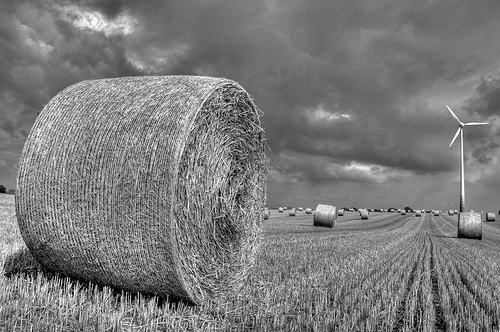
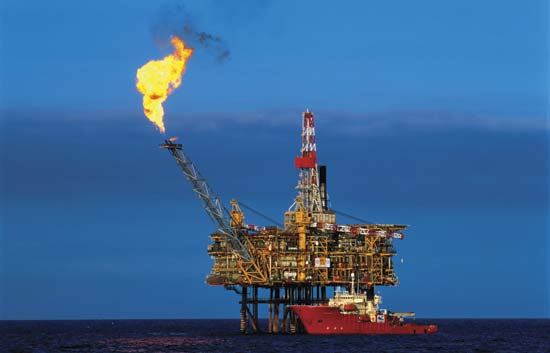
Solar power plants burden the counties that host them
Eager for jobs and tax money, Mojave Desert counties welcomed big solar projects. But they may have been too optimistic. And expanding emergency services and infrastructure isn't cheap.
Showing posts with label energy. Show all posts
November 25, 2012
October 17, 2012
Electric Car Crash
Via-WSJ
Obama's green energy industrial policy turns up in Chapter 11.
Mitt Romney quipped in the first Presidential debate that the problem with the Obama Administration's green energy investing isn't that it tried to pick winners and losers, but that "you pick the losers." He was being generous. Another big green Administration favorite went belly-up on Tuesday with the Chapter 11 filing by battery-maker A123 Systems Inc.
Massachusetts-based A123 is—or was—part of President Obama's grand design to build a U.S. electric-car industry more or less from scratch. The company was founded by entrepreneurs in 2001 to make lithium ion phosphate batteries and attracted private investment from the likes of Sequoia Capital and GE. Then Washington picked up the green energy fad.
As Mr. Obama put it in August 2009, the government would create an "infrastructure of innovation" by doling out "$2.4 billion in highly competitive grants to develop the next generation of fuel-efficient cars and trucks, powered by the next generation of battery technologies, all made right here in the U.S. of A."
In a September 2010 congratulatory phone call to A123's Livonia, Michigan plant, Mr. Obama called it "the birth of an entire new industry in America."
Democrats were explicit that this was an attempt to rehabilitate the idea that government could nurture new industries. As Michigan Senator Carl Levin said in a 2011 speech, A123's factories "are a forceful rebuttal to those who argue against public investment in this field, people who label this 'industrial policy.' In the not too distant past, that label—'industrial policy'—was the kiss of death for any proposal. That's an ideological hang-up that we've now overcome."
One not-so-ideological hang-up: The technology and market for such an industry didn't and still doesn't exist for commercially profitable levels of production. Electric-battery storage in particular has bedeviled technologists for decades. But rather than fund basic research—arguably a role for government—Mr. Obama and his green friends decided to play venture capitalist and industrial planner. With your money.
The Bush Administration gave A123 a $6 million research grant in 2007. But the company hit the jackpot in August 2009 when Mr. Obama's Department of Energy announced a $249 million grant. No strings attached and not even a taxpayer equity stake. The cash was supposed to build three plants in Michigan that would create "more than 3,000 [jobs] by the end of 2012," according to Mr. Obama.
The A123 batteries needed a market, so the government tried to finance that too. In April 2010, the Energy Department gave Fisker Automotive a $529 million loan to develop and produce plug-in hybrid cars—for which A123 would supply the batteries.
Fisker was supposed to be producing cars this year at an old General Motors-United Auto Workers plant in Delaware. Vice President Joe Biden traveled to Delaware himself for the plant reopening. But Fisker has struggled with reliability issues, car recalls and management changes. In August, a Fisker Karma vehicle caught fire in a parking lot in California, thanks to a defective cooling fan. The Energy Department froze Fisker's credit line last year.
As for A123, it also struggled with quality-control problems and competition from low-cost producers in Asia. China's Wanxiang Group offered A123 a lifeline in August, but Tuesday that deal fell apart.
Johnson Controls, the Fortune 500 giant, will now pick up the pieces and finance A123's bankruptcy. Johnson Controls received a $299.2 million grant from the Obama Administration in 2009 to build advanced batteries. Johnson Controls is a respected enterprise, but does a company with a fiscal 2011 net income of $1.6 billion really need taxpayer subsidies?
More than any single failure, the larger lesson here is the eternal one about the folly of government industrial policy. Someday someone will find a way to store electric power for long periods, and someday someone may build a commercially viable electric car. We will be the first to cheer.
But the second to last people in the world to know when that day arrives will work for the Department of Energy, and the last will be U.S. Senators. In 2008 President Obama sold voters a fairy tale about millions of "green jobs" that he could conjure up merely by "investing" taxpayer money. The 2012 election is in part a referendum on whether Americans can be fooled again.
Obama's green energy industrial policy turns up in Chapter 11.
Mitt Romney quipped in the first Presidential debate that the problem with the Obama Administration's green energy investing isn't that it tried to pick winners and losers, but that "you pick the losers." He was being generous. Another big green Administration favorite went belly-up on Tuesday with the Chapter 11 filing by battery-maker A123 Systems Inc.
Massachusetts-based A123 is—or was—part of President Obama's grand design to build a U.S. electric-car industry more or less from scratch. The company was founded by entrepreneurs in 2001 to make lithium ion phosphate batteries and attracted private investment from the likes of Sequoia Capital and GE. Then Washington picked up the green energy fad.
As Mr. Obama put it in August 2009, the government would create an "infrastructure of innovation" by doling out "$2.4 billion in highly competitive grants to develop the next generation of fuel-efficient cars and trucks, powered by the next generation of battery technologies, all made right here in the U.S. of A."
In a September 2010 congratulatory phone call to A123's Livonia, Michigan plant, Mr. Obama called it "the birth of an entire new industry in America."
Democrats were explicit that this was an attempt to rehabilitate the idea that government could nurture new industries. As Michigan Senator Carl Levin said in a 2011 speech, A123's factories "are a forceful rebuttal to those who argue against public investment in this field, people who label this 'industrial policy.' In the not too distant past, that label—'industrial policy'—was the kiss of death for any proposal. That's an ideological hang-up that we've now overcome."
One not-so-ideological hang-up: The technology and market for such an industry didn't and still doesn't exist for commercially profitable levels of production. Electric-battery storage in particular has bedeviled technologists for decades. But rather than fund basic research—arguably a role for government—Mr. Obama and his green friends decided to play venture capitalist and industrial planner. With your money.
The Bush Administration gave A123 a $6 million research grant in 2007. But the company hit the jackpot in August 2009 when Mr. Obama's Department of Energy announced a $249 million grant. No strings attached and not even a taxpayer equity stake. The cash was supposed to build three plants in Michigan that would create "more than 3,000 [jobs] by the end of 2012," according to Mr. Obama.
The A123 batteries needed a market, so the government tried to finance that too. In April 2010, the Energy Department gave Fisker Automotive a $529 million loan to develop and produce plug-in hybrid cars—for which A123 would supply the batteries.
Fisker was supposed to be producing cars this year at an old General Motors-United Auto Workers plant in Delaware. Vice President Joe Biden traveled to Delaware himself for the plant reopening. But Fisker has struggled with reliability issues, car recalls and management changes. In August, a Fisker Karma vehicle caught fire in a parking lot in California, thanks to a defective cooling fan. The Energy Department froze Fisker's credit line last year.
As for A123, it also struggled with quality-control problems and competition from low-cost producers in Asia. China's Wanxiang Group offered A123 a lifeline in August, but Tuesday that deal fell apart.
Johnson Controls, the Fortune 500 giant, will now pick up the pieces and finance A123's bankruptcy. Johnson Controls received a $299.2 million grant from the Obama Administration in 2009 to build advanced batteries. Johnson Controls is a respected enterprise, but does a company with a fiscal 2011 net income of $1.6 billion really need taxpayer subsidies?
More than any single failure, the larger lesson here is the eternal one about the folly of government industrial policy. Someday someone will find a way to store electric power for long periods, and someday someone may build a commercially viable electric car. We will be the first to cheer.
But the second to last people in the world to know when that day arrives will work for the Department of Energy, and the last will be U.S. Senators. In 2008 President Obama sold voters a fairy tale about millions of "green jobs" that he could conjure up merely by "investing" taxpayer money. The 2012 election is in part a referendum on whether Americans can be fooled again.
September 12, 2012
March 21, 2012
America’s Coming Energy Independence
FROM-Commentary
Max Boot
In this Wall Street Journal oped Ed Morse of Citigroup points out a little appreciated fact: that oil and natural gas production is soaring in the United States—and also in our neighbors Canada and Mexico. Thanks to technological developments such as the exploitation of oil shale, the U.S. has become the fastest growing oil producer in the world and is likely to remain that way for a decade or more. Already we produce almost as much oil as Saudi Arabia; soon we will surpass it. Already we have become a net petroleum-exporting country for the first time since 1949; in the future we have the potential to export far more, or to lessen even more our already declining dependence on oil imports.
That will make us increasingly energy independent and lessen the strategic importance of OPEC. It is also the latest of many reasons why predictions of American decline are so overwrought.
The country that is supposedly going to overtake us—China—has scant energy reserves of its own and is heavily reliant on imports brought by water along sea lines which are either now controlled by the U.S. Navy or could be in a time of war. That places China at a major strategic disadvantage in the long-term. When combined with America’s other advantages—especially the fact that our population is not aging nearly as fast as China’s—this suggests that there is no reason American cannot remain No. 1 for a long time to come, provided policymakers in Washington don’t mess it up. Of course, as seen from the Obama administration’s refusal so far to approve the Keystone pipeline that will bring oil from Alberta tar sands to the Gulf of Mexico, official obstructionism remains a potent obstacle to exploiting America’s natural strengths.
October 6, 2011
FROM-The Wall Street Journal
During the decade that Al Gore dominated the environmental debate, global carbon-dioxide emissions rose by 28.5%.
By ROBERT BRYCE
Over the past two months, environmental activists have held protests at the White House and elsewhere hoping to convince the Obama administration to deny a permit for the proposed Keystone XL oil pipeline from Canada to the Gulf Coast. Some of those same activists have launched a series of demonstrations called "Moving Planet" to move "the planet away from fossil fuels towards a safer climate future." And next month, leaders from dozens of countries will meet at the 17th United Nations Framework Convention on Climate Change in Durban, South Africa.
But for all of the sturm und drang about climate change, what has actually happened? It's time to acknowledge five obvious truths about the climate-change issue:
1) The carbon taxers/limiters have lost. Carbon-dioxide emissions have been the environmental issue of the past decade. Over that time period, Al Gore became a world-renowned figure for his documentary, "An Inconvenient Truth," for which he won an Oscar. In 2007, he, along with the Intergovernmental Panel on Climate Change (IPCC), collected a Nobel Peace Prize for "informing the world of the dangers posed by climate change." That same year, the IPCC released its fourth assessment report, which declared that "most of the observed increase in global average temperatures since the mid-20th century is very likely due to the observed increase in anthropogenic greenhouse gas emissions." (Emphasis in original.)
Two years later, Copenhagen became the epicenter of a world-wide media frenzy as some 5,000 journalists, along with some 100 world leaders and scores of celebrities, descended on the Danish capital to witness what was billed as the best opportunity to impose a global tax or limit on carbon dioxide.
The result? Nothing, aside from promises by various countries to get serious—really serious—about carbon emissions sometime soon.
Here's a reality check: During the same decade that Mr. Gore and the IPCC dominated the environmental debate, global carbon-dioxide emissions rose by 28.5%.
Those increases reflect soaring demand for electricity, up by 36%, which in turn fostered a 47% increase in coal consumption. (Natural-gas use increased by 29% while oil use grew by 13%.) Carbon-dioxide emissions are growing because people around the world understand the essentiality of electricity to modernity. And for many countries, the cheapest way to produce electrons is by burning coal.
July 16, 2011
The Green Economy Withers
FROM-IBD
Even after fudging numbers and ignoring the huge subsidies, a liberal think tank reports that growth in the alternative-energy sector lags the rest of the economy.
Green jobs were supposed to be our salvation, both for the earth and for the economy, according to the Obama administration. White House policy based on this flawed premise led to offshore and onshore drilling bans and the locking-up of energy-rich lands while huge alternative energy subsidies (aka "investments") found their way into the stimulus and other legislation.
As happens when government tries to pick winners and losers, the government lost — no, we all lost. As has happened in countries such as Spain, this misallocation of resources has succeeded only in stalling our economy as unemployment and debt grow.
In Spain's case, it was found that for every "green" job created, 2.2 jobs were lost in the rest of the economy.
Along comes the Brookings Institution with a report touting the fact that nearly 2.7 million people brought home paychecks in 2010 working in the "clean economy." That's a 3.4% increase in "green jobs" since 2003, and it sounds terrific until you realize the economy as a whole grew at a 4.2% rate over the same period.
As the folks at HotAir.com duly note, Brookings got to its conclusions by including, for example, all mass transit workers regardless of the actual energy source. They also lump in people such as organic farmers and nuclear energy workers, though the greenies have never touted nuclear energy as "clean" or nuclear jobs as "green."
Discounted is the role of government mandates and subsidies, without which the alternative energy sector would wither and die. A good many of these "green jobs" exist in the public sector of federal, state and local governments. And they come at huge expense.
A 2008 report by the Energy Department's Energy Information Administration reported that in 2007, while the average subsidy per megawatt hour for all energy sources was $1.65, the subsidy for wind and solar was about $24 per megawatt hour. On the nonelectricity generating side, ethanol received a subsidy of $5.72 per million British thermal unit.
Remember Solyndra Inc., the first recipient of $535 million of stimulus cash in 2009 to hire 1,000 workers for "green jobs"? The company had never shown a profit, and in the end the Fremont, Calif.-based solar panel manufacturer never came through.
A month after President Obama's visit, the company he praised withdrew its public offering plans. A few weeks later, congressional auditors announced that the Energy Department had given favorable treatment to some loan-guarantee applicants.
Coincidently, Solyndra's majority owner, billionaire George Kaiser, was a top fundraiser for the 2008 Obama-Biden campaign.
This is how we set energy policy. It is based not on the free market and supply and demand, but on ideology and crony capitalism. Energy prices then "necessarily skyrocket," causing job loss and consumer pain as money that might be spent to buy stuff goes just to keep the lights on.
As we have noted, the focus on green jobs comes at the expense of other jobs. An oil industry study says that 190,000 jobs could be created by 2013 if offshore development permits in the Gulf of Mexico were returned. Just finishing the Keystone XL pipeline to bring Canadian tar sands oil to Houston-area refineries could net hundreds of thousands of jobs.
Alternative energy cannot survive without mandates and subsidies, and cannot compete in the free market with proven and plentiful sources like petroleum.
The Brookings report may have been meant to tout the green economy, but it only serves to underscore its failure and the opportunity costs it imposes on the American people and economy.
Even after fudging numbers and ignoring the huge subsidies, a liberal think tank reports that growth in the alternative-energy sector lags the rest of the economy.
Green jobs were supposed to be our salvation, both for the earth and for the economy, according to the Obama administration. White House policy based on this flawed premise led to offshore and onshore drilling bans and the locking-up of energy-rich lands while huge alternative energy subsidies (aka "investments") found their way into the stimulus and other legislation.
As happens when government tries to pick winners and losers, the government lost — no, we all lost. As has happened in countries such as Spain, this misallocation of resources has succeeded only in stalling our economy as unemployment and debt grow.
In Spain's case, it was found that for every "green" job created, 2.2 jobs were lost in the rest of the economy.
Along comes the Brookings Institution with a report touting the fact that nearly 2.7 million people brought home paychecks in 2010 working in the "clean economy." That's a 3.4% increase in "green jobs" since 2003, and it sounds terrific until you realize the economy as a whole grew at a 4.2% rate over the same period.
As the folks at HotAir.com duly note, Brookings got to its conclusions by including, for example, all mass transit workers regardless of the actual energy source. They also lump in people such as organic farmers and nuclear energy workers, though the greenies have never touted nuclear energy as "clean" or nuclear jobs as "green."
Discounted is the role of government mandates and subsidies, without which the alternative energy sector would wither and die. A good many of these "green jobs" exist in the public sector of federal, state and local governments. And they come at huge expense.
A 2008 report by the Energy Department's Energy Information Administration reported that in 2007, while the average subsidy per megawatt hour for all energy sources was $1.65, the subsidy for wind and solar was about $24 per megawatt hour. On the nonelectricity generating side, ethanol received a subsidy of $5.72 per million British thermal unit.
Remember Solyndra Inc., the first recipient of $535 million of stimulus cash in 2009 to hire 1,000 workers for "green jobs"? The company had never shown a profit, and in the end the Fremont, Calif.-based solar panel manufacturer never came through.
A month after President Obama's visit, the company he praised withdrew its public offering plans. A few weeks later, congressional auditors announced that the Energy Department had given favorable treatment to some loan-guarantee applicants.
Coincidently, Solyndra's majority owner, billionaire George Kaiser, was a top fundraiser for the 2008 Obama-Biden campaign.
This is how we set energy policy. It is based not on the free market and supply and demand, but on ideology and crony capitalism. Energy prices then "necessarily skyrocket," causing job loss and consumer pain as money that might be spent to buy stuff goes just to keep the lights on.
As we have noted, the focus on green jobs comes at the expense of other jobs. An oil industry study says that 190,000 jobs could be created by 2013 if offshore development permits in the Gulf of Mexico were returned. Just finishing the Keystone XL pipeline to bring Canadian tar sands oil to Houston-area refineries could net hundreds of thousands of jobs.
Alternative energy cannot survive without mandates and subsidies, and cannot compete in the free market with proven and plentiful sources like petroleum.
The Brookings report may have been meant to tout the green economy, but it only serves to underscore its failure and the opportunity costs it imposes on the American people and economy.
May 21, 2011
Oil “subsidy” and “tax breaks” nonsense
FROM-Townhall
By Paul Driessen
President Obama frequently says Americans "need to end our $4 billion in annual taxpayer subsidies to oil companies." The latest Democrat bill would have repealed some $2 billion of what Senator Charles Schumer (D-NY) and others call "subsidies" and "special tax breaks" for Big Oil.
That’s baloney – shameless demagoguery that will inflict further damage on our struggling economy.
Subsidies are cash payments from government to the private sector. Money is taken from the 51% of Americans who still pay income taxes – and transferred by legislators and bureaucrats to companies and activities that "deserve" or "require" these wealth transfers, because the recipients perform an important service and/or could not remain in business unless subsidized with other people’s money (OPM).
The petroleum industry does not receive "subsidies" to produce oil and natural gas. It doesn't even get "special tax breaks" or outright tax credits. What are falsely described in these terms are actually tax deductions for costs incurred by companies in the process of exploring, drilling, producing and refining the oil and natural gas that energize this nation's economy and living standards.
These tax deductions are equivalent or similar to deductions claimed by every US business, large and small, for things like facilities depreciation, equipment, utilities, payroll, and research and development. They are intended to ensure that businesses, like individuals, recover their costs and get taxed only on their net incomes. For oil companies those deductions include:
* Geological and geophysical costs, for exploration to assess prospects prior to drilling;
* Intangible drilling costs – equipment, labor, fuel and supplies associated with drilling expensive wells;
* Expensing "tertiary injectants," water and chemicals injected into older wells to keep them producing;
* Domestic manufacturer's deductions of up to 6% of income earned from extracting oil and gas (farmers, manufacturers and other producers can deduct up to 9% of earned income);
* Percentage depletion allowance, allowing for gradual recovery of up-front investments in a petroleum (or iron, gold, limestone, et cetera) deposit that is gradually extracted and depleted. The allowance is not available to "integrated" companies that produce, refine and market oil.
White House, congressional and eco-activist claims that repealing these deductions will generate "billions in new revenues" reflect an abysmal grasp of basic business, economic and behavioral principles....
read entire article here
By Paul Driessen
President Obama frequently says Americans "need to end our $4 billion in annual taxpayer subsidies to oil companies." The latest Democrat bill would have repealed some $2 billion of what Senator Charles Schumer (D-NY) and others call "subsidies" and "special tax breaks" for Big Oil.
That’s baloney – shameless demagoguery that will inflict further damage on our struggling economy.
Subsidies are cash payments from government to the private sector. Money is taken from the 51% of Americans who still pay income taxes – and transferred by legislators and bureaucrats to companies and activities that "deserve" or "require" these wealth transfers, because the recipients perform an important service and/or could not remain in business unless subsidized with other people’s money (OPM).
The petroleum industry does not receive "subsidies" to produce oil and natural gas. It doesn't even get "special tax breaks" or outright tax credits. What are falsely described in these terms are actually tax deductions for costs incurred by companies in the process of exploring, drilling, producing and refining the oil and natural gas that energize this nation's economy and living standards.
These tax deductions are equivalent or similar to deductions claimed by every US business, large and small, for things like facilities depreciation, equipment, utilities, payroll, and research and development. They are intended to ensure that businesses, like individuals, recover their costs and get taxed only on their net incomes. For oil companies those deductions include:
* Geological and geophysical costs, for exploration to assess prospects prior to drilling;
* Intangible drilling costs – equipment, labor, fuel and supplies associated with drilling expensive wells;
* Expensing "tertiary injectants," water and chemicals injected into older wells to keep them producing;
* Domestic manufacturer's deductions of up to 6% of income earned from extracting oil and gas (farmers, manufacturers and other producers can deduct up to 9% of earned income);
* Percentage depletion allowance, allowing for gradual recovery of up-front investments in a petroleum (or iron, gold, limestone, et cetera) deposit that is gradually extracted and depleted. The allowance is not available to "integrated" companies that produce, refine and market oil.
White House, congressional and eco-activist claims that repealing these deductions will generate "billions in new revenues" reflect an abysmal grasp of basic business, economic and behavioral principles....
read entire article here
May 11, 2011
Next to Nothing...and more : update
The IPCC released a much touted report yesterday on renewable energy. I was not all that interested but I did skim through it. While doing so the following graph caught my attention.
Initially what caught my attention was solar. Granted that this is all energy and they had to convert the various uses to a common accounting method in order to quantify the various sources but the fact remains that solar power only accounts for one tenth of one percent of all global energy. That is the very definition of next to nothing.
Think about that. Think of all that we read and hear about solar energy. Think of the investments both private and public in the billions of dollars which have been poured into solar energy and to date according to the IPCC we receive 1/10 of 1% of our energy from solar, amazing.
As I was getting ready to write up this note on my incredulity at the minuscule return on investment for solar, something else caught my attention. Obviously biomass accounts for the vast majority of renewable energy sources but what do they mean by modern biomass? Well I went back through the report and it means exactly what you would expect it to mean.
The largest RE contributor was biomass (10.2%), with the majority (roughly 60%) being traditional biomass used in cooking and heating applications in developing countries but with rapidly increasing use of modern biomass as well.So in fact 62% or 6.3% of the total global energy that the IPCC lists as biomass which is figured into the renewable energy category is old fashioned wood, animal dung, and various other forms of energy which have been used since the discovery of fire to heat and cook. The same sources of energy that confines the impoverished throughout the world to a life of misery, poverty and death. But it helps with the IPCC's accounting and spin. Unless of course it is the IPCC's contention that these primitive energy sources are good for the future.
So let's look a little closer at the above chart. Taking away the primitive sources of energy responsible for millions of children's deaths each year from lung diseases, modern biomass accounts for 4.5% of global energy bringing the total down to 6.6% for renewable energy.
But in a very real way it is worse than that. Would anyone really consider hydropower a modern energy source? No. There is no doubt that it is a renewable energy source but do we think of it as
a product of the new "green energy" revolution? No.
So if the IPCC was doing and honest report, I know I laughed just writing that, they would point out that the "green energy" revolution accounts for at most 4.3% of all of the energy in the world.
I won't even point out that the greatest share of that "revolution" is the result of bio fuels which are responsible for higher food prices and shortages around the world. Oops I pointed it out.
The scope of the waste in money and human lives wrought by this sham of climate change is staggering. Thank you climate science community for your service to humanity.
Update: It is worse than my original post. I subtracted the modern biomass from the total rather than the traditional biomass which means even less (4.3%) of the world's energy is the result of the "green energy" revolution. I have corrected this in the text. To put this into context consider how fast the two previous energy revolutions fueled global economic booms, steam and oil and they did it the old fashioned way, they earned it in the free market, not through taxpayer subsidies and government mandates.
May 9, 2011
Obama's Scandalous War Against Domestic Oil
FROM-Human Events
by David Limbaugh
Do you remember the terrible things the left was saying about President George W. Bush when gas prices soared under his watch? Yet President Obama, whose policies and actions are actually contributing to rocketing gas prices today, gets the usual mainstream media pass.
Is it that the liberal media exempt Obama from accountability because they're on his team in general? Is it because they think he's blameless in the equation even though they sprang to the unfounded conclusion that Bush was culpable? Or could it be that they aren't critical because they share his bias against conventional energy and believe the pain caused by his policies is necessary to move us toward alternative energy sources?
During Bush's term, gas prices went down 9 percent, adjusted for inflation. Yet, preposterously, he was excoriated for allegedly colluding with "big oil" to drive up prices. When prices spiked later in his term, he took proactive steps to increase our supply and reduce prices, and they worked. But Obama has taken action to impede conventional energy sources and shove us into alternative ones. Even so, liberals ignore any possible causal links.
Obama told us he would bankrupt the coal industry. He's pushing high-speed rail down our throats despite the lack of public demand for it and our inability to finance it. Transportation Secretary Ray LaHood said the administration intended to coerce us out of our cars. Energy Secretary Steven Chu said, "Somehow we have to figure out how to boost the price of gasoline to the levels in Europe."
In view of exploding gas prices, why aren't these statements seen as scandalous? Where are the calls for investigations?
Obama demeans "big oil," pushes alternative energy every time he gets a chance and does everything in his power to suppress domestic oil production, then looks us in the face and tells us he's increasing domestic production -- kind of like how he says his budget won't add a penny to the national debt. The audacity is of Hollywood magnitude, and so is the lack of scrutiny that enables it.
Behind the smoke and mirrors of his rhetoric, it's hard not to conclude that Obama's on a mission to suppress or shut down the existing oil infrastructure in the United States in pursuit of his stated alternative priorities.
The Heritage Foundation's Rory Cooper reports that, as of February 2011, at least 103 permits were awaiting review by the Bureau of Ocean Energy Management, Regulation and Enforcement. And since February, the administration has issued on average only 1.3 permits a month, a 78 percent reduction in the monthly average according to the latest Gulf Permit Index.
Obama even reversed an earlier decision to open access to coastal waters for exploration, placing a seven-year ban on drilling in the Atlantic and Pacific Coasts and in the eastern Gulf of Mexico. Oil production in the Gulf is expected to drop by 220 thousand barrels per day in 2011, which is going to cost the U.S. some $1.35 billion in revenues in 2011.
Not only are we losing oil production and revenues, the administration's actions are destroying jobs in the oil industry and elsewhere. Many companies are going out of business. The Heritage Foundation reports that Seahawk Drilling, of Houston, laid off 632 employees before recently filing for bankruptcy as a direct result of Obama's moratorium and subsequent "permitorium." Seahawk owned and operated 20 shallow-water rigs in the Gulf. Randall Stilley, president and CEO of Seahawk, said, "As an American, you never want to look at your own government and say they're hurting you personally, they're hurting your business and they're doing it in a way that's irresponsible. I'm not very proud of our government right now and the way they handled this."
Cooper explains that these crippling policies are having a negative rippling effect throughout the economy. Many vendors, suppliers, restaurants and retailers are losing revenues or going out of business. More than 30 deepwater rigs, which each employ around 200 people, have moved from the Gulf to other markets. While the industry is on "life support," Obama is at war with it, brazenly spending billions to support foreign oil and jobs in Brazil.
Making matters worse, the administration and congressional Democrats are considering legislation that would further damage energy businesses by significantly increasing taxes on domestic oil and gas concerns. And just in the past few days, we've been reading that the administration is floating a plan to tax cars by the mile.
Can you imagine the insanity and insensitivity of raising taxes on this ailing industry and its consumers (drivers) at a time when both need all the relief they can get?
Obama is no less determined to cram his preferred energy alternatives down Americans' throats than he was to force feed us socialized medicine. Again, where is the outrage?
April 29, 2011
Obama Tilting at Oil Companies, Propping Up Windmills
FROM-Center for Individual Freedom
BY ASHTON ELLIS
In Cervantes’ Don Quixote, the title character repeatedly makes a fool of himself with well-meaning crusades against common sense. With U.S. Attorney General Eric Holder riding along as Sancho Panza, President Barack Obama is mounting his own quixotic quest: lowering gas prices by increasing the cost of doing business.
One of Don Quixote’s most infamous escapades was declaring battle against a windmill, then one of the greatest engines of economic progress. Today, President Barack Obama is trying to wage war against economic reality by threatening to prosecute oil companies for pricing gasoline according to the rules of supply and demand.
At least Don Quixote could claim ignorance. President Obama cannot. He knows all too well that the American economy runs on oil, consuming 15.3 million barrels a day. Of that, imports supply 9.5 million barrels a day while domestic producers contribute 5.8 million a day.
And though trained as a public-interest lawyer and employed as a non-profit community organizer, a president smart enough to graduate from Columbia and Harvard Law School should know that his idea to strip away tax incentives to oil companies raises their price of doing business. It doesn’t take much calculating to conclude that the end result is more expensive gasoline for every consumer.
Yet in his ongoing quest to create a green utopia where only politically correct energy flourishes, President Obama won’t acknowledge reality. He won’t admit that two days prior to forming his Oil and Gas Price Fraud Working Group, another federal agency confirmed there is no fraud to prosecute. Concluding its own investigation into allegations of market manipulation, the U.S. Federal Trade Commission (FTC) “determined that none of the complaints involved conduct that violated” FTC rules.
The FTC report confirms a 2008 study by the Commodity Futures Trading Commission (CFTC) that found price surges of up to $140 a barrel and $4 a gallon that year did “not support the proposition that speculative activity has systematically driven changes in oil prices.”
Contrary to liberal conspiracy theories, the CFTC reasoned that increases in oil prices were “largely due to fundamental supply and demand factors.”
Undeterred, the president’s Sancho Panza – U.S. Attorney General Eric Holder – assured confused onlookers that the Department of Justice would press on anyway. Without citing specifics, Holder said there are “at least a couple of things” that are “disturbing” about energy markets.
Here’s one. The Environmental Protection Agency’s appeals board recently killed Shell Oil’s drilling project in Alaska after the company spent $4 billion preparing the site. The weapon was a dubious ruling that an ice-cutting vessel used by Shell would emit greenhouse gases harmful to a nearby village of native Alaskans. Population: 245. Proximity to Shell’s site: 70 miles. Likelihood of being the real reason the environmentalists on the board voted against Shell: zero.
Despite this kind of catastrophic economic loss, President Obama wants to end some tax incentives to oil companies like Shell because their profits increase when consumers drive more (as do their taxes). If the tax incentives are ended, will he also promise to reimburse Shell and others for job-killing rulings like the EPA’s surprise decision?
Of course not.
Like Don Quixote, President Obama lives in a world of make believe, in which the engines of economic progress are the enemies of right-thinking men. As with ObamaCare, the president is dutifully mounting another assault against the interests of his neighbors. He isn’t content with putting America on a forced march to socialized medicine; now we’ll also have to get there in electric cars with less horsepower.
Don Quixote charged windmills because he thought they were giants harassing the land. President Barack Obama wants to increase costs for oil companies to lower gasoline prices. Unfortunately, only one of these stories is fictional.
Ironically, there is at least one likely beneficiary of Obama’s subsidy switch from “old” energy like oil to “renewable” sources: makers of windmills.
POWER TO THE PEOPLE

Letters to the Editor and other People Speak
FROM-Baltimore Sun
Domestic drilling could finance alternative energy
Your editorial on oil prices and drilling ("Beware the snake oil sales pitch," April 26) is disingenuous at best. While your points on the amount of available domestic oil and the development of alternative energy are valid, you fail to mention the minimal potential for alternative energy over the next 10 years. My recollection is that alternative energy would produce less than 5 percent of the needed energy in that period, and anecdotally, consumer interest (or lack thereof) in electric cars speaks volumes.
Why not make a complete argument rather than shill for an agenda that is only costing citizens more? When we encourage Brazil to drill with the promise of purchasing their oil, yet hamstring domestic oil production (and by the way, creation of jobs), it sends a message that the agenda is one-sided. Why not develop domestic oil resources and take the requisite taxes and use them to develop alternative energy sources at a faster rate than the free market will since the free market knows alternative energy is inefficient and costly at this point?
Brice Gamber, Royal Oak
April 28, 2011
April 26, 2011
Wise investment opportunity ?
FROM-Inside Bay Area
Bay Biz Buzz: Feds halt BrightSource solar work in Mojave
Oakland-based BrightSource Energy has been ordered by federal regulators to halt construction on two sections of its solar thermal farm in the Mojave Desert due to fresh concerns about the vast project's impact on dozens of desert tortoises. On April 15, the Bureau of Land Management issued an immediate suspension of activities, according to a BLM filing. BrightSource has been relocating tortoises to other areas and building fences to prevent the reptiles from returning. BrightSource says it believes the project can still be completed by 2013. On Friday, BrightSource filed for an initial public offering of its stock that could raise up to $250 million.
Cooling on global warming
FROM-LA TIMES
The fight against climate change has fizzled, with much of the public not believing or not caring. That's why Obama tries to change the subject to jobs when he talk about energy policy.
By Jonah Goldberg
"What the heck went wrong?" That, apparently, is the question roiling the environmental community as it realizes that the fight against climate change has fizzled.
As Brad Plumer writes in the New Republic, everything was looking great in 2008 for a sweeping effort to make good on candidate Barack Obama's pledge to start turning back the rising oceans. The Democrats held Congress. Both John McCain and Obama had promised to push for capping carbon emissions. Corporations had gotten on board. Al Gore and "An Inconvenient Truth" had seemingly softened up the public to the point where it might go along with whatever a popular president promised.
"Instead, the climate push was ... a total flop," laments Plumer.
And of course, Plumer's right, though not entirely for the reasons he claims.
Climate change is dead as a major political issue for the foreseeable future. Don't believe me? Check out Obama's remarks in his weekly radio address last weekend. It was all about energy policy, and yet not once did he talk about climate change.
In one sense, that's odd, given that without global warming, his energy policy goes from merely misguided to outright bonkers. After all, if you wanted to create non-exportable jobs, wean America off foreign oil or pursue energy independence from the Middle East, absent any concerns about climate change or releasing CO2 into the atmosphere, you would unleash America's massive energy reserves in coal, gas and oil. According to the Congressional Research Service, hardly a mouthpiece for Big Oil, the U.S. has the largest energy resources of any country, Saudi Arabia and Russia included.
But in another sense it's not odd, because telling voters that they have to pay high gas prices in order to ineffectually fight climate change would be honest but incalculably dumb, politically. Recent polling shows that Americans care about the economy more — a lot more — than global warming. Skepticism about the existence of a problem or its scope has been rising in the U.S. and Europe. When a Pew poll in January asked voters what their biggest priorities were, climate changed ranked second to last. Only obesity was deemed less of a priority. (Don't tell Michelle Obama.)
Even Madison Avenue has noticed. The New York Times reports that increasingly budget-conscious consumers are no longer willing to shell out extra for self-described "green products." As a result, the number of new Earth-friendly products has plummeted.
Why has climate change lost its oomph? Plumer lays out some of the reasons, though he minimizes the damage greens have inflicted on their own credibility thanks to the 2009 Climategate email scandal and wildly overstated predictions. For instance, the United Nations predicted there would be 50 million "climate refugees" by 2010. They're nowhere to be found.
No wonder Obama constantly insists that switching to vastly more expensive and less-efficient energy sources will create jobs. No wonder he insists that if we all get onboard the high-speed rail bandwagon, we'll win the future. No wonder he's trying to change the subject to as-of-yet-nonexistent gas station price gouging and allegedly outrageous subsidies for the oil industry.
Obama's claims are dubious at best. The Chinese word for high-speed rail should be "white elephant." Green jobs destroy more jobs than they create, and pay less. In Spain, Obama's favorite clean-energy innovator, one study found that 2.2 jobs were destroyed for every one that was created. Indeed, across Europe, massive investments in wind and solar simply haven't paid off.
One suspects that Obama would dearly love to drill a lot for more oil and gas, simply for the political windfall in jobs and economic growth. But after he flipped on offshore drilling, then flopped after the Gulf of Mexico oil spill, he cannot flip again without infuriating his base. So he brags about how much more drilling there is today, even though that's the result of policies already in the pipeline.
Obama and the greens are in an exquisite bind. Without economic recovery, Americans won't support Obama's "investments," but Obama's investments are a hindrance to recovery.
April 24, 2011
April 20, 2011
Relax biofuel laws says World Bank as millions face food poverty
FROM-Green Car Web Site
The World Bank is calling on Governments around the world to relax laws requiring biofuels to be mixed with conventional fuels for road transport use as global food prices remain volatile.
According to the organisation, rising food and fuel prices is causing unrest in some of the world’s poorest countries as more people face being pushed below the $1.25 daily income extreme poverty line.
Driven in part by higher fuel costs connected to events in the Middle East and North Africa, global food prices are 36 per cent above their levels a year ago new World Bank Group numbers released this week reveal.
The bank is calling on governments to divert more crop production away from biofuel use and ease export controls to prevent even more people falling below the extreme poverty line.
“More poor people are suffering and more people could become poor because of high and volatile food prices,” said World Bank Group President Robert B. Zoellick. “We have to put food first and protect the poor and vulnerable, who spend most of their money on food.”
The World Bank says that a further 10 per cent increase in global food prices would push a further 10 million people below this line. This is in addition to the 44 million people who have been driven into poverty since last June as a result of price spikes. The World Bank estimates there are now about 1.2 billion people living below the poverty line.
The World Bank’s food price index, which measures global prices remains close to its 2008 peak. While not suggesting that biofuel laws should be abolished altogether, the organisation is concerned that many of the greatest food price increases link to plants commonly used as biofuel sources. Crops such as maize show a 74 per cent increase in price, while other biofuel crops such as wheat show a 69 per cent increase and soybeans show a 36 per cent increase, although rice prices have been stable.
Food prices have soared due to severe weather events in key grain exporting countries, export restrictions and low global stocks as well as biofuel production. The food price hike is also linked to surging fuel prices – crude oil increased 21 per cent in the first quarter of 2011as a result of unrest in the Middle East and North Africa.
In Europe, the European Renewable Energy Directive states that 10 per cent of transport fuel must come from renewable sources by 2020. In the UK a similar measure requires 5 per cent of transport fuel to come from renewable sources by 2013-much of this is currently met through the use of biofuels.
April 17, 2011
The Best of Times, The Worst of Times
FROM-American Thinker
Energy: A Tale of Two Narratives
By Gary Jason
When it comes to energy, two prominent narratives exist. The environmentalist narrative states that the world has only a limited amount of supplies of fossil fuel, so we need to enact steep taxes or other statist punishments to make people conserve what little they have. The classical liberal narrative, on the other hand, avows that there is no practical limit to most commodities people need, including fuels. Rather, as access to one type of fuel becomes less easy, the price of it will rise, which will encourage consumers to use less of it or more of a substitute.
Several recent stories illustrate anew how much more accurate the classical liberal model is than the environmentalist one. The first is the reportout of Texas that Chevron and other major oil companies have increased drilling in a very old field. Texas' legendary Permian Basin Field (which stretches from West Texas to New Mexico) was first exploited in 1925, and its reserves started declining decades ago. But recent advances in oil-extraction technologies such as fracking (the high-pressure injection of sand, water, and small amounts of chemicals into rock or other formation to loosen up the oil and separate it from the surrounding rock) are making oil in that old field easier to extract.
In fact, this year alone, Chevron will increase its investment in this one field by $600 million (which represents a third more money than it invested here last year) and drill twice as many wells as last year.
Spurring this new interest in old wells is the high price of oil -- now hovering around $110 a barrel -- due in turn to Obama's virtual moratorium on deep-sea drilling together with the spike in uncertainty in the Middle East (including our kinetic military action in Libya). Besides Chevron, both Exxon and ConocoPhillips are developing new wells (and reopening old ones) in the Permian Basin.
The second piece informs us of a potential new source of oil. As the piece notes, Canada is already our biggest oil supplier, providing us with more than two of the eleven million barrels we use every day. But given the spike in prices and the turmoil in the Middle East, interest is growing in a new proposed pipeline project.
The project, called the "Keystone XL Pipeline," envisions a pipeline from Alberta, Canada all the way down to Texas (where many of our refineries are). It would have connections to other pipelines to other refineries in the U.S. along the way. The Keystone Pipeline would have the capacity to give us yet another 1.1 million barrels a day from our kindly cousins in the Great White North. Our Canadian kin are moderately well-disposed towards us, unlike the Arabs and the Persians. I mean, when was the last time you saw some wild-eyed Canadian kid detonate an explosive belt to kill Americans while screaming, "The Maple Leaf is great!"?
So letting this project proceed would seem like an economic and national security no-brainer. Alas, the pipeline has been stalled by the no-brainers in Washington since 2008. Environmentalists have been in heavy opposition to the pipeline, and despite favorable reviews by both the State and Energy Departments, Obama -- the biggest no-brainer in Washington -- has ordered yet more environmental studies.
The environmentalist beef with the project is that the oil the Canadians will ship through the pipeline is be extracted from the reserves in their vast ranges of tar sands. These reserves are huge -- on the order of 175 billion barrels of oil, which makes for more than two-thirds of Saudi Arabia's proven reserves. But the environmentalists fear that the after-products of the tar sand oil extraction will harm the environment.
However, it is both presumptuous and silly for American environmentalists to oppose this joint project to ship Canadian oil. First, it is not as if Canada were a corrupt, third-world dictatorship where the leaders are willing to despoil their own country for some low-end cash. The Canadians have a fine record on environmental protection (as good as our own, in fact). And they have gotten the extraction process for tar-sand oil very ecologically safe. Over 80% of the water used in the extraction process is recycled, and the "trailing ponds" (which contain the remains of the extraction process) are being planted over with trees and shrubbery. And remember: these tar sands are already laden with petrochemicals to begin with!
So a project that would bring an estimated 20,000 new construction jobs and 250,000 long-term jobs overall to a country with an unemployment rate still up around 9%, not to mention bring about $585 million in corporate and other taxes -- and $5 billion in property taxes -- to states most of whom are experiencing financial crises, is being held up by the usual green dreamers. You know the green dreamers: they oppose all sources of energy known to work, and they support only sources of energy proven to be inefficient.
The third article ironically takes us to the Middle East -- and, even more ironically, to Israel, a county that traditionally has been an oil and gas importer. Much to the chagrin of the surrounding states so eager for it to disappear, the scrappy Jewish state is turning out to be a surprise energy powerhouse thanks to its embrace of the fracking technology. I have already noted in an earlierpiece elsewhere that Israel has employed fracking to liberate the natural gas in a huge shale field off it shoreline -- an estimated 16 trillion cubic feet of the stuff, or more than a century's worth of supply at Israel's current usage.
The shale fields in Israel also contain lots of oil. Israel's main shale field (about 30 miles southwest of Jerusalem) likely has reserves of oil about 95% of the total proven reserves of...Saudi Arabia! And unlike our own big field in Colorado, there is no aquifer running through it. In terms of shale oil reserves, Israel now ranks third in the world after the U.S. (which has an estimated 1.5 trillion barrels of shale oil) and China (with 355 billion barrels of it), and ahead of Russia.
All this is great news for Israeli security. Israel imports most of its oil by tanker from Russia and the former Russian empire, and in 2006, these supplies were cut off in Israel's war with Hezbollah. And Israel gets most of its natural gas from Egypt, which is considering cutting Israel off.
Look to these sorts of reports to continue...despite what the green dreamers would have you believe.
April 16, 2011
Moonbeam's Death Ray
FROM-The American Thinker
California's Renewable Economic Suicide
Gov. Jerry Brown, flakier now as a recycled geriatric governor than he was as Governor Moonbeam decades ago, has decided to place his state into economic hospice care. By proudly signing legislation that would require California to obtain 33% of its electric power from renewable sources by 2020 -- the Renewable Energy Bill -- he is telegraphing that the state does not have much longer to live.
Already plagued with some of the highest energy costs in America, California businesses are now guaranteed even higher costs. If you learn about a manufacturing-focused company currently domiciled in California that does not have an exit strategy to relocate to Nevada, Arizona, or Texas, or hear of one that is thinking about moving to California, sell their shares immediately.
"Instead of taking oil from thousands of miles away we're taking the sun," Brown beamed before the signing ceremony.
Of course, the only reason Brown and his fellow travelers would have to import oil from thousand of miles away is because they refuse to exploit California's own colossal petroleum reserves estimated recently by the Energy Information Agency at over 3 billion barrels, six times our yearly imports from Saudi Arabia. The same source estimates California's proven natural gas reserves at over 3,500 trillion cubic feet, a number that grew by 10% between 2008 and 2009.
Intermittent by nature, wind and solar are only remotely feasible when always-on sources -- coal, natural gas, and nuclear -- provide the base-load power. Supposedly pagan lovers of the unspoiled earth, the Californian legislators who are leading us over the precipice of insolvency are willing to devote about 300 times more land for wind farms than the land needed to generate the equivalent amount of energy from a nuclear facility.
It doesn't seem to bother the typical green zombie at all that a wind farm uses 30 times more concrete and 140 times more steel than the energy-equivalent natural gas facility and that the cement industry is the second largest emitter of CO2 after power generation, with iron and steel production not far behind. And the giant 100-meter turbine blades will probably not be made in the US but in India.
Jerry Brown was flanked by Barack Obama's sunbeam Energy Secretary, Steven Chu. That Chu would be thrilled to join by Brown's signing is no surprise given that Chu's great hope and dream for energy is to "somehow ... figure out how to boost the price of gasoline to the levels in Europe."
Well on his way to having succeeded in accomplishing that goal for the country -- the national average for a gallon of gasoline has risen 108% since Obama's inauguration -- Chu will soon be able to boast about having supported the regime that figured out how to significantly increase the cost of electricity in California.
Brown and the bill's sponsor, Senator Joseph Simitian, believe that wind and solar power will reinvigorate the state and were proud to announce that 100 new jobs would be created in the solar cell facility serving as the Silicon Valley backdrop for the signing.
Only the delusional can get excited about 100 green jobs. In a depressing study from UC-Berkeley in 2010, only 1% of Californians are employed in the green industry despite one absurd, voter-supported green referendum after another. After all, before the Renewable Energy Bill we had Arnold Schwarzenegger's AB 32, the California Global Warming Solutions Act and, before that in 2008 Californians voted to float a $10 billion bond to support high-speed rail.
While the rest of the country turned sharp right last November, California doubled down on its radical leftist bet and decreased the number of state-wide republican office-holders. We now have none. The same election cycle that brought us a conservative-free ruling class also saw Prop 23 fail to delay implementation of AB 32 in hopes of preserving jobs certain to be lost requiring the state to reduce its CO2 emissions by 12% below current levels by 2012.
Indeed the business exodus from California has become so self-destructive and violent a stampede that frustrated CA Assemblyman Dan Logue has organized a fact-finding mission to Texas, in hopes of learning what Texas is doing right and California is doing so wrong, when it comes to jobs creation.
It's hard to guess he'll learn anything we don't already know: California's problems are self-inflicted. We weren't brought to our knees by earthquakes, fires, floods, or droughts though we have our share of all of these, but by multi-generational, one-party inept liberal governance. For much of this Californians themselves are to blame.
The effectiveness of California's suicidal economic policies is inversely proportional to their supposed environmental good. Only the Western world's greatest satirists -- a Petronius or a Swift -- could do justice to the lunatic, self-righteous legislative victories of California's governing left.
Certainly reading the output of this imagined literary genius would be a lot more fun than living in the reality of a dying green experiment, governed by a whacked-out septuagenarian, run by one-party legislature voted in by neighbors unable to discern how quickly our light is dying.
April 14, 2011
The Boone Pickens Bill
FROM-American Spectator
By R. Emmett Tyrrell, Jr.
WASHINGTON -- Last week was the culmination of process begun years ago. A bill was introduced to Congress that can end American dependence on foreign oil. What is called the New Alternative Transportation to Give Americans Solutions Act -- more simply put, the Nat Gas Act -- was introduced on April 6. It had bipartisan support. It ought to pass and pass promptly. It could be called the Boone Pickens Bill.
The process began with the Pickens Plan for global energy security in 2008. Authored by the legendary oilman Boone Pickens, who put some $80 million of his own money into promoting it, it called for the development of all sources of energy, even wind and solar. Boone recognized that as long as America is dependent on foreign oil America has a national security problem. We import 70 percent of our oil, a number that can only go up unless something is done. The oil comes from unfriendly countries in the worst scenario, unstable countries in a slightly better scenario. Canada is the best scenario, but cannot provide all the oil we need.
In the meantime, a very auspicious development has taken place. America has become the Saudi Arabia of natural gas. In fact, we probably have more energy capacity in natural gas than the Saudis have in oil.
In the last few years natural gas has been found in abundance in the United States. We have over 2,000 trillion cubic feet of natural gas reserves, mostly in Appalachia, Arkansas, Louisiana, Oklahoma, and Texas -- more than twice the amount of Saudi oil, enough to last us 100 years, probably more. Recent innovations make it cleaner to burn and cheaper to use. It is the only fuel that can replace diesel in semis and other heavy-duty vehicles. Battery power will not work on these behemoths, nor will ethanol.
The Nat Gas Act that is now pending before Congress will extend and increase tax credits for natural gas and fueling. The key clauses call for the orderly replacement of diesel-powered 18-wheeler semis and other heavy-duty vehicles with natural gas over a five to seven year period. It also gives tax incentives to truck-stop owners to supply natural gas. That will amount to a savings of 2.5 million barrels of oil a day. It will cut our reliance on OPEC oil by 50%. This is why Boone calls it “a game changer.” With our reliance on OPEC down by 50%, the oil producers will have to negotiate with us for the price they charge us for oil. Also, we will have a breathing spell during which to find alternative sources of energy.
It seems to me that the way to look at the Nat Gas Act is as a national security measure. American presidents since Jimmy Carter have called for America to be energy independent. They wanted us to drill, to develop wind and solar, to expand our nuclear potential. Well, we can do all that but we have here and now the capacity to be independent. The solution is natural gas. Get the semis and other heavy-duty vehicles on it now.
About a year ago, the price of gas at the pump was not much of a problem. Now that price has shot up with turbulence in the Middle East. There are predictions of $5 a gallon gasoline. It could have been avoided had we acted on the Nat Gas Act a couple of years ago. The time to act is now. Our national security will be enhanced.
I have made a few calls around Washington. No one, save an environmental wacko, is against the Nat Gas Act before Congress. It is time for both Democrats and Republicans to prove that they can, acting together, get something done. This bill has 157 co-sponsors. Pass the bill. And why not call it the Boone Pickens Bill? It is a lot easier to enunciate than the New Alternative Transportation to Give Americans Solutions Act.
April 13, 2011
Subscribe to:
Posts (Atom)