Pages

Showing posts with label glaciers. Show all posts

June 19, 2014

The white man brought climate change to the New World


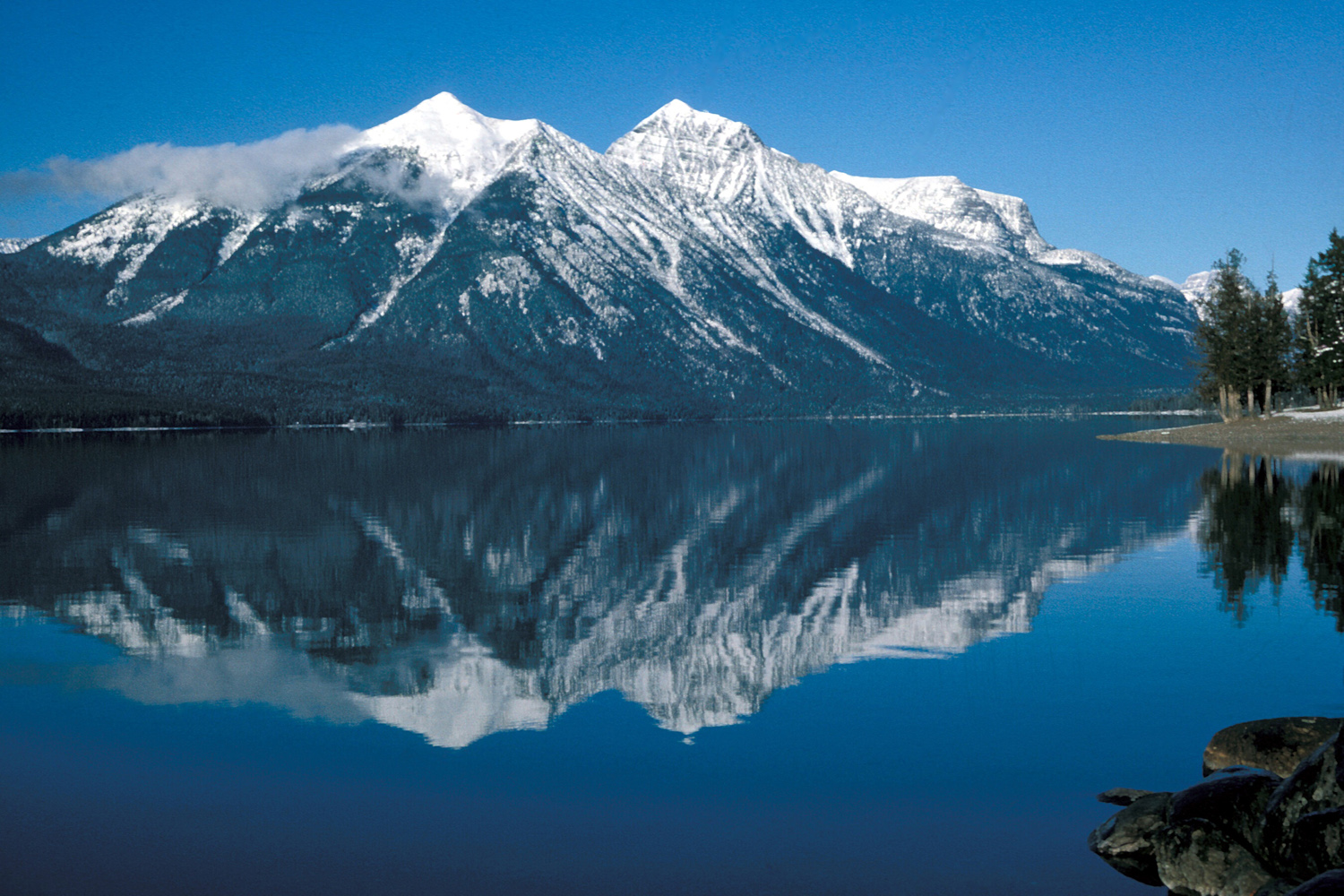
Melting glaciers in Glacier National Park as a poster child for the claim “white man brought climate change”. But just how old are those glaciers?

Glacier National Park|Photo Credit Wiki Media Commons
Glacier National Park | Photo Credit Wiki Media Commons
Melting glaciers ranks near the top with the polar bears as a symbol used by the climate cult to “prove” global warming, man-made of course. The hyperbole over melting glaciers has gotten the cult in trouble on more than one occasion.
There was Al Gore’s famous assertion in An Inconvenient Truth that the snows of Mt Kilimanjaro were melting which turned out not to be caused by carbon dioxide induced warming but rather a real environmental problemdeforestation around the mountain. Then there was the IPCC claiming in their “authoritative” fourth assessment report (FAR) that the Himalayan Glaciers would be gone by 2035.  A claim that was not only false but showed just how shoddy and unscientific the IPCC and their fellow cult members truly are.
When it comes to the United States and glaciers, there is nothing more iconic than Glacier National Park, so of course the cult and all its minions latch onto the receding glaciers in GNP as “proof” of man-made global warming.
For example a recent USGS “report” on glaciers in Glacier National Park is little more than a propaganda sheet on “global climate change.” However they do make this rather cryptic and unsubstantiated claim:
While the glaciers that carved GNP’s majestic peaks were part of a glaciation that ended about 12,000 years ago, current glaciers are considered geologically new, having formed about ~7,000 thousand years ago. These glaciers grew substantially during the Little Ice Age (LIA) that began around 1400 A.D and reached their maximum size at the end of the LIA around A.D.1850.
Perhaps the most important item of note from the above statement is that there are no citations as to the studies which back up the age of the current glaciers. In the rest of the report there are citations to recent studies which predict the continuing demise of the glaciers, but when it comes to scientific studies about the age of the glaciers, there is nothing. That is alright I have some.
But before we get to that let’s take a second to dissect the above paragraph. The last ice age ended 12,000 years ago yet according to this USGS report the glaciers in Glacier National Park are not from that period, they are, they claim, 7,000 years old. Even if this statement is true there is a serious gap of time there.
Left unstated but obvious, is that for five thousand years, from 10,000 BC until 5,000 B.C. there were no glaciers in Glacier National Park. This is no small matter, although 5000 B.C. is ancient history it is not before humankind. In 5,000 B.C. the Mesopotamians were beginning to actually record history and on a more local note the so-called “native” Americans had migrated over the land bridge from Asia to North America at least 10,000 years before and recent studies show that they may have come some 25,000 years ago.
So our Native American ancestors who populated the region around Glacier National Park must have lived in a climate similar to the one we are warned of in our future. They lived in a time when there were no glaciers in Glacier National Park.  That of course is if the glaciers in Glacier National Park are really 7,000 years old, but are they?
Well perhaps some very tiny bit of the glaciers formed that long ago, even the most recent USGS report notes that “These glaciers grew substantially during the Little Ice Age (LIA) that began around 1400 A.D…” but the USGS is being modest. You see the USGS study on the Glaciers in Glacier National Park is quite extensive,
Let me give you a few excerpts from this study that speaks to the age of the glaciers in Glacier National Park.
Read entire article at Brenner Brief

February 26, 2012

Water torture springing another leak


nar·ra·tive   [nar-uh-tiv]
noun
1.a story or account of events, experiences, or the like, whether true or fictitious.


A narrative is a story, true or not. The narrative of man made global warming was always, as the lawyers might say, based on facts not yet in evidence. The creation of that evidence has been one of the greatest scams and injustices in world history. Like all good stories the man made global warming theory was always based on a fact, this being that extra CO2 introduced into the atmosphere by industrialization was causing the Earth to warm. That is a fact which few serious people deny.

 Where the story became a narrative is when proponents of "catastrophic" global warming began to seek out and embellish reality in order to make the so called problem worse than it ever really was. is, or ever will be.

Like the theory of the Chinese water torture, "a process in which water is slowly dripped onto a person's forehead, allegedly driving the restrained victim insane" the scientist, politicians, and media over the past two decades have dripped countless unproven assertions upon the psyche of mankind pushing a belief in something which is insane.

The narrative has become the foundation for the theory rather than the evidence.

Basically how this is done is that some scientific study is done showing an extreme or possible extreme reult of global warming. This narrative will take hold and be widely publicized until it becomes accepted by the public and policy makers. Later studies might disagree or even disprove the original hyped study or studies but by then the premise of the original study has become the "mainstream" and accepted narrative.

Recently yet another aspect of this narrative has begun to untangle, the Himalaya glacier drip has sprung yet another leak. The first leak happened two years ago when it was revealed that  claims by the IPCC that the Himalaya glaciers would melt by 2035 was totally fabricated. The Daily mail pulls few punches in it's explanation
The scientist behind the bogus claim in a Nobel Prize-winning UN report that Himalayan glaciers will have melted by 2035 last night admitted it was included purely to put political pressure on world leaders.

Dr Murari Lal also said he was well aware the statement, in the 2007 report by the Intergovernmental Panel on Climate Change (IPCC), did not rest on peer-reviewed scientific research.

In an interview with The Mail on Sunday, Dr Lal, the co-ordinating lead author of the report’s chapter on Asia, said: ‘It related to several countries in this region and their water sources. We thought that if we can highlight it, it will impact policy-makers and politicians and encourage them to take some concrete action.
‘It had importance for the region, so we thought we should put it in....’
This and subsequent revelations of the IPCC blatant misrepresentations, not to mention the two series of Climategate revelations should have destroyed this drag on human progress called climate science. but the torture of common sense and reason continued and continues still.

Using just the Himalaya Glacier melting meme of the Global warming narrative foisted on society as an example, lets look back at some of the drips that were used to torture ...well... the truth.

Back in 2002 the once esteemed National Geographic Magazine informed a trusting world that:
Melting Himalayan Glaciers May Doom Towns

Dozens of mountain lakes in Nepal and Bhutan are so swollen from melting glaciers that they could burst their seams in the next five years and devastate many Himalayan villages, warns a new report from the United Nations.

It's hardly news that the world's glaciers are melting—a phenomenon widely attributed to gradually rising global temperatures. But the possible consequences in terms of human deaths and loss of property have reached greater urgency in light of the findings of the new study.
There you have it back in 2002 due to global warming we were informed by reliable sources that:
Himalayas could experience intense flooding as mountain lakes overflow with water from melting glaciers and snowfields.

The lives of tens of thousands of people who live high in the mountains and in downstream communities could be at severe risk as the mud walls of the lakes collapse under the pressure of the extra water. Major loss of land and other property would aggravate poverty and hardship in the region.
They knew this and the world believed them because trusted scientist said it was so and they had the goods to back it up:
...based on three years of research involving site visits and studies of topographical maps, satellite images, and aerial photography. The scientists assessed the conditions of about 4,000 glaciers and 5,000 glacial lakes in Nepal and Bhutan.
 Yes the glaciers are melting, lives are in danger, catastrophic consequences are not five years away, the scientist told us so.

drip

In 2005 we learned from the always reliable BBC that it was even worse than was previously thought. After the flooding would come the droughts:
Himalayan glaciers 'melting fast'

The world's highest mountains hide vast glaciers. Melting glaciers in the Himalayas could lead to water shortages for hundreds of millions of people, the conservation group WWF has claimed.

In a report, the WWF says India, China and Nepal could experience floods followed by droughts in coming decades.

".... in a few decades this situation will change and the water level in rivers will decline, meaning massive eco and environmental problems for people in western China, Nepal and northern India."
So after the floods come the droughts, "massive eco and environmental problems" are in the future or as the story points out in bold quotes half way through 'Catastrophe' awaits us. And how do we know this?
a study commissioned for the WWF indicated that the temperature of the Earth could rise by two degrees Celsius above pre-industrial levels in a little over 20 years.
So it must be true and concerned individuals from the halls of power to the halls of schools around the world spread the alarm and begin implementing policies to stave off the coming 'catastrophe".

drip

In 2007 the narrative goes full orbital
Himalayan Glacier Melting Observed From Space 
The Himalaya, the "Roof of the World" source of the seven largest rivers of Asia are, like other mountain chains, suffering the effects of global warming. To assess the extent of melting of its 33 000 km2 of glaciers, scientists have been using a process they have been pioneering for some years.
Throughout the article though, there is a sense of caution, perhaps because the Journal has the word science in it's masthead rather than just being a propaganda tool for the "cause", They inform us that the "study" though confirming that which we all should "believe" has some hurdles to conquer.
 The technique is still experimental, but it has been validated in the Alps and could prove highly effective for watching over all the Himalayan glacier systems. However, the procedure for achieving a reliable estimate must overcome a number of sources of error and approximation inherent in satellite-based observations.
drip

As  pointed out earlier, these concerns did not prevent the foremost science organization in the world dealing with climate change from releasing a report that boldly stated:
Glaciers in the Himalayas are receding faster than in any other part of the world and, if the present rate continues, the likelihood of them disappearing by the year 2035 and perhaps sooner is very high if the Earth keeps warming at the current rate.

Its total area will likely shrink from the present 500,000 to 100,000 square kilometres by the year 2035
drip


As previously pointed out, this was not only not verifiable, it was a deliberate misrepresentation designed to intentionally deceive policy makers (and everyone else) "We thought that if we can highlight it, it will impact policy-makers and politicians and encourage them to take some concrete action." Knowing full well that the conclusion they were inserting into the report was not scientifically "robust",‘We knew the WWF report with the 2035 date was “grey literature” [material not published in a peer-reviewed journal].

All of this would be bad enough and indeed in of itself reason  for any thinking person to doubt the validity of anything coming from the IPCC in particular and the entire "climate change" community in general, but it is worse than that.

In the past month a new study has shown that all of these claims are not only exaggerated but simply  not true.
New sat data shows Himalayan glaciers hardly melting at all

New scientific analysis of satellite gravity measurements has shown that ice is melting from glaciers around the world much less quickly than had been thought. The new research is important as worldwide glacier melt is thought to be one of the main factors which could drive rising sea levels in future....

...In particular, it appears that glaciers in the high Asian mountain ranges - the Himalayas, the Pamir and the Tien Shan - have been losing much less ice than was previously thought. Researchers visiting the region on the ground have previously suggested that the Asian mountain ice was depleting at rates as high as 50 billion tons per year, but Wahr and his colleagues' results show losses in the area of just 4 billion tonnes annually. They give the error in this figure as plus-or-minus 20 billion tons, so this much the same as saying that the Asian mountain ice - the planet's "third pole" - was unaffected.
What? There is not going to be any flooding? Or droughts? Hundreds of thousands of people are not being jeopardized by catastrophic "eco and environmental problems" ? Well it would seem not based on current science.

So what of those previous studies trumpeted over the past decade? They were either totally wrong or to be more accurate they were incomplete but "sold" as if they were authoritative, Why? Well because when a narrative is the foundation for science rather than facts it becomes totally acceptable to  "rush to judgement" with "facts that are not yet in evidence." The narrative must be maintained because once the narrative is questioned the foundation begins to crumble and when billions of dollars are at stake this is not an acceptable outcome for those with a vested interest.

For years to come people who do not keep up with the "shape shifting" nature of the climate change narrative will continue to believe that the Himalaya glaciers are melting away due to global warming when in fact there is now absolutely no scientific evidence to support it, But there once was, the National Geographic, the BBC, The WWF, the IPCC and a host of "scientist" said so. So it must be true...right?

The rest of this particular article is interesting in that it ties this development to the even bigger climate change scare tactic of rising sea levels and explains how they are corrupted science as well.

The IPCC says that "no long-term acceleration of sea level has been identified using 20th-century data alone" but says that if limited 19th-century data is included then the rate of sea level rise can be shown to have started speeding up in 1870. However, recent research on tide-gauge readings indicates that the rate of rise is steady at the 20th-century rate of 1.7mm annually, or may even be decreasing slightly.

Since the early 1990s satellites have been used to monitor global sea levels. In contrast to tide gauges they have shown a steady, unchanged rate of rise of 3.2mm annually. This line is often added to the tide-gauge record up to 1990, showing a sharp upward curve.

If the rate of sea level rise remains steady at a few millimetres annually, there is probably no need to be much concerned about it: it would take centuries to rise by amounts comparable to the variations (tide, floods etc) which occur all the time anyway....
This may seem like mundane scientific squabbling over details, but it is far more than that. An entire generation has been subjected to this Chinese water torture. Drip,drip,drip  these tales of impending doom have been inflicted upon us, not by some cartoon villains but rather inflicted upon us and our children by peoples and institutions that we ought to be able to trust.

 But we can not. Not because of some conspericy theory but by their own admission of their own hyperbole, incompetence and worst of all purposeful fraud.

 They have shown themselves to be worthy of only scorn and the judgment of history on those who have perpetrated this fraud on mankind will and should be one of absolute disdain..

July 26, 2011

"...getting back to normal.”


Not being a scientist, or truth be told not even a great intellect, much of my education and knowledge is based upon common sense observation and instruction. When it comes to the topic of global warming aka "climate change" my skepticism has been a product of simple common sense rather than any great intellectual mastery of the subject. Early on in my study of the narrative of global warming one of the best lessons in common sense skepticism was hammered home to me when I read this article and interview of the late Reid Bryson.

In the article he recounts this simple tale:
Bryson mentions the retreat of Alpine glaciers, common grist for current headlines. “What do they find when the ice sheets retreat, in the Alps?”

We recall the two-year-old report saying a mature forest and agricultural water-management structures had been discovered emerging from the ice, seeing sunlight for the first time in thousands of years. Bryson interrupts excitedly.

“A silver mine! The guys had stacked up their tools because they were going to be back the next spring to mine more silver, only the snow never went,” he says. “There used to be less ice than now. It’s just getting back to normal.”
The implications of this observation on the entire theory of man made global warming are immense if only common sense had anything to do with the discussion at all, but alas it does not. Everyone wants to be an intellectual but it is common sense which is discrediting the narrative more than scientific papers.

So it was with some interest and another "whoa Betsy" moment that I read this post over at the Inconvenient Skeptic site earlier. The entire post is well worth the read, the main focus being on a recent trip to Glacier National Park by the author and some pictures of glaciers he took comparing them to earlier pictures from the recent past. The pictures seem to indicate that the glaciers may be making a comeback despite the doomsday projections of warmist. But what really caught my attention was this comment:
One question I wanted to ask the rangers there was “How old are the glaciers there?” There is a very common misconception that the glaciers there exist from the last ice age. That of course is wrong, but I was curious what they would say. The answer I got from the ranger was 3,000 years old. That is a reasonable answer, but one I find unlikely. Glaciers farther north and higher than Glacier National Park are typically much younger than that. I have never been able to find an ice core from glacier national park that would answer this question. Certainly it is possible that some of the glaciers are 3,000 years old, but I suspect that 900-1,000 is more accurate. I have yet to find enough accurate information to answer this though.

This comment blew me away, I admit that it had never occurred to me to question how old these or any other glaciers might be. As the author notes if I had ever thought about it I would have assumed that these and most glaciers date back to the last ice age. However even taking the rangers answer at face value this would put the glaciers well within a human historic time frame rather than some prehistoric event explained away by planetary orbits or primordial volcanic eruptions. To put it simply during the rise of the Roman Empire (Roman Warming Period) there were no glaciers in Glacier National Park.

Being enthralled by this I did a quick search to see if there was any scientific literature about the age of the glaciers in Glacier National Park. It took me all of two clicks of my handy mouse to find this paper from the U.S. Geological Survey titled

Glaciers of North America—
GLACIERS OF THE CONTERMINOUS UNITED STATES
GLACIERS OF THE WESTERN UNITED STATES
By ROBERT M. KRIMMEL

With a section on GLACIER RETREAT IN GLACIER NATIONAL PARK, MONTANA
By CARL H. KEY, DANIEL B. FAGRE, and RICHARD K. MENICKE

There is a very detailed account of previous studies of the glaciers in the park and the retreat of the glaciers over the past 150 years.
All named glaciers within the park are mountain glaciers that have retreated dramatically since the middle 19th-century end of the Little Ice Age in the Western United States.
Since the end of the Little Ice Age, small glaciers that were insulated or protected by the surrounding topography tended to lose proportionately less area to recession. Commonly, they changed rapidly to a stagnant condition. The larger glaciers generally experienced proportionately greater and more rapid reduction in area than the smaller glaciers, but they still continue to be active (fig. 25A). During the last 150 years, the larger glaciers,which had descended below cirque margins into subalpine terrain, would have had the greatest exposure to solar radiation and warmer temperatures for longer periods of time. As these large glaciers retreated and shrank in area, they regularly separated into discrete ice masses.
As you can plainly see the glacier melt in the park is not a recent development and easily preceding the advent of the internal combustion engine.

On the subject of time lines I found this comment to be quite interesting:
In all cases, it must be noted that, although initially the distance of retreat was small, substantial thinning—and therefore appreciable volume loss—likely took place. This
preceded the eventual retreat of termini. From 1910 onward, recession rates increased (Dyson, 1948; Johnson, 1980). This corresponded to a period of increased scientific interest in Glacier National Park glaciers, and many of the early investigators bore witness to dramatic instances of glacier recession. Following the middle 1940’s, recession rates decreased, and glaciers became increasingly confined within cirque margins
So it a pretty well established fact that the Glaciers in Glacier National Park have been receding for over 150 years and not some cataclysmic current event except in the minds of the ALGORES of the world. Also note the timeline of this recession "Following the middle 1940’s, recession rates decreased. " If increased global temperatures as the result of AGW is the reason for the recession, why then has recession decresased at the point in time when man's contribution to increased atmospheric CO2 most dramatically increased?

We will ignore this and get back to the original question,how old are the glaciers in Glacier National Park? (My emphasis)
Because of the apparently long and relatively stable climatic interval preceding the Little Ice Age, it is believed that most of the glacier ice remaining in Glacier National Park was formed during the Little Ice Age and is not a relic from the Pleistocene Epoch...
Interesting isn't it that they refer to the time prior to the formation of glaciers in the park as "relatively stable climatic interval " or as Reid Bryson might have said "back when it was normal."

Further we learn
The Little Ice Age comprised a several-hundred-year-long cool period (about 1400 to about 1850 in North America), during which Glacier National Park glaciers formed and expanded
So it seems that perhaps our ranger may be off a bit in his information. According to this paper the glaciers in the park are a product of the Little Ice Age. If this is indeed  true and I have little reason to question the authors, they being scientist and all, when Columbus sailed the ocean blue in 1492 the glaciers in Glacier National Park were just babies if they were there at all.

So for all the hysteria over melting glaciers in Glacier National Park, the facts seems to be that they are a product of an unstable and hostile period of "climate change" which disrupted the normal optimum which we ought to enjoy while we have it.

So as I have previously observed:
If for example as was proven before the AGW nonsense took hold of science, the Medieval Warming Period was warmer than today, as was accepted until these guys got their hands and agenda on the data and the process, why did we not have runaway warming? Where was the enhanced greenhouse effect while they were making wine in England?
Or when there were no glaciers in Glacier National Park.

March 7, 2010

And Real Scientist Say.....?


Global Warming has no impact on Himalayas claims Wadia Director

FROM-Hindustan Times

Senior scientists at the Wadia Institute of Himalayan Geology (WITG) has rejected the Global Warming Theory and told that the Himalayas are quite safer zone on earth, where Global Warming has no role in controlling the conditions.

In an exclusive chat with HT, Director WIHG Dr AK Dubey has said that the conditions of Himalayas are controlled by the winter snowfall rather than external factors like much hyped Global Warming. He told that for a concrete result, at least 30 years of continuous research with steady outcome is needed to confirm the actual impact.

"According to a data for over 140 years available with a British weather observatory situated in Mukteswar (2311m) in Almora has actually revealed that temperature in that region witnessed a dip of .4 degrees," he said.

Since 1991, the institute is monitoring the Himalayas extensively with focusing the glacial studies and last twenty year data has never witnessed a continual retreat. Sometimes, the recession rates have gone up but on an average the rate is very much safer, he added.

Whatever predictions about Himalayas are being made are based on short-term studies conducted on glaciers, which have no comparison with Himalayan Glaciers, he told. "Our glaciers are giant high altitude glaciers above 4000m altitude with a permanent temperature below 20 degrees Celsius. And has no comparison with the Alps Glaciers or Alaskan Glacier which are at sea level," he said.

Dr. DP Dobhal, eminent glaciologist added that however there is a change in climate in terms of shrinking of winter period but still a lot is dependent upon the snowfall occurs. Currently the rate of recession is in between 16-20 meters a year for glacial retreat in Himalayas, whereas 30 percent of the glaciers are more than 10km in length, he said.

**********

Please note this comment:

"Our glaciers are giant high altitude glaciers above 4000m altitude with a permanent temperature below 20 degrees Celsius"

Do you think the same factors may apply to places like...I don't know let's say Antarctica where the average summer temperatures range between -15 to -35 C


More...


February 14, 2010

The Martian Solution


FROM-American Thinker

It's not too late to get the Himalayan glacier melt back on schedule

by Steve Boler

Barak Obama could do much to help his friends at the IPCC save face for the recent revelation that the Himalayan glaciers will not be melting by 2035 as predicted. But he has to work fast to correct what the Associated Press categorizes as an "embarrassing but small" error.

Scientists at the University of Innsbruck in Austria revealed that it would take a temperature rise of 12 degrees C to melt these glaciers. By multiplying the paltry warming effects of CO2 by over 500%, the IPCC's unimpeachable (?) CO2 warming formula forecasts an increase of 3.75 degrees for every doubling of the concentration of this dreaded gas. Burning all known earthly deposits of fossil fuels will only result in roughly 3 more doublings. (from 400 ppm to 800, then from 800 to 1600 and finally from 1600 to 3200.) Three doublings, utilizing the IPCC formula, results in a predicted global temperature increase of 11.25 degrees, short of the 12 degree threshold for complete Himalayan meltdown.

Fortunately, our celestial neighbor has polar ice caps almost entirely composed of CO2. President Obama should reinstate the NASA Mars program; send up a task force to do an Avatar on the Martians and confiscate for earth enough of a resource that, once released into our atmosphere, will get Himalayan glacier melt back on the IPCC timetable.


More...


February 6, 2010

The great global warming collapse


FROM-The Globe and Mail

Margaret Wente

As the science scandals keep coming, the air has gone out of the climate-change movement

In 2007, the most comprehensive report to date on global warming, issued by the respected United Nations Intergovernmental Panel on Climate Change, made a shocking claim: The Himalayan glaciers could melt away as soon as 2035.

These glaciers provide the headwaters for Asia's nine largest rivers and lifelines for the more than one billion people who live downstream. Melting ice and snow would create mass flooding, followed by mass drought. The glacier story was reported around the world. Last December, a spokesman for the World Wildlife Fund, an environmental pressure group, warned, “The deal reached at Copenhagen will have huge ramifications for the lives of hundreds of millions of people who are already highly vulnerable due to widespread poverty.” To dramatize their country's plight, Nepal's top politicians strapped on oxygen tanks and held a cabinet meeting on Mount Everest.

But the claim was rubbish, and the world's top glaciologists knew it. It was based not on rigorously peer-reviewed science but on an anecdotal report by the WWF itself. When its background came to light on the eve of Copenhagen, Rajendra Pachauri, the head of the IPCC, shrugged it off. But now, even leading scientists and environmental groups admit the IPCC is facing a crisis of credibility that makes the Climategate affair look like small change.....
Read entire article here


More...


February 5, 2010

Credibility is what’s really melting


FROM-MACLEANS CA
by Mark Steyn

Take the disappearing Himalayan glaciers.Turns out that ‘research’ was idle speculation.


Whenever I write about “climate change,” a week or two later there’s a flurry of letters whose general line is: la-la-la can’t hear you. Dan Gajewski of Ottawa provided a typical example in our Dec. 28 issue. I’d written about the East Anglia Climatic Research Unit’s efforts to “hide the decline,” and mentioned that Phil Jones, their head honcho, had now conceded what I’d been saying for years—that there has been no “global warming” since 1997. Tim Flannery, Australia’s numero uno warm-monger, subsequently confirmed this on Oz TV, although he never had before.

In response, Mr. Gajewski wrote to our Letters page: “Steyn’s column on climate change was one-sided, juvenile and inarticulate.”

Yes, yes, but what Steyn column isn’t? That’s just business as usual. A more pertinent question is: was any of it, you know, wrong?

Well, our reader didn’t want to get hung on footling details: “The disproportionate evidence supports the anthropogenic cause of global warming,” he concluded.

Yes, but how did the “evidence” get to be quite so “disproportionate”?

Take the Himalayan glaciers. They’re supposed to be entirely melted by 2035. The evidence is totally disproportionate, man. No wonder professor Orville Schell of Berkeley is so upset about it: “Lately, I’ve been studying the climate-change-induced melting of glaciers in the Greater Himalaya,” he wrote. “Understanding the cascading effects of the slow-motion downsizing of one of the planet’s most magnificent landforms has, to put it politely, left me dispirited.” I’ll say. Professor Schell continued: “If you focus on those Himalayan highlands, a deep sense of loss creeps over you—the kind that comes from contemplating the possible end of something once imagined as immovable, immutable, eternal . . .”

Poor chap. Still, you can’t blame him for being in the slough of despond. That magnificent landform is melting before his eyes like the illustration of the dripping ice cream cone that accompanied his eulogy for the fast vanishing glaciers. Everyone knows they’re gonna be gone in a generation. “The glaciers on the Himalayas are retreating,” said Lord Stern, former chief economist of the World Bank and author of the single most influential document on global warming. “We’re facing the risk of extreme runoff, with water running straight into the Bay of Bengal and taking a lot of topsoil with it. A few hundred square miles of the Himalayas are the source for all the major rivers of Asia—the Ganges, the Yellow River, the Yangtze—where three billion people live. That’s almost half the world’s population.” And NASA agrees, and so does the UN Environment Programme, the Intergovernmental Panel on Climate Change, and the World Wildlife Fund, and the respected magazine the New Scientist. The evidence is, like, way disproportionate.

But where did all these experts get the data from? Well, NASA’s assertion that Himalayan glaciers “may disappear altogether” by 2030 rests on one footnote, citing the IPCC’s Fourth Assessment Report from 2007.

In fact, the Fourth Assessment Report suggests 2035 as the likely arrival of Armageddon, but what’s half a decade between scaremongers? They rate the likelihood of the glaciers disappearing as “very high”—i.e., more than 90 per cent. And the IPCC was awarded the Nobel Peace Prize for that report, so it must be kosher, right? Well, yes, its Himalayan claims rest on a 2005 World Wildlife Fund report called “An Overview of Glaciers.”

WWF? Aren’t they something to do with pandas and the Duke of Edinburgh? True. But they wouldn’t be saying this stuff if they hadn’t got the science nailed down, would they? The WWF report relies on an article published in the New Scientist in 1999 by Fred Pearce.

That’s it? One article from 12 years ago in a pop-science mag? Oh, but don’t worry, back in 1999 Fred did a quickie telephone interview with a chap called Syed Hasnain of Jawaharlal Nehru University in Delhi. And this Syed Hasnain cove presumably knows a thing or two about glaciers.

Well, yes. But he now says he was just idly “speculating”; he didn’t do any research or anything like that.

But so what? His musings were wafted upwards through the New Scientist to the World Wildlife Fund to the IPCC to a global fait accompli: the glaciers are disappearing. Everyone knows that. You’re not a denier, are you? India’s environment minister, Jairam Ramesh, says there was not “an iota of scientific evidence” to support the 2035 claim. Yet that proved no obstacle to its progress through the alarmist establishment. Dr. Murari Lal, the “scientist” who included the 2035 glacier apocalypse in the IPCC report, told Britain’s Mail on Sunday that he knew it wasn’t based on “peer-reviewed science” but “we thought we should put it in”—for political reasons.

I wonder what else is in that Nobel Peace Prize-winning report for no other reason than “we thought we should put it in.” Don’t forget, the IPCC’s sole source was the cuddly panda crowd over at the World Wildlife Fund. Donna Laframboise, a colleague of mine from the glory days at the National Post, did a simple search of the online version of the IPCC report and discovered dozens of citations of the WWF. It’s the sole source cited for doomsday predictions of glacier melt not only in the Himalayas but also the Andes and the Alps, as well as for a multitude of other topics, from coral reefs to avalanches. This would appear to be in breach of the IPCC’s own guidelines. The WWF is a pressure group. They’re not scientists. They’re not even numerate: one of their more startling glacier-melt claims derives entirely from an arithmetical miscalculation arising from a typing error.

Go back to that Berkeley professor mooning over the loss of that “magnificent landform” he once thought “immutable, eternal.” From his prose style, one might easily assume Orville Schell was a professor of creative writing or some such. In fact, he’s the former dean of the Graduate School of Journalism. Yet, for all the limpid fragrance of his poignant obsequies, professor Schell would seem to lack the one indispensable quality of a journalist: basic curiosity—the same curiosity that led Miss Laframboise to see just how much of the “science” in the IPCC report rested on the assertions of the panda-cuddlers. So instead, professor Schell bid a teary farewell to his beloved landform, even though the glaciers of the western Himalayas are, in fact, increasing.

Likewise, in the years since Syed Hasnain “speculated” about glacial melt, the BBC, the CBC, CNN and thousands of newspapers around the world have hired specialist Environmental Correspondents on lavish salaries. Yet not one of them gave any serious examination to the claims of the IPCC report, or the “science” on which they rested. And, now that the IPCC and WWF have conceded their error, the eco-correspondents are allowing NATO and other dupes to vacuum their records without having to explain why they fell for the scam.

V. K. Raina, of the Geological Survey of India, produced a special report demonstrating that the run-for-your-life-the-glaciers-are-melting IPCC scenario was utterly false. For his pains, Dr. Rajendra Pachauri, the self-aggrandizing old bruiser and former railroad engineer who serves as head honcho of the IPCC jet set, dismissed Mr. Raina’s research as “voodoo science.” He’s now been obliged to admit the voodoo was all on his side. But don’t worry. By 2008, Syed Hasnain’s decade-old casual chit-chat over the phone to a London journalist had become “settled science,” so Dr. Pachauri’s company TERI (The Energy & Resources Institute) approached the Carnegie Corporation for a grant to research “challenges to South Asia posed by melting Himalayan glaciers,” and was rewarded with half a million bucks. Which they promptly used to hire Syed Hasnain. In other words, professor Hasnain has landed a cushy gig researching solutions to an entirely non-existent global crisis he accidentally invented over a 15-minute phone call 10 years earlier. As they say in the glacier business, ice work if you can get it.

“Climate change” is not a story of climate change, which has been a fact of life throughout our planet’s history. It is a far more contemporary story about the corruption of science and “peer review” by hucksters, opportunists and global-government control-freaks. I can see what’s in it for Dr. Pachauri and professor Hasnain, and even for the lowly Environmental Correspondent enjoying a cozy sinecure at a time of newspaper cutbacks in everything from foreign bureaus to arts coverage.

But it’s hard to see what’s in it for Dan Gajewski of Ottawa and the millions of kindred spirits who’ve signed on to this racket and are determined to stick with it. Don’t be the last off a collapsing bandwagon. The scientific “consensus” is melting way faster than the glaciers.


More...


January 19, 2010

"Notable Quotes"


"The IPCC had dumped our report that the glaciers have not retreated abnormally. Now, with the truth out in open, the IPCC should dump its own report which was based on mere speculation,"

source

V K Raina

More...


January 17, 2010

World misled over Himalayan glacier meltdown


FROM- Sunday Times of London

A WARNING that climate change will melt most of the Himalayan glaciers by 2035 is likely to be retracted after a series of scientific blunders by the United Nations body that issued it.

Two years ago the Intergovernmental Panel on Climate Change (IPCC) issued a benchmark report that was claimed to incorporate the latest and most detailed research into the impact of global warming. A central claim was the world's glaciers were melting so fast that those in the Himalayas could vanish by 2035.

In the past few days the scientists behind the warning have admitted that it was based on a news story in the New Scientist, a popular science journal, published eight years before the IPCC's 2007 report.

It has also emerged that the New Scientist report was itself based on a short telephone interview with Syed Hasnain, a little-known Indian scientist then based at Jawaharlal Nehru University in Delhi.

Hasnain has since admitted that the claim was "speculation" and was not supported by any formal research. If confirmed it would be one of the most serious failures yet seen in climate research. The IPCC was set up precisely to ensure that world leaders had the best possible scientific advice on climate change.

Professor Murari Lal, who oversaw the chapter on glaciers in the IPCC report, said he would recommend that the claim about glaciers be dropped: "If Hasnain says officially that he never asserted this, or that it is a wrong presumption, than I will recommend that the assertion about Himalayan glaciers be removed from future IPCC assessments."

The IPCC's reliance on Hasnain's 1999 interview has been highlighted by Fred Pearce, the journalist who carried out the original interview for the New Scientist. Pearce said he rang Hasnain in India in 1999 after spotting his claims in an Indian magazine. Pearce said: "Hasnain told me then that he was bringing a report containing those numbers to Britain. The report had not been peer reviewed or formally published in a scientific journal and it had no formal status so I reported his work on that basis.

"Since then I have obtained a copy and it does not say what Hasnain said. In other words it does not mention 2035 as a date by which any Himalayan glaciers will melt. However, he did make clear that his comments related only to part of the Himalayan glaciers. not the whole massif."

The New Scientist report was apparently forgotten until 2005 when WWF cited it in a report called An Overview of Glaciers, Glacier Retreat, and Subsequent Impacts in Nepal, India and China. The report credited Hasnain's 1999 interview with the New Scientist. But it was a campaigning report rather than an academic paper so it was not subjected to any formal scientific review. Despite this it rapidly became a key source for the IPCC when Lal and his colleagues came to write the section on the Himalayas.

When finally published, the IPCC report did give its source as the WWF study but went further, suggesting the likelihood of the glaciers melting was "very high". The IPCC defines this as having a probability of greater than 90%.

The report read: "Glaciers in the Himalaya are receding faster than in any other part of the world and, if the present rate continues, the likelihood of them disappearing by the year 2035 and perhaps sooner is very high if the Earth keeps warming at the current rate."

However, glaciologists find such figures inherently ludicrous, pointing out that most Himalayan glaciers are hundreds of feet thick and could not melt fast enough to vanish by 2035 unless there was a huge global temperature rise. The maximum rate of decline in thickness seen in glaciers at the moment is 2-3 feet a year and most are far lower.

Professor Julian Dowdeswell, director of the Scott Polar Research Institute at Cambridge University, said: "Even a small glacier such as the Dokriani glacier is up to 120 metres [394ft] thick. A big one would be several hundred metres thick and tens of kilometres long. The average is 300 metres thick so to melt one even at 5 metres a year would take 60 years. That is a lot faster than anything we are seeing now so the idea of losing it all by 2035 is unrealistically high.”
Some scientists have questioned how the IPCC could have allowed such a mistake into print. Perhaps the most likely reason was lack of expertise. Lal himself admits he knows little about glaciers. "I am not an expert on glaciers.and I have not visited the region so I have to rely on credible published research. The comments in the WWF report were made by a respected Indian scientist and it was reasonable to assume he knew what he was talking about," he said.

Rajendra Pachauri, the IPCC chairman, has previously dismissed criticism of the Himalayas claim as "voodoo science".

Last week the IPCC refused to comment so it has yet to explain how someone who admits to little expertise on glaciers was overseeing such a report. Perhaps its one consolation is that the blunder was spotted by climate scientists who quickly made it public.

The lead role in that process was played by Graham Cogley, a geographer from Trent University in Ontario, Canada, who had long been unhappy with the IPCC's finding.

He traced the IPCC claim back to the New Scientist and then contacted Pearce. Pearce then re-interviewed Hasnain, who confirmed that his 1999 comments had been "speculative", and published the update in the New Scientist.

Cogley said: "The reality, that the glaciers are wasting away, is bad enough. But they are not wasting away at the rate suggested by this speculative remark and the IPCC report. The problem is that nobody who studied this material bothered chasing the trail back to the original point when the claim first arose. It is ultimately a trail that leads back to a magazine article and that is not the sort of thing you want to end up in an IPCC report.”

Pearce said the IPCC's reliance on the WWF was "immensely lazy" and the organisation need to explain itself or back up its prediction with another scientific source. Hasnain could not be reached for comment.

The revelation is the latest crack to appear in the scientific concensus over climate change. It follows the so-called climate-gate scandal, where British scientists apparently tried to prevent other researchers from accessing key date. Last week another row broke out when the Met Office criticised suggestions that sea levels were likely to rise 1.9m by 2100, suggesting much lower increases were likely.

*********************

All emphasis are mine. Please note that all comments regarding the melting of glaciers would also apply to glaciers and ice sheets in Greenland and Antarctica. If the melting of the glaciers in the Himalayas is so small how much less is the melting of ice in Greenland and Antarctica where it is far colder and with less sun during the year. Common sense please.

We also have the lead author for the IPCC report on glaciers who admits "I am not an expert on glaciers.and I have not visited the region so I have to rely on credible published research. The comments in the WWF report were made by a respected Indian scientist and it was reasonable to assume he knew what he was talking about,"

Also note that like much of the "global warming" scare mongering it is led by extreme environmental groups such as the WWF, which the IPCC took as a "scientific source" for a report from which global ecconomic policies are being enacted. Not to mention scaring little kids with their "voodoo science"

More...


December 28, 2009

Global warming activists ignore the science they claim to support


FROM-Kitsap Peninsula Business Journal

Todd Myers

When discussing global warming, one phrase recurs: “scientific consensus.” Environmental activists often cite “science” when arguing for far-reaching and costly responses to global warming. Ironically, those activists ignore the findings of that same science. The potential impacts they cite are based not on science but on speculation which contradicts the actual science.

One activist claimed that, “In the lifetime of a child born today, sea levels could rise three to six feet.” The scientific consensus says this is nonsense. Using the science from the UN’s Intergovernmental Panel on Climate Change (IPCC), University of Washington scientists found the most likely sea level rise for the next century is about 13 inches, with the high of 50 inches called “very unlikely.” Understand also, sea levels rose about one foot during the last 150 years.

When it comes to sea level science, environmental activists ignore the findings they pretend to support. The same is true with recent storms. Many people, from environmental activists to the Governor, claim that recent storms, like those that caused floods in Centralia, are evidence of global warming. Top local climatologists, however, disagree.

University of Washington atmospheric scientist Cliff Mass says the link between climate change and recent storms is false. He notes that “there is no strong evidence for these claims,” and that “initial simulations of future Northwest climate do not suggest heavier rain events.”

Activists seize upon weather headlines in the hope that the public will believe they are linked to climate change, even when they are not. Recent wildfires are also cited as evidence of climate change. The National Wildlife Federation claimed that “Warmer temperatures are also to blame for the invasion of mountain pine beetles, which have already decimated over 32 million acres of forest in Washington and British Columbia.”

Forestry scientists say the primary cause of insect infestations is that too many trees are fighting for too few nutrients and water. In many Washington forests there are many more trees per acre than hundreds of years ago. Stressed trees cannot fight off natural infestations that were manageable for centuries. While working at the State Department of Natural Resources, I spoke with many foresters and entomologists who demonstrated this very process.

Until recently, the environmental community made this very argument. Arguing for a “natural” policy of letting forest fires burn, the Northwest Ecosystem Alliance said in 2001 that “Because we have vigorously enforced a no-burn policy in these forests, many have become clogged with thick clusters of trees that could easily explode into the monstrous conflagrations…” They have since changed their tune, not based on the science, but on politics.

Warmer temperatures can increase infestation, but ignoring the role of overstocked forests, and opposing the thinning necessary to help those forests recover, demonstrates a commitment to science only when it is convenient.

The threat to polar bears is another claim trotted out in a fact-free way. I spent a week in Barrow, Alaska one November, braving 30 degree below zero temperatures to see these truly magnificent creatures. I have a strong affinity for them. But we must not ignore the facts. Polar bear populations are higher today than during the last forty years. Many more bears are killed by hunters each year than by climate change. The belief that polar bears are drowning is based more on the cartoon segment of Al Gore’s movie than on the reality of these notoriously strong-swimming animals.

One final claim is that climate change will have a dramatic impact on our mountain snowpack. Scientists have repeatedly rebutted the claims made by climate alarmists. Snowpack has actually increased since 1980, a period when temperatures were increasing.

U.W. scientist Mark Stoelinga argues that increasing temperatures may impact snowpack, but that many other factors are involved. He notes that in recent decades, “We can’t see the global-warming signature in terms of a decline in snowpack.” Claims that, in the words of one environmental activist, “nearly 60 percent of the Cascade snowpack could be lost,” are political, not scientific.

There is a real risk from the increase in carbon-dioxide in the atmosphere. But a crisis mentality that relies more on fear than science is the surest path to costly solutions that fail to solve the real problem.

Todd Myers is environmental director at Washington Policy Center, a non-partisan independent policy research organization in Seattle and Olympia

More...


August 23, 2009

Going global loco local


I was reading this article from Reuters- The spectre of climate change in Kashmir and just had to laugh. The article is obviously about climate change in Kashmir, hence the title. It is full of your typical doom and gloom :


A report on ‘Climate Change in Kashmir’ by ActionAid, an international anti-poverty agency, says the Pampore-Khrew belt, famous for its saffron production, has been witnessing an unusual phenomenon over the last two decades — receiving the least snowfall in Kashmir....

.....Romshoo says there are a number of indicators of climate change discernible in the Kashmir valley.

“Glaciers are receding, scanty and erratic snow fall, change of growing season, shifting of vegetation from lower to higher altitudes, shrinking/loss of wetlands, etc,” he said.

The government official does try to explain reality:


Enviroment Minister Jairam Ramesh says there is no conclusive scientific evidence that climate change is causing glaciers to recede. Ramesh says some glaciers like the Siachen are advancing and there needs to be more study done on this subject.

But the activist will have none of it. Not only do they attribute these events to man made climate change, they have identified the specific cause:

The report also said locals attributed this phenomenon to industrial units which have come up in the area since 1982.

Well I guess that is somewhat reasonable right? Increased industrialization in the area has caused climate change, I guess it could be argued that soot and such would cause a local affect on glaciers etc. But that is not what they mean at all they are far more specific:


The ActionAid report also mentions the movement of heavy military vehicles as one of the reasons for excess pollution in the Valley.

It says convoys and heavy military vehicles produce a high level of greenhouse gases and are out of the purview of the law enforcing agencies in pollution control.

Can the government do something about the reduction of greenhouse gases in the Valley? Will education and awareness among locals and tourists help slow climate change?

So the report being cited in this Reuter's story, despite the environmental minister's caution, represents that greenhouse gasses from military convoys are melting glaciers. That somehow harmless carbon dioxide is being spewed from trucks into the local environment and is reeking havoc on the local ecosystem.

This is one of the problems with the entire AGW mania. The idea that greenhouse gasses are a pollutant and an increase would cause local warming is not only believed but promoted through the media. This is just one example of the absurdity that this movement has taken us but no more absurd than an entire generation being taught that using mercury laden light bulbs is going to save the polar bears.

More...


August 9, 2009

"To our surprise.."


FROM-The Hindu
'Weather variations, not global warming cause glacier melt'


New Delhi (PTI): Himalayan glaciers, including the world's highest battlefield Siachen, are melting due to variations in weather and not because of global warming, Jammu University scientists have claimed.

"The field studies from other glaciers in India also corroborate the fact that inter and intra-annual variations in weather parameters have more impact on the glaciers of northwest Himalayas, rather than any impact due to global warming," they said.

Geologists R K Ganjoo and M N Koul of Jammu University's Regional Centre for Field Operations and Research of Himalayan Glaciology visited the Siachen glacier to record changes in its snout last summer.

"To our surprise, the Siachen glacier valley does not preserve evidences of glaciation older than mid-Holocene, suggesting that the glacier must have advanced and retreated simultaneously several times in the geological past, resulting in complete obliteration and modification of older evidences," they said reporting their findings in 'Current Science'.

Ganjoo and Koul dubbed as "hype" some earlier studies which suggested that the Himalayan glaciers were melting fast and caused serious damage to the Himalayan ecosystem.

There is sufficient field and meteorological evidence from the other side of Karakoram mountains that corroborate the fact that glaciers in this part of the world are not affected by global warming, they said.

"Overwhelming field geomorphological evidences suggest poor response of the Siachen glacier to global warming. The snout of the Siachen glacier of 2008 has retreated by about 8-10 metres since 1995, making an average retreat of 0.6 metre per year," the scientists said.

Ganjoo said that the east part of the Siachen glacier showed faster withdrawal of the snout that is essentially due to ice-calving, a phenomenon that holds true for almost all major glaciers in the Himalayas and occurs irrespective of global warming.

The west part of the Siachen has reduced due to the action of melting water released from the retreated tributary glacier, he said.

Ganjoo contended the Siachen glacier shows hardly any retreat in its middle part and thus defies the "hype" of rapid melting.

More...