Pages

Showing posts with label singer. Show all posts

January 14, 2011

STOP THE PRESSES !

Sanity in the Main Stream Media


FROM-OC Register

Editorial: Reasons to cool it on global warming

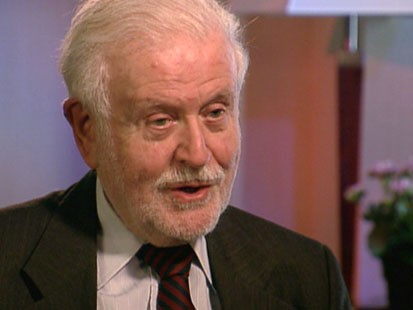
A man perhaps as responsible as anyone for debunking global warming hysteria was in town last week to speak to the curious and the converted at Chapman University. Dr. Fred Singer also spoke with us about the state of global warming.

Dr. Singer, chairman of the Science and Environmental Policy Project and professor emeritus of environmental sciences at the University of Virginia, concedes that global warming alarmists persist in their efforts to control our lives, fortunes and economies, but he notes that opposition from scientists and others like him have significantly impeded that cause.

Congress and the White House have, at least for now, abandoned plans to adopt a cap-and-trade regulatory scheme that would drive up energy prices and penalize emitters of carbon dioxide and other so-called greenhouse gases. House Republicans have introduced several bills to prevent the Environmental Protection Agency from doing administratively what Congress couldn't muster enough votes to do, curtail carbon emissions, also at great economic harm. When the new Congress convened last week, the House killed the committee devoted solely to climate change and energy issues.

Back-to-back annual international climate conferences resulted in no binding agreements among the attending 190-plus nations to implement carbon trading, carbon taxing or wealth redistribution, all foundational to alarmists' plans to wean the world from fossil fuels to combat global warming.

Virginia Attorney General Ken Cuccinelli is in court to force release of documents at the University of Virginia to determine whether a fraud investigation is warranted into tax-funded climate research conducted by global warming proponent Michael Mann. The private American Tradition Institute Environmental Law Center filed a freedom of information request last week seeking similar records concerning Mr. Mann, a leading proponent of global warming theory who now is at Pennsylvania State University.

The new chairman of the House Science and Technology Committee wants to investigate "the quality of climate science." Meanwhile, public sentiment has turned against alarmists as the more immediate press of economic issues have outweighed questionable claims of climate catastrophe predicted for decades in the future.

Dr. Singer contends the science always has been on the side of skeptics. We tend to agree. On close inspection, the much-touted "consensus" that global warming is a manmade threat never was true. Such matters in the scientific community are difficult to document, other than anecdotally. But thousands of scientists, including climatologists, meteorologists and researchers, even some formerly affiliated with the U.N.'s own climate-change panel, have voiced their qualms and complaints with warmist orthodoxy.

Dr. Singer estimated "the number of skeptical qualified scientists has been growing steadily." He estimates "it is about 40 percent now."

Climate computer models that forecast frightening temperature increases over the next century "basically, are unreliable," Dr. Singer said. Nontoxic CO2 is not a pollutant and, contrary to alarmists' claims, is beneficial as a natural plant food. "One of the best things to do is put more CO2 into the atmosphere," he suggested with a smile.

Dr. Singer contends the fanatical drive to subsidize so-called renewable energy sources will only drive up conventional energy prices, while some people will purchase faddish alternative energy devices that will be less reliable and still more expensive, even after their subsidies. Atmospheric temperatures will be unaffected, but special interests' pockets will be lined. All things considered, it's prudent to cool it on the global warming front.

December 27, 2010

CARB's Carbon Capers

FROM-The American Thinker


S. Fred Singer

In a nearly unanimous vote, the California Air Resources Board (CARB) just approved a statewide cap-and-trade scheme to limit emissions of CO2 from six hundred major industrial plants, starting in 2012.  Proposition 23 on the California ballot, defeated in November, was an attempt to at least delay the state's Cap-and-Trade law, AB-32, until California's record unemployment eased.  However, the slanted description appearing on both the official Voter Guide and the ballot, written by then-State Attorney General Jerry Brown and his office, the well-funded "No-on-23" campaign, and some very heavy media bias, had Californians believing that Prop. 23 would thwart efforts to curb air pollution -- i.e., smog.  So Prop 23 went down in flames, threatening hundreds of thousands of jobs, and perhaps a million.

The "Cooler Heads" blog relates that the adopted regulation is more than three thousand pages long, but most of the details have yet to be worked out.  CARB rushed to meet a December 31 deadline set by the 2006 legislation that authorizes CARB to reduce the state's greenhouse gas emissions to 1990 levels by 2020.  In order to protect California business from out-of-state competition, CARB will (initially) allocate emissions credits (aka energy-rationing coupons) for free.  The European Union Emissions Trading Scheme (ETS) is the only precedent for free allocation of carbon credits; it resulted in windfall profits for politically connected industries and higher electricity prices for consumers.


Not surprisingly, the New York Times approves of the scheme: "[AB32] will put the state far ahead of the rest of the country in energy reform."


The regulations, if they go into effect, will create the largest market for carbon trading in the country.  (Ten states including New York, New Jersey, Delaware, Maryland, and the New England states are participating in a less extensive system known as the Regional Greenhouse Gas Initiative, which covers only electric utilities.)


By the time the CARB program takes effect in 2012, California regulators plan to have created a framework for carbon trading with New Mexico, British Columbia, Ontario, and Quebec -- some of its partners in the Western Climate Initiative.  But as long as Congress and the Obama administration shun cap and trade, California, instead of being the forerunner of a national movement, will remain part of a far-flung archipelago of states and provinces participating in a small carbon market. 


Mary D. Nichols, CARB's chairwoman, said, "We are well aware that we in California are on a different path from many other states in our willingness to be at the front" of the cap-and-trade movement.  An idea of her mindset comes from a speech at the University of Rhode Island in November 2008, where she mentioned California's efforts on climate change:

We know that the economic crisis we will face from unmitigated climate change could dwarf [sic] anything we have ever seen. That alone is a compelling enough reason to take swift action. But there's another reason also, which is that developing a new clean energy economy that drives and rewards investment and innovation, creates jobs and serves as the engine for sustainable economic growth is exactly what we need at a time like this.
Transportation and utility industry representatives see Nichols' push on climate-change regulation in California as evidence of an ingrained pro-regulatory bias.


I recollect Nichols as a former assistant EPA administrator in the Clinton years, under Carol Browner.  In testimony to Congress in 2000, on phasing out the chemical fumigant methyl bromide (of great economic importance to agriculture but suspected of causing damage to the ozone layer), she claimed benefits of 32 trillion dollars!  And no one questioned how she arrived at this wild number.  A more reasonable value, I argued in my opposing testimony, would be zero benefits: There was no evidence of MeBr, with an atmospheric lifetime of only a few months, reaching the stratosphere; no evidence of a bromine-caused ozone depletion; and no evidence from ground-level monitoring stations of any increase in cancer-causing solar UV.


Among the industries immediately affected by the CARB rules will be producers of cement, which requires an industrial process in which the release of carbon dioxide is an integral part.  Steve Regis, vice president of CalPortland, said in an interview, "We feel like we're really exposed because 60 percent of our direct emissions are from the process -- nothing we can do about them."  The re-engineering of that process, Regis said, would entail major costs, if it is even possible.  He added that some California plants had recently shut down and moved their production out of state.


The midterm elections turned into a sweeping repudiation of the Democrats' failed status quo -- except, that is, in California, says Investor's Business Daily.  With the exception of the governor's office, California has been a virtual one-party state since the 1960s.  Now, thanks to decades of anti-business policies promulgated by a series of left-leaning legislatures, its economy and finances are a mess, and it is hemorrhaging jobs, businesses, and productive entrepreneurs to other states.


How bad has it gotten in the erstwhile Golden State?  Consider:


  • Some 2.3 million Californians are without jobs, making for a 12.4-percent unemployment rate -- one of the highest in the country.
  • From 2001 to 2010, factory jobs plummeted from 1.87 million to 1.23 million -- a loss of 34 percent of the state's industrial base.
  • With just 12 percent of the U.S. population, California has almost a third of the nation's welfare recipients; meanwhile, 15.3 percent of all Californians live in poverty.
  • The state budget gap for 2009-2010 was $45.5 billion, or 53 percent of total state spending -- the largest in any state's history.
  • Unfunded pension liabilities for California's state and public employees may be as much as $500 billion -- roughly 17 percent of the nation's total $3 trillion at the state and local level.


This disaster has been building for decades.  In the end, only the voters of California could have changed things.  But on Tuesday, November 2, they opted for more of the same governance.  Empowering CARB regulation will only make conditions worse.

S. Fred Singer is professor emeritus of Environmental Sciences at the University of Virginia and former director of the U.S. Weather Satellite Service.  A fellow of the Independent Institute and the Heartland Institute, he has authored books and monographs on energy policy and climate change -- most recently,Unstoppable Global Warming-Every 1500 Years (with Dennis T. Aver

November 29, 2010

The Cancun Climate Capers

FROM-American Thinker


By S. Fred Singer


Today, Nov. 29, marks the beginning of the Cancun COP (Conference of the Parties [to the Kyoto Protocol]). This is the 16th meeting of the nearly 200 national delegations, which have been convening annually since the Kyoto Protocol was negotiated in 1997 at COP-3.


This conference promises to be another two-week extravaganza for some 20,000 delegates and hangers-on, who will be enjoying the sand, surf, and tequila-sours -- mostly paid for by taxpayers from the US and Western Europe. For most delegates, this annual vacation has become a lifetime career: it pays for mortgages and their children's education. I suppose a few of them actually believe that they are saving the earth -- even though the Kyoto Protocol [to limit emission of greenhouse (GH) gases, like CO2, but never submitted for ratification to the US Senate] will be defunct in 2012 and there is -- thankfully -- no sign of any successor treaty.

But never fear: the organizers may ‘pull a rabbit out of a hat' and spring a surprise on the world. They will likely announce that they have conquered the greenhouse gas hydrofluorocarbon (HFC). Now, HFCs are what replaced HCFCs, which in turn replaced CFCs, thanks to the Montreal Protocol of 1987. This succession of chemical refrigerants has reduced ozone-destroying potential; but unfortunately they are all GH gases. So now HFCs must be eradicated, because a single molecule of HFC produces many thousand times the greenhouse effect of a molecule of CO2. What they don't tell you, of course, is that the total forcing from the HFCs is less than one percent of that of CO2, according to the IPCC [see page 141]. So ‘slaying the dragon' amounts to slaying a mouse -- or something even smaller. But you can bet that it will be trumpeted as a tremendous achievement and will likely invigorate the search for other mice that can be slain.

November 14, 2010

The Global Warming Court Battle

FROM-American Thinker
By S. Fred Singer

Kenneth Cuccinelli II, elected as the Attorney General of the Commonwealth of Virginia in November 2009, has demanded from the University of Virginia (my university) the e-mails and other information of Dr. Michael Mann, who was an assistant professor of environmental sciences there from 1995 to 2005.

From the e-mails leaked from the University of East Anglia (UEA) in the so-called Climategate affair, we know that Professor Phil Jones was at the center of a conspiracy to manipulate temperature data. His American analogue was Michael Mann. Even though Jones recommended deletion of all e-mails, it is possible that many e-mails will still be found on the UVA server and furnish the "smoking gun" that can tell us just how the temperature data had been manipulated.

The UEA e-mails tell us of attempts to "hide the decline" (of temperature) using "Mike [Mann]'s Nature trick." It is important now to discover the truth, either from e-mail evidence or by direct testimony. Unfortunately, none of the investigations so far have delved into this matter, but instead have produced what amounts to a series of whitewashes.

The University of Virginia is fighting the demand for the data using outside lawyers and claiming "academic freedom" among other such excuses. I cannot comment on the legal implications of the AG's investigation. It should be noted, however, that UVA was quite willing to deliver up the e-mails of Professor Pat Michaels when Greenpeace asked for them in December 2009. It makes the UVA protestations sound rather hypocritical

read entire article here

December 17, 2009

"Notable Quotes"


Regrading claim of manipulation by CRU of Siberian temperature data

“I have long suspected that this selective fiddle took place but have not assembled all the evidence.

“We know, and have published, that between 1975 and 2000 the number of weather stations was reduced from nearly 7,000 to only 3,000 with many of them in the former Soviet Union.

“The effect of this would be to produce an artificial temperature trend which we don’t see in the satellite data. So the warming of the past 30 years is likely to be an illusion.”

source

S. Fred Singer

More...


October 4, 2009

A review of reality


FROM-The Bulletin

Unstoppable Global Warming?

By ROGER F. JONES, For The Bulletin

Singer and Avery have updated their New York Times bestseller by reorganizing the content of the original edition. It is now easier to follow the discoveries showing solar radiation to be the principal influence on global climate, while demonstrating that human-caused carbon dioxide has virtually no measurable effect whatever. It is a very readable book that avoids scientific jargon and does not drown its major points in a flood of data, yet provides 499 references for anyone desiring to find and read the facts found and explained by international researchers.

The authors go through hundreds of papers published since 1962 in peer-reviewed scientific journals that examine physical evidence of global climate variation throughout the world – in the Arctic and Antarctica, China and Europe, the USA and Patagonia, Greenland and New Zealand, and many more locations. In every case, these papers have uncovered a pattern of global warming and cooling that is independent of atmospheric carbon dioxide levels.

The evidence is in the form of such “heavy isotopes” as carbon14, oxygen18, and beryllium10, which vary inversely to solar activity. These isotopes have been found trapped in glacier strata, deep sea and lake bottom sediments, and cave stalagmites. In each case, these isotopes show a distinct repetitive 1500-year cyclic pattern of global warming and cooling that can be verified as far back as 250,000 years ago.

The pattern is not completely regular, as it can vary by as much as plus/minus 500 years, but it is clearly a well-established and long-running feature of the earth’s climate – and it is completely independent of the activities of humankind. Such recent climatic periods as Roman Warming, Dark Ages (cold), Medieval Warming, Little Ice Age (which only ended in 1850), and more recent warming, are all explained by variations in solar radiation.

This is only half the story, of course. What about all of the predictions of doom by global warming believers?

The authors demonstrate the first problem is with the oversimplified greenhouse theory itself: it does not explain climatic variation prior to the second half of the 20th century, or even recent changes (a decline in warming between 1940 and 1975, despite a huge increase in industrial activity and carbon dioxide emission). Also, research has shown that each increment of carbon dioxide has less warming effect than the one before – we may already be at saturation levels.

Furthermore, greenhouse theory predicts that warming will be strongest in the Arctic and Antarctic regions, but this is simply not happening. In addition, greenhouse theory predicts that warming will take place first in the lower atmosphere and be amplified by increased water vapor there, before warming the earth’s surface – this is not taking place either.

An enormous equatorial “climatic heat vent” was discovered in 2001 by an MIT-NASA research team and independently verified by two other researchers. This vent is triggered by ocean temperatures exceeding 28ºC and the common finding of the scientists was that the vent reduced as much heat energy during the 1980s and 1990s as is predicted for an instantaneous doubling of the atmosphere’s carbon dioxide content.

Here is the earth’s answer to carbon dioxide-caused warming but it has been almost completely ignored by global warming advocates.

This leads to another harsh reality – the US government has been spending over $2 billion dollars annually for nearly a decade now for the express purpose of proving the imminent danger of carbon-dioxide caused global warming. Singer and Avery are very direct about consequence of such a prolonged tidal wave of funding: it has lead to a serious distortion of the scientific research process in this field.

The authors note that “rent-seeking” for climate research funding started when National Academy of Sciences “expert” Lowell Ponte authored a book in 1975, “The Cooling: Has the Next Ice Age Already Begun?” NAS then asked for a quadrupling of climate research funding – and got it. NAS has since forgotten all about global cooling and latched onto global warming as the vehicle for still greater government funding.

There is much more in this book that is well worth reading; everyone needs to know just how shoddy the evidence of global warming is before carbon taxes effectively destroy US manufacturing and the economy.

Unstoppable Global Warming – Every 1500 Years, By S. Fred Singer and Dennis T. Avery; Rowman & Littlefield Publishers (2007 & 2008), 278 pp.


More...


June 9, 2009

The Elder Statesman


FROM-NPR

Interview with Dr. S. Fred Singer

Some people hold that the threat of climate change is so great that we need to fundamentally change the way we produce and use energy. What's your response to this view?


Climate change is a natural phenomenon. Climate keeps changing all the time. The fact that climate changes is not in itself a threat, because, obviously, in the past human beings have adapted to all kinds of climate changes.

The argument is that there's a new cause for climate change, which is human beings. And that the dimensions of this change might exceed what is natural or normal.

Well, there's no question in my mind that humanity is able to affect climate on a local scale. We all know that cities are warmer than the suburbs or surrounding countryside. So there's clear indication that human beings, in producing energy, in just living, generate heat. We're not going to go back to living without energy.

Whether or not human beings can produce a global climate change is an important question. This question is not at all settled. It can only be settled by actual measurements, data. And the data are ambiguous. For example, the data show that the climate warmed between 1900 and 1940, long before humanity used much energy. But then the climate cooled between 1940 and 1975. Then it warmed again for a very short period of time, for about five years. But since 1979, our best measurements show that the climate has been cooling just slightly. Certainly, it has not been warming.More...

The surface record, however, continues to go up.

The surface record continues to go up. But you have to be very careful with the surface record. It is taken with thermometers that are mostly located in or near cities. And as cities expand, they get warmer. And therefore they affect the readings. And it's very difficult to eliminate this--what's called the urban heat island effect. So I personally prefer to trust in weather satellites.

You've got one record that goes back 100 years, which has got imperfections in data gathering, and then you've got a much shorter record that also has questions about data gathering, the satellite record. From a statistical point of view, you get more power out of a longer record than a shorter record, don't you?

A longer record, in general, will give you more statistical power, if there is a general overall trend. But, in fact, the surface record also shows a cooling. So, which part of the surface record are you going to believe? The part before 1940, that shows a warming, or the part after 1940, that shows a cooling? See, that's the dilemma.

The curve--as the climate modelers have it--has three segments. They would say there was a warming, a cooling, and a sharp warming now...they would say...on the land surface. And that's their problem.

Well, since we're using models to predict the future--and the only way you can predict the future is to use models--the important question is: Can these models be validated by observations? And the models very clearly show that the climate right now should be warming at about the rate of one degree Fahrenheit per decade, in the middle troposphere, that is, above the surface. But that's not what the observations show. So until the observations and the models agree, or until one or the other is resolved, it's very difficult for people--and for myself, of course--to believe in the predictive power of the current models. Now, the models are getting better. And perhaps in ten years we will have models that can be trusted, that is, that agree with actual observations.

Let's go back to the basic physical principles. People like John Tyndall did experiments in the nineteenth century, where he filled tubes with different gases and found that certain trace gases--CO2 and also gases like water vapor-- had the ability to block infrared radiation. And that basic physics suggests the natural greenhouse effect takes advantage of this, suggests that part of the reason we have the climate we have is because of that, and that if you added to it continually and for long enough, you would increase the optical thickness of these gases and, therefore, would trap more heat in the system. From that standpoint, you don't deviate, do you?

There's nothing wrong with the basic physics. There's nothing wrong with laboratory physics, with measurements taken in the laboratory. They can be made very precisely, and under controlled conditions. Unfortunately, the atmosphere is not a laboratory that you can put into a building and control. The atmosphere is much more complicated.

For example, as carbon dioxide increases, you would expect a warming. But at the same time that you get this warming or this slight warming, you get more evaporation from the ocean. That's inevitable. Everyone agrees with that. Now, what is the effect of this additional water vapor in the atmosphere? Will it enhance the warming, as the models now calculate? Or will it create clouds, which will reflect solar radiation and reduce the warming? Or will it do something else? You see, the clouds are not captured by the models. Models are not good enough to either depict clouds or to even discuss the creation of clouds in a proper way. So it's not possible at this time to be sure how much warming one will get from an increase in carbon dioxide.

I personally believe that there should be some slight warming. But I think the warming will be much less than the current models predict. Much less. And I think it will be barely detectable. Perhaps it will be detectable, perhaps not. And it certainly will not be consequential. That is, it won't make any difference to people. After all, we get climate changes by 100 degrees Fahrenheit in some places on the earth. So what difference does a 1-degree change make over 100 years?

Well, for instance, it might increase the size of oceans through thermal expansion. So, over time, it would increase the water levels, which have been increasing naturally.

There's no question that if the ocean warms, the water will expand and sea level will rise. But that's just one factor. Another factor is that mountain glaciers will tend to melt and, therefore, add water to rivers, and rivers will add the water to the ocean, and that also will produce a rise.

But counterbalancing this is the fact that more water will evaporate from the ocean because it's now warmer. And this will come down as rain all over the earth. And some of the rain will come down over the Antarctic, where it will turn into ice and accumulate. Then the question is: Which is more important, the accumulation of ice --which will lower sea level because it takes water from the ocean and puts it on the ice cap--or, the other factors that raise sea level? You can't decide these questions by theory. You have to do measurements.

I have now looked at the measurements and have analyzed them, and I find that the accumulation of ice is more important. And, in fact, when I look at the data from the early part of the century, when there was a strong warming--I forget what caused it, but there was a strong warming between 1900 and 1940--during the same time, sea level actually fell. So we have, you might say, an experimental verification. We have a check on the idea that accumulation of ice will be more important if there is a modest warming. Of course, if the warming is extreme, and melts all the ice caps, all bets are off. But no one is talking about that.

So, basically, the issue depends on the kinds of particular feedbacks that are operating. And the fact you've said-- it's so complicated and nonlinear--that a warming can produce a cooling, a cooling can produce a warming, all kinds of things like that can happen. But it is possible in principle to have forcings that are powerful enough to dominate. For example, there have been times in history when it's been very much warmer than now, where there's been more CO2.

In principle, you can get forcings that will produce strong warming, and you get forcings that produce strong cooling. For example, a volcanic eruption produces a strong cooling. No question about this. Changes in solar radiation can produce warming or cooling, depending on which way the change is going. But the feedbacks are the most important part. And these feedbacks are not properly described by models, because we don't understand how they work. That means we have to do a great deal of physical research on the atmosphere--that is, more observations--to discover what the feedbacks are, which way they operate. Are they positive feedbacks that enhance the warming, or are they negative feedbacks that diminish the warming? And the evidence, as far as I can tell, seems to be that the negative feedbacks must be important, because we do not see the warming that's expected from the current rise in carbon dioxide.

Some people would say that we've got inertias in the system. All we're seeing are delays caused by other anthropogenic forcings we're putting into the atmosphere--like aerosols--either directly or producing clouds...or ocean lag in the system...and that actually the lack of warming isn't a cause for complacency. It's really a worry, because when it comes, it will be hard to get out of. What about that as an argument?

We have to distinguish between delays, which have their cause in the heat capacity of the ocean. That's one issue. But we also must look carefully at other human activities that can produce a cooling, like the production of aerosols. How are aerosols produced? Well, one way is to burn coal and release a lot of sulphur into the atmosphere. Fortunately, now we [are] beginning to use clean coal. We're actually taking the sulphur out of the smokestacks so that the aerosol production is no longer as important. Also biomass burning, burning of forests, produces a lot of smoke and particulates in the atmosphere. Agriculture disturbs the land surface so that winds can then pick up dust. And dust in the atmosphere is another aerosol.

All of these particles in the atmosphere have some effect on climate. Some will cause a cooling. Some will cause a warming. Different particles act in different ways. Depends on whether the particles are black (soot), in which case they absorb solar energy, or whether they're reflecting...whether they reflect solar energy back into space. That has to be done carefully.

One of the leading climate modelists is Jim Hanson. He actually was the man who, ten years ago, went out on a limb and said he was sure the enhanced greenhouse effect was here. He now says we can't really tell. He says the forcings are so uncertain that they're much more important than the climate models. In other words, until we get the forcings straight, the climate-model predictions are not worth very much. That is basically what he said.

But there's this argument: Yes, the aerosols are there and might counteract some of the enhanced greenhouse effect. But, they will be washed out within a few days and, therefore, wouldn't continue to accumulate in the way that CO2 does. CO2 stays around for 100 years. Therefore, the two things really aren't in balance. They might balance for a bit, but over a long period of time, if you go on producing CO2, this will concentrate, while the other will get washed out. And if you look ahead and project the use of fossil fuels, isn't it going to overwhelm the other forcing factors?

Aerosols have a very short lifetime in the atmosphere, measured typically in a matter of a week, two weeks, something like that. And then they rain out, or they fall out. Carbon dioxide has a lifetime measured in decades. Some of it survives even beyond 100 years. So if carbon dioxide effects were important, then they would eventually predominate.

But the question is: Are they important in relation to the aerosol effects? Or, put it this way: Are the aerosol effects hiding the effect of carbon dioxide now? We can tell. We can find an answer to this, because we can look for fingerprints in the climate record. Since aerosols are mostly emitted in the northern hemisphere, where industrial activities are rampant, we would expect the northern hemisphere to be warming less quickly than the southern hemisphere. In fact, we would expect the northern hemisphere to be cooling. But the data show the opposite. Both the surface data and the satellite data agree that, in the last 20 years, the northern hemisphere has warmed more quickly than the southern hemisphere. So it contradicts the whole idea that aerosols make an important difference.

This is very embarrassing to the modelists, because they have been using the aerosol as an excuse to explain why the models do not agree with observations. I suggest that they now will have to look for another excuse.

Talk about the models. What is a computer model, and what isn't it? What is its purpose in science?

There are many kinds of computer models. But the ones that people mostly talk about these days are the giant models that try to model the whole global atmosphere in a three-dimensional way. These models calculate important parameters at different points around the globe--and these points are roughly 200 miles apart--and at different levels of the atmosphere. You can see that if you only calculate temperature, winds, and so on at intervals of 200 miles, then you cannot depict clouds, or even cloud systems, which are much smaller. So until the models have a good enough resolution to be capable of depicting clouds, it's very difficult to put much faith in them.

But, still, they're playing quite an important role in this debate. Take me through a history of what the models have predicted. You've alluded to this, and how some of their predictions have had to be scaled down. What can models do, and what can't they do?

You have to understand that these models are calibrated to produce the seasons. That is to say, the models are adjusted until they produce the present climate and the seasonal change.

So they're faked, you're saying?

They're tweaked. I think that's a polite way of putting it. They're adjusted, or tweaked, until they produce the present climate and the present short-term variation. You have to also understand there's something like two dozen climate models in the world. And one question to ask is: Do they agree? And the answer is: They do not. And these models are all produced by excellent meteorologists, fantastic computers. Why do they not agree? Why do some models predict a warming for a doubling of CO2, of, let's say, five degrees Centigrade--which is eight degrees Fahrenheit)--and why do other models predict something like one degree?

Well, there's a reason for this. These models differ in the way they depict clouds, primarily. In some models, clouds produce an additional warming. In some models, clouds produce a cooling. Which models are correct? There's no way of telling. Each modeler thinks that his model is the best. So I think we all have to wait until the dispersion in the model results shrinks a little bit--until they start to agree with each other.

What happens when you use these models to try and reproduce past climates, when other forcings are known, like ice ages and so forth? Can they succeed at that?

They fail spectacularly in explaining, for example, why an ice age starts, or why an ice age stops. The most recent result on this was published in early 1999. It's always been known that, for example, the deglaciation--that is, the transition from an ice age to the warm interglacial, which is spectacular--suddenly the ice age ends and the warming starts. And at the same time, you see an increase in carbon dioxide in the record. And these are records taken from ice cores--good measurements.

They go up and down together.

Well, you certainly find an association between carbon dioxide changes and temperature changes. Now, scientists have been very careful to just call it an association without identifying which is the cause and which is the effect. Politicians have been less careful. In fact, our Vice President, Al Gore, has a standard presentation where he shows the results of the Antarctic ice core (called the Vostok core), and you see changes in temperature and changes in carbon dioxide. And he points to this and says, "You see? These carbon dioxide changes caused a temperature increase in the past."

Well, it's not so. In fact, in early 1999, there was a paper in Science in which they have now gotten adequate resolution so they can measure which came first, the temperature change or the carbon dioxide change. And guess what? The temperature change came first, followed by the carbon dioxide change about 600 years later. This means that something changed the temperature, not the carbon dioxide. But then as the climate warmed, more carbon dioxide apparently was released from the ocean into the atmosphere.

Which could of course, in principle, make a feedback.

Yes, I would expect so. But how much of a feedback, we cannot tell. In other words, we're back again to the question of how much of a temperature increase is produced by a change in carbon dioxide.

But to go back to my question: What can the models do? Can they take an era and plug in some figures and reproduce what happens?

A number of researchers have actually tried to reproduce past climates, using models. And to some extent, they've been successful. And to another extent, they have not been successful, in the sense that you cannot derive what is called the climate sensitivity. In other words, what we really are after is some way of valiating these models. We'd like to know how much of a temperature change is produced if carbon dioxide doubles in the atmosphere? That's called the climate sensitivity. What is the climate sensitivity? As I've mentioned earlier, it can range from as little as one degree in some models to as much as five degrees Centigrade, which equals eight degrees Fahrenheit, in other models. That's a big difference, a huge difference.

Which of these numbers is correct, if any? You cannot just take the median or the average. There's no reason why the average should be correct. Maybe it's the high number; maybe it's the low number. We don't know. We need to find out by making observations and understanding really what happens in the atmosphere.

Some say we don't have the time for that, and that it would be prudent, since this is at least a plausible scenario, that we do something about it now, because as you said, these measurements are very difficult to take. You need to do it over a long period of time and very accurately. It might take fifteen, twenty, twenty-five years. Should we do nothing until that point?

Well, the question is what you mean by "doing" something. I'm not a great believer in buying insurance if the risks are small and the premiums are high. Nobody in his right mind would do that. But this is the case here. We're being asked to buy an insurance policy against a risk that is very small, if at all, and pay a very heavy premium. We're being asked to reduce energy use, not just by a few percent but, according to the Kyoto Protocol, by about 35 percent within ten years. That means giving up one-third of all energy use, using one-third less electricity, throwing out one-third of all cars perhaps. It would be a huge dislocation of our economy, and it would hit people very hard, particularly people who can least afford it.

For what? All the Kyoto Protocol would do is to slightly reduce the current rate of increase of carbon dioxide. And in fact, the UN Science Advisory Group has published their results. And they clearly show that the Kyoto Protocol would reduce, if it went into effect and were punctiliously observed by all of the countries that have to observe it--by the year 2050, --about 50 years from now--it would reduce the calculated temperature increase by .05 degrees Centigrade. That amount is not even measurable. So this is what you are being asked to buy.

With regard to that range of model predictions, from one to five degrees: Even if we assumed the climate was not very sensitive, clearly a doubling of CO2 is bound to happen in the next century, and probably a trebling after that. If you look at the growth rates in population and the growth rates in standard of living that are plausible, and if you look at the dependence on fossil energy, which is definite--85 percent to 90 percent)--it seems very likely that you would treble and probably quadruple. At what stage does even a low sensitivity climate become vulnerable to climate change? There has to come a point when the forcing of greenhouse gases would become significant. Do you accept that? Would there come a point when you'd have concern?

Let me deal first of all with the question of the future levels of carbon dioxide in the atmosphere. The fact is that people disagree about this. Some good experts believe that carbon dioxide will never even double [in/near] the atmosphere. They believe that the so-called decarbonization of our economy, which has been ongoing for some time, will continue. That is, we will use less and less fossil fuels to produce a unit of GNP.

They also believe that fossil fuels will become more expensive as they become depleted, and that therefore in a very natural way nonfossil fuels will be used to produce energy. Nuclear energy is a good example. Nuclear energy produces no carbon dioxide whatsoever. And now nuclear energy is in bad repute in the United States and in some other countries. But in France, it produces 75 percent of electricity. In Japan, they've just decided to build 20 more nuclear reactors in the next ten years, which would increase their electricity capacity by 50 percent, all nuclear.

However, the two largest countries for population, India and China, have enormous dependence on coal. Most economists agree that as they expand, they will burn a lot of coal and produce a lot of CO2, and much more than the U.S. probably in thirty to fifty years. So, in the short term, I don't see grounds for optimism that CO2 won't go into the atmosphere.

I'm not a prophet. I don't try to predict what the carbon dioxide levels will be in the future. But I can read and report on work that's being published. And certainly China and India, particularly China, will continue to increase its carbon dioxide emissions, no matter what we do. And this will soon dominate the world emissions, probably by the year 2010, at least by the year 2020. And beyond this, it really doesn't matter what we do. It will be determined by how many people are living in China and India, how much energy they consume, and whether or not they use coal or other fossil fuels. I think that's a given. The question is: Why should we be concerned about it? Is the carbon dioxide level in the atmosphere any sort of danger to us?

That was my question. The model scenario you give is for a doubling. If we had a trebling or a quadrupling, is there a stage at which even an insensitive model produces a climate change that you would get serious about? Because clearly, a five-degree change is pretty significant, true?

Well, as I mentioned earlier, I have no doubt that an increase in carbon dioxide in the atmosphere should lead to some increase in global temperatures. The question is: How much? We do have some way of getting a handle on this problem, because carbon dioxide levels have already increased by 50 percent since the beginning of the industrial era--let's say, in the last hundred years. So where is the temperature increase from this? Why don't we see it? This is the way to ask the question.

And how can we be sure that any temperature increase that we do find in the record is in fact due to this additional carbon dioxide? Since we know that the climate also changes naturally--it warms, it cools)--how can you distinguish a warming produced by an increase in carbon dioxide from a warming produced by some other cause--let's say, by the sun? These are important issues that need to be settled.

But let me go a step further and ask: Supposing carbon dioxide does increase by a factor of four, five--mention any number you wish. What has happened in the past? We have geologic evidence that carbon dioxide levels were twenty times as large during the fossil record as in the last 600 million years, and have been decreasing steadily. So carbon dioxide levels have been decreasing. The earth has experienced much, much higher levels than we have today, without any apparent ill effects, because life developed quite well. In fact, it blossomed forth at the beginning of the Cambrian period.

And the only thing we are concerned about is carbon dioxide levels becoming too low, because if carbon dioxide levels were to fall below, let's say, one-half of the present level, as they almost did during the last ice age...if they were to fall below one-half of the present level, then plants would be in real trouble. After all, carbon dioxide is plant food. Without carbon dioxide in the atmosphere, plants would disappear. And so would animals. And so would human beings. In other words, we do have a stake, a vested interest in making sure that carbon dioxide in the atmosphere does not fall to low levels. High levels of carbon dioxide should not concern us. They will make plants grow faster. They will make agriculture become more productive. They will encourage more diversity of animals, and they'll make for a better life for human beings. Obviously, lower costs for food, more food, is a better situation than higher costs and less food.

Some climatologists have argued that while there was indeed more CO2 if you go back to when the dinosaurs lived, since there's been ice in the world--since the last few million years--there's never been this much. And if we go up higher, it's the combination of CO2 and ice that's the issue. And then they would add to the argument that also the world has huge numbers of people on it, therefore it's less adaptable than perhaps it was before, in terms of consequence.

I think to argue that the world is less adaptable because it has huge numbers of people is a specious argument. I think adaptability has to do with technology. Obviously, if people could adapt during the Ice Age, as they did to very low temperatures, and during the previous interglacial--let's say, 120,000 years ago--they certainly should be able to adapt to almost any climate change that we can imagine, because we have the technology to do so. And also, people can move, and do move. If we look at the historic record--let's say, the last 3,000 years--we see that during the cold periods, people really suffered. During the Little Ice Age, from around 1400 to 1800 or 1850, things were really cold in Europe, and we have records of this. Harvests failed. Food became scarce. People starved. There was much disease. It was a miserable period.

Before that, we had what's called the medieval climate optimum--notice the word "optimum" used by climatologists here. The climate was warmer around the year 1100. The Vikings were able to settle Greenland, actually grow crops in Greenland, and life was good in Europe. Cathedrals were being built. There was plenty of food, plenty of surplus. So I think the historic record clearly shows that a warmer period is better for human beings than a colder period. And I would be much more afraid of adapting to a coming ice age than adapting to a coming warmer period.

Another argument sometimes made comes under the rubric of surprises--that there have been these sudden temperature shifts in history, particularly when you're coming out of an ice age--some people have tried to link them to changes in ocean circulation--where you get maybe ten-, fifteen-, twenty-degree drops within a matter of a decade. And the argument sometimes is put that this proves that the climate system is unstable at some level, that it can be perturbed to switch states quickly, and that we're messing with fire, because maybe what you're saying is true, but we might just hit it and trigger it, causing a big change. What do you think of that argument?

Well, climate does change rapidly at times. But I think you should note that this all happened without any human intervention. Actually, we do have historic records again of climate changes that were faster and greater than anything predicted by the UN science group. For example we have records from ocean sediments with very good resolution, where we can actually resolve the temperatures that existed year by year. And we see climate changes that are really quite fast, without any human intervention. So I think these sorts of climate changes will keep occurring.

Now, it's interesting that the variability of climate is greater when the climate is cold and when CO2 content is low. It's just a historic fact. When you analyze the data, you find that the variability of climate during the last ice age was much greater than it is during the present warm interglacial. So if you believe this, it would argue that we should have a warmer climate with more carbon dioxide in the atmosphere, because it will make the climate more stable.

While there are scientists who hold views similar to yours on this subject, there are a very large number who don't. I want your reflections on what's happened in terms of the way this has played out with the intergovernmental panel on change, with the statements that a majority of scientists believe this or that, because there are a lot of scientists who feel very passionately there is an issue here. What do you think has been going on? Because there's a tremendous amount of people involved in modeling, an activity which you think is fairly limited in terms of what it's delivered so far. How are they getting away with it?

Well, when you start talking about the question of scientific consensus, I think one should be very careful to say, first of all, that science is not decided by vote. I don't take a poll and then determine what is the correct answer. Science is decided by observations that either confirm or deny a theory, a hypothesis. And if they confirm the theory, you go on to the next set of observations and see whether it still holds. And if it works against the hypothesis, you try to develop a new hypothesis.

That's how science makes progress.

And, in fact, historically, every bit of scientific progress has come about because the observations or the experimental facts did not support the current theory. And, usually, these new experiments were done by a small group, or the new theory was proposed by a single individual, even. Take Albert Einstein, as an example, against the great opposition of the large scientific community. But science is a wonderful subject. It works itself out. The truth eventually emerges. So, this is my preface.

In the climate business, the situation is more complicated because there are also political factors involved, and frankly, there's also money involved. This is an unusual situation. There's no politics attached to the theory of relativity, for example. But there is to climate science. There are no large sums of money attached to relativity, but there are to climate science.

The federal government pumps about $2 billion a year into climate research. Now, this money has to be spent by someone. It supports a lot of jobs. It supports a lot of people. And inevitably, many of these people begin to feel that what they're doing is tremendously important and vital. Otherwise, they couldn't really live with themselves. They've talked themselves into the fact that the work they're doing is somehow helping humanity deal with some kind of a problem.

You're not saying they're dishonest, are you?

I'm not saying that they're dishonest at all. No. No one has been caught falsifying data. No one has been caught falsifying calculations. But inevitably, when you have a particular point of view--(and this works both ways--you tend to suppress facts or data that disagree with your point of view, and you tend to favor data, observations that support your point of view. You become selective in the way you present your observations.

Take an example. Take the UN Science Advisory Group, the IPCC. In their report--which is a very good report, by the way...which is close to 600 pages without an index, so no one really reads it except dedicated people like me--there's a five-page summary of the report that everyone reads, including politicians and the media. And if you look through the summary, you will find no mention of the fact that the weather satellite observations of the last twenty years show no global warming. In fact, a slight cooling. In fact, you will not even find satellites mentioned in the summary.

Now, why is that? These are the only global observations we have. These are the best observations we have. They cover the whole globe. The surface observations don't cover the whole globe. They leave out large chunks of the globe. They don't cover the oceans very well, which is 70 percent of the globe. So you see, the summary uses data selectively, or at least it suppresses data that are inconvenient, that disagree with the paradigm, with what they're trying to prove. This happens often, unfortunately.

Now, you'll also notice that people who are skeptical about global warming generally do not have government support for their work. They don't have to write proposals to government agencies to get money. They tend to be people who have other sources of income. They might even be retired and live on pensions, or they might [have] other sources of income that do not depend on writing research proposals to federal agencies. And if you look at research proposals to federal agencies, you will find that people who write a proposal saying, "I'm going to do research to show that global warming is not a real threat"...they're not likely to get funding from any of the government agencies.

Do you think, then, this is no longer operating as "normal" science, that there's some kind of pathological mechanism here?

I think climate science is on its way to becoming pathological, to becoming abnormal in the sense that it is being guided by the money that's being made available to people. I don't blame people for accepting money. And the people who take the money and do research, by and large, are doing very competent research. [But] you'll find them very careful not to speak out against the global warming "threat"--(I'm putting "threat" in quotes, of course. And you'll find also that when they do speak out, as many of them do, they suffer consequences. They lose support. And I can give you examples of that. Or they have other consequences that are equally disagreeable. And if you're a young professor at a university and want to get tenure, or if you want to get a permanent academic position, you must do published research. And to do published research, you must write proposals to get money to do the research. So you're locked into a vicious spiral here. You have to go along with the current wisdom that global warming is a threat. Otherwise, you're not going to get the job that you want.

If you're right and they're wrong, then is what they're doing falsifiable? If, for instance, the next ten years was unusually cold, would that make them give up their theory?

The climate business doesn't work the way laboratory science does. If the next ten years turn out to be cold, this by itself does not prove anything. It just makes it less likely that global warming is important. Because people will say, "Well, now instead of having 20 years of satellite data, we have 30 years of satellite data." They'll say, "Well, that's not really long enough. We need 100 years of satellite data that show cooling." And inevitably during the next 100 years, you're going to have some warming, because the climate is constantly changing. Certainly it will change as the solar radiation becomes stronger or weaker. And we know solar radiation does fluctuate on an 11-year cycle and on longer cycles.

But my question is: What could convince you that you were wrong? What could convince them they were wrong? What could actually resolve this debate to the satisfaction of honest scientists? If people can always interpret what happened within their model, how do you resolve it?

I think that we would have to try to get the models to become better, and try to find more specific fingerprints-as I call them-- in the observations that can either be verified or falsified by models. And the global average temperature simply isn't good enough. It has to be based on geographic variation, or variation with altitude, or temporal variation, or much more detailed measurements. Certainly we know that the models do not agree amongst themselves. So I think the first step is to find out why this is so, and work very hard to at least resolve the differences between [models], and then try to resolve differences between models and observations.

I want to finally get at this mix-up some people have between weather and climate. When we see Al Gore standing in front of forest fires in Florida, or talking about the droughts in Texas, or people saying, "Last July was extremely hot," does this constitute evidence of global warming? Or, the hot summer of 1998--is that evidence of global warming? Yes or no? What's going on there?

A hot summer, a warm winter, is no evidence for global warming. Don't forget, we've had a warm winter in the United States, but temperatures in Europe and Russia were extremely cold. Of course, we don't hear about this because we read American papers describing weather in the United States.

So all of these observations that we are bombarded with tend to be anecdotal. And if we have cold weather, that doesn't mean that an ice age is coming. But if we have many, many cold periods in succession, as we did, for example, between 1940 and 1975, where even global temperatures were decreasing, then people become quite concerned--and I do remember this period--about a coming ice age. And it's interesting that many of the kind of people who are now concerned about a coming global warming catastrophe were then concerned about a coming global cooling catastrophe.

And what was their recommendation? Government has to do something about this. The National Academy of Sciences published a report in 1971, saying, as best as I recall, that a coming ice age was a definite probability within the next hundred years. The National Academy of Sciences...supposedly a collection of the best scientific minds to deal with this issue. Naturally, they're not--they're only as good as the particular panel that was chosen to do this work.

Anything else? . . .

Let me say something about this idea of scientific consensus. Well, you really shouldn't go by numbers. I think it's significant to straighten out misconceptions. One misconception is that 2,500 IPCC scientists agree that global warming is coming, and it's going to be two degrees Centigrade by the year 2100. That's just not so. In the first place, if you count the names in the IPCC report, it's less than 2,000. If you count the number of climate scientists, it's about 100. If you then ask how many of them agree, the answer is: You can't tell because there was never a poll taken. These scientists actually worked on the report. They agree with the report, obviously, in particular with the chapter that they wrote. They do not necessarily agree with the summary, because the summary was written by a different group, a handful of government scientists who had a particular point of view, and they extracted from the report those facts that tended to support their point of view.

For example, they came up with a conclusion--the only conclusion of this 1996 report--that there's a discernible human influence on climate. I don't know what that means. Nobody really knows what that means. On the one hand, it's easy to agree with a statement "a discernible human influence on global climate." Sure, why not? Nights are getting warmer. Maybe that's it. On the other hand, it certainly does not mean--as politicians think it does--it does not mean that the climate models have been validated, that there's going to be a major warming in the next century. It does not mean that. And they don't say that. They just imply it.

If people can't rely on statements like "most scientists agree" and so forth, like that, with an issue of this complexity, how are they supposed to come to an opinion on it?

How should people come to some conclusion when scientists disagree? I think this is a problem that people will have to ask themselves. They'll have to say: What happens in the worst case? Supposing the scientists who say it will warm are correct, is that good or bad? And the answer is: If it warms, it will be good. So what is the concern, really? Even if the warming should take place, and the warming will be noticeable...if that should be the case, if it is measurable, that does not mean that it is economically damaging. In fact, the opposite is true.

But you might get, for instance, flooding in Bangladesh or in the [Maldive] Islands, or in southern United States. Those have to be scenarios. If you have a warming up,four or five degrees, those are possibilities, aren't they?

We have to ask, what is the impact of a warmer climate? It's not the warming itself that we should be concerned about. It is the impact. So we have to then ask: What is the impact on agriculture? The answer is: It's positive. It's good. What's the impact on forests of greater levels of CO2 and greater temperatures? It's good. What is the impact on water supplies? It's neutral. What is the impact on sea level? It will produce a reduction in sea-level rise. It will not raise sea levels. What is the impact on recreation? It's mixed. You get, on the one hand, perhaps less skiing; on the other hand, you get more sunshine and maybe better beach weather.

Let's face it. People like warmer climates. There's a good reason why much of the U.S. population is moving into the Sun Belt, and not just people who are retiring.


March 7, 2009

Anti-CO2 Campaign Like An Atom Bomb On U.S. Economy


By S. FRED SINGER

The CO2 wars have begun. Presumably following White House directions, the EPA is ready to issue an "Endangerment Finding" on carbon dioxide, paving the way for regulations to control CO2 emissions. But with over one million "major stationary sources," a full-blown application of the Clean Air Act would be the equivalent of an atomic bomb directed at the US economy — all without any scientific justification. Hence there is speculation that the White House strategy is to use the threat of EPA regulation to force Congress to take action.

The CO2 wars have begun. Presumably following White House directions, the EPA is ready to issue an "Endangerment Finding" on carbon dioxide, paving the way for regulations to control CO2 emissions. But with over one million "major stationary sources," a full-blown application of the Clean Air Act would be the equivalent of an atomic bomb directed at the US economy — all without any scientific justification. Hence there is speculation that the White House strategy is to use the threat of EPA regulation to force Congress to take action.

Is this just a bluff — and how will Congress respond, in view of the financial meltdown, failure of emission-trading in Europe, and Chinese refusal to cut CO2 emissions? The answer seems to be:

"Not this year!"

An endangerment finding that CO2 is detrimental to "health and human welfare" must be based on scientific facts — and they will certainly be disputed. Furthermore, in July 2008 the EPA issued an Advance Notice of Proposed Rulemaking and there have been many negative comments to which the EPA must respond — under threat of litigation.

So, proposed action by EPA is not a "done deal" and may only be an empty threat. Many in Congress understand these matters well — or should. With fossil fuels supplying over 85 percent of all energy in the US, there will be much hesitation before passing any CO2 legislation. Keep in mind also that the Senate once turned down Kyoto-like regulation by unanimous vote and recently defeated attempts to pass Cap & Trade bills to place national limits on CO2 emission — a costly method of rationing, even if emission permits can be traded.

Short of direct regulation by mandates, Cap & Trade is probably the worst possible scheme, involving not only reporting of emissions, monitoring, inspection, and punishment, but also special deals for favored industries and other parties. Some in Congress therefore like the idea of Cap & Trade, which does not sound like a tax but would cost even more. The White House estimate is $650 billion over an eight-year period. And of course, it would be an open invitation to lobby Congress for special favors: the "Lobbyists Full Employment Act of 2009."

One of the worst features of Cap & Trade is the idea of "soft caps," which would allow Congress to increase the yearly allowance if the price for permits seems too high. In essence, anyone who bought emission permits for future use could find his investment nullified by Act of Congress. This feature alone may scuttle the legislation.

Professional economists, in and out of the government, prefer a straight carbon tax to Cap & Trade: it is more transparent, easier to administrate, and less subject to abuse. But here too Congress can legislate exemptions — as it does for any other tax. For example, should fire departments and police departments pay a carbon tax on their fuel use? Should hospitals? Clergy? Department of Defense?

A carbon tax would of course represent a huge subsidy — not only to uneconomic biofuels, like corn-based ethanol, but also to nuclear energy. Environmental lobbies would object and soon argue for an all-encompassing energy tax — not just on fossil fuels. But of course, they would try to exempt biofuels, wind and solar.

Perhaps the only tax that makes sense is a tax on motor fuels, principally gasoline — even if one is not concerned about global warming. It would reduce the amount of driving, decrease oil use and imports, congestion and traffic deaths. It could be raised gradually, perhaps to the four-dollar level of last year, and kept there — independent of the price of crude oil. It could be made revenue-neutral and used to eliminate other regressive taxes.
But why reduce CO2 emission at all?

• CO2 is not a "pollutant." The best evidence we have from climate science shows that any warming from the emission of greenhouse gases is insignificant — contrary to claims by the UN-IPCC. See the NIPCC report, Nature Not Human Activity Rules the Climate, at www.sepp.org.
• The climate has not been warming since 1998 — in spite of steadily rising CO2 levels. But even if it were warming, reputable economists have shown that it would yield overall benefits. For details, see the NIPCC report.

• Finally, the level of CO2 is now largely controlled by emissions from China. But even if all nations were to cut emissions according to the Kyoto Protocol, CO2 levels would continue to rise, albeit at a slightly slower rate.

We conclude therefore that the drive to reduce CO2 emissions is not concern about climate. After all, there are no comparable efforts to limit the global emission of methane, a potent greenhouse gas; perhaps because methane comes from farming and cattle-raising, while CO2 is associated with energy production and industry, and therefore considered "bad."
Ultimately, ideology may be what's fueling the CO2 wars.

Atmospheric physicist S. Fred Singer is Professor Emeritus of Environmental Sciences at the University of Virginia and served as the founding director of the US Weather Satellite Service. He is the founder of the Science and Environmental Policy Project and author of "Unstoppable Global Warming Every 1500 Years".