July 28, 2011

SCIENTIST TIED TO GLOBAL WARMING BEING INVESTIGATED FOR ‘SCIENTIFIC MISCONDUCT

FROM-The Blaze


JUNEAU, Alaska (The Blaze/AP) — A federal wildlife biologist whose observation in 2004 of presumably drowned polar bears in the Arctic helped to galvanize the global warming movement has been placed on administrative leave and is being investigated for scientific misconduct, possibly over the veracity of that article. Newser has more:
Charles Monnett is being investigated for unspecified “integrity issues” apparently linked to his report that polar bears could face an increased threat of death if they’re forced to swim farther as Arctic ice recedes.
Monnett, an Anchorage-based scientist with the U.S. Bureau of Ocean Energy Management, Regulation and Enforcement, or BOEMRE, was told July 18 that he was being put on leave, pending results of an investigation into “integrity issues.” But he has not yet been informed by the inspector general’s office of specific charges or questions related to the scientific integrity of his work, said Jeff Ruch, executive director of Public Employees for Environmental Responsibility.

Read entire article here

July 26, 2011

"...getting back to normal.”


Not being a scientist, or truth be told not even a great intellect, much of my education and knowledge is based upon common sense observation and instruction. When it comes to the topic of global warming aka "climate change" my skepticism has been a product of simple common sense rather than any great intellectual mastery of the subject. Early on in my study of the narrative of global warming one of the best lessons in common sense skepticism was hammered home to me when I read this article and interview of the late Reid Bryson.

In the article he recounts this simple tale:
Bryson mentions the retreat of Alpine glaciers, common grist for current headlines. “What do they find when the ice sheets retreat, in the Alps?”

We recall the two-year-old report saying a mature forest and agricultural water-management structures had been discovered emerging from the ice, seeing sunlight for the first time in thousands of years. Bryson interrupts excitedly.

“A silver mine! The guys had stacked up their tools because they were going to be back the next spring to mine more silver, only the snow never went,” he says. “There used to be less ice than now. It’s just getting back to normal.”

The implications of this observation on the entire theory of man made global warming are immense if only common sense had anything to do with the discussion at all, but alas it does not. Everyone wants to be an intellectual but it is common sense which is discrediting the narrative more than scientific papers.

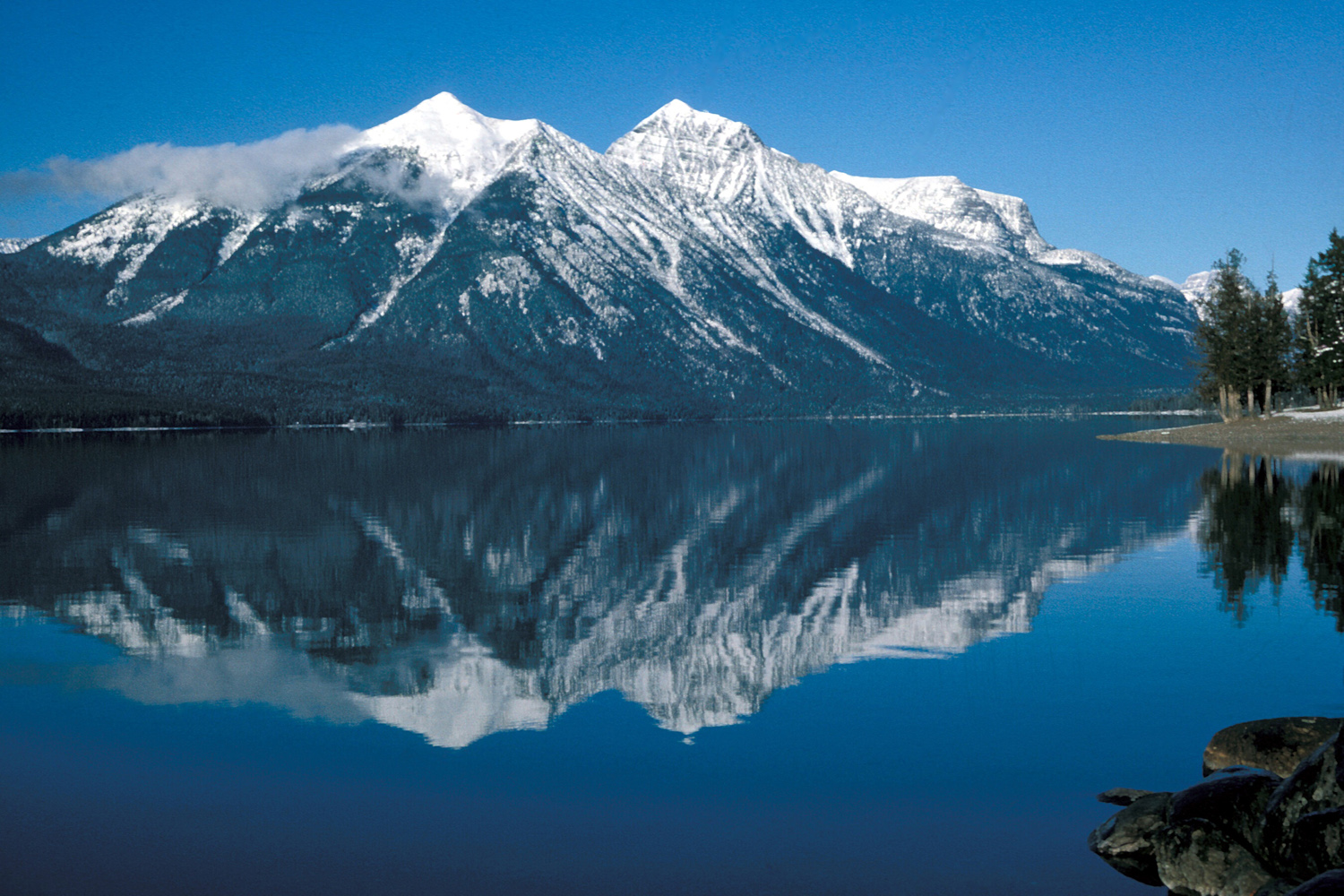
So it was with some interest and another "whoa Betsy" moment that I read this post over at the Inconvenient Skeptic site earlier. The entire post is well worth the read, the main focus being on a recent trip to Glacier National Park by the author and some pictures of glaciers he took comparing them to earlier pictures from the recent past. The pictures seem to indicate that the glaciers may be making a comeback despite the doomsday projections of warmist. But what really caught my attention was this comment:
One question I wanted to ask the rangers there was “How old are the glaciers there?” There is a very common misconception that the glaciers there exist from the last ice age. That of course is wrong, but I was curious what they would say. The answer I got from the ranger was 3,000 years old. That is a reasonable answer, but one I find unlikely. Glaciers farther north and higher than Glacier National Park are typically much younger than that. I have never been able to find an ice core from glacier national park that would answer this question. Certainly it is possible that some of the glaciers are 3,000 years old, but I suspect that 900-1,000 is more accurate. I have yet to find enough accurate information to answer this though.

This comment blew me away, I admit that it had never occurred to me to question how old these or any other glaciers might be. As the author notes if I had ever thought about it I would have assumed that these and most glaciers date back to the last ice age. However even taking the rangers answer at face value this would put the glaciers well within a human historic time frame rather than some prehistoric event explained away by planetary orbits or primordial volcanic eruptions. To put it simply during the rise of the Roman Empire (Roman Warming Period) there were no glaciers in Glacier National Park.

Being enthralled by this I did a quick search to see if there was any scientific literature about the age of the glaciers in Glacier National Park. It took me all of two clicks of my handy mouse to find this paper from the U.S. Geological Survey titled

Glaciers of North America—
GLACIERS OF THE CONTERMINOUS UNITED STATES
GLACIERS OF THE WESTERN UNITED STATES
By ROBERT M. KRIMMEL

With a section on GLACIER RETREAT IN GLACIER NATIONAL PARK, MONTANA
By CARL H. KEY, DANIEL B. FAGRE, and RICHARD K. MENICKE

There is a very detailed account of previous studies of the glaciers in the park and the retreat of the glaciers over the past 150 years.
All named glaciers within the park are mountain glaciers that have retreated dramatically since the middle 19th-century end of the Little Ice Age in the Western United States.
Since the end of the Little Ice Age, small glaciers that were insulated or protected by the surrounding topography tended to lose proportionately less area to recession. Commonly, they changed rapidly to a stagnant condition. The larger glaciers generally experienced proportionately greater and more rapid reduction in area than the smaller glaciers, but they still continue to be active (fig. 25A). During the last 150 years, the larger glaciers,which had descended below cirque margins into subalpine terrain, would have had the greatest exposure to solar radiation and warmer temperatures for longer periods of time. As these large glaciers retreated and shrank in area, they regularly separated into discrete ice masses.
As you can plainly see the glacier melt in the park is not a recent development and easily preceding the advent of the internal combustion engine.

On the subject of time lines I found this comment to be quite interesting:
In all cases, it must be noted that, although initially the distance of retreat was small, substantial thinning—and therefore appreciable volume loss—likely took place. This
preceded the eventual retreat of termini. From 1910 onward, recession rates increased (Dyson, 1948; Johnson, 1980). This corresponded to a period of increased scientific interest in Glacier National Park glaciers, and many of the early investigators bore witness to dramatic instances of glacier recession. Following the middle 1940’s, recession rates decreased, and glaciers became increasingly confined within cirque margins
So it a pretty well established fact that the Glaciers in Glacier National Park have been receding for over 150 years and not some cataclysmic current event except in the minds of the ALGORES of the world.

But how old are they? (My emphasis)
Because of the apparently long and relatively stable climatic interval preceding the Little Ice Age, it is believed that most of the glacier ice remaining in Glacier National Park was formed during the Little Ice Age and is not a relic from the Pleistocene Epoch...
Interesting isn't it that they refer to the time prior to the formation of glaciers in the park as "relatively stable climatic interval " or as Reid Bryson might have said "back when it was normal."

Further we learn
The Little Ice Age comprised a several-hundred-year-long cool period(about 1400 to about 1850 in North America), during which Glacier National Park glaciers formed and expanded
So it seems that perhaps our ranger may be off a bit in his information. According to this paper the glaciers in the park are a product of the Little Ice Age. If this is indeed  true and I have little reason to question the authors, they being scientist and all, when Columbus sailed the ocean blue in 1492 the glaciers in Glacier National Park were just babies if they were there at all.

So for all the hysteria over melting glaciers in Glacier National Park, the facts seems to be that they are a product of an unstable and hostile period of "climate change" which disrupted the normal optimum which we ought to enjoy while we have it.

So as I have previously observed:
If for example as was proven before the AGW nonsense took hold of science, the Medieval Warming Period was warmer than today, as was accepted until these guys got their hands and agenda on the data and the process, why did we not have runaway warming? Where was the enhanced greenhouse effect while they were making wine in England?
Or when there were no glaciers in Glacier National Park.

July 17, 2011

Why Hasn’t The Earth Warmed In Nearly 15 Years?


FROM-Forbes

Patrick Michaels

There is no statistically significant warming trend since November of 1996 in monthly surface temperature records compiled at the University of East Anglia. Do we now understand why there’s been no change in fourteen and a half years?

If you read the news stories surrounding a recent paper in the Proceedings of the National Academy of Sciences by Boston University’s Robert Kaufmann and three colleagues, you’d say yes, indeed. It’s China’s fault. By dramatically increasing their combustion of coal, they have increased the concentration of fine particles in the atmosphere called sulphate aerosols, which reflect away solar radiation, countering the warming that should be occurring from increasing atmospheric carbon dioxide.

Further, if this is true, then (as is usual in climate-world), “it’s worse than we thought.” After all, China will eventually reduce their sulfate emissions as their population becomes affluent enough to demand something better than miasmic air. Indeed, they are already beginning to clean things up, and when they finally do, all the cooling particles will be gone and the earth will warm substantially.


Reality may be a bit simpler, or much more complicated. But the reason this is all so important is that if there is no good explanation for the lack of warming, then an increasingly viable alternative is that we have overestimated the gross sensitivity of temperature to carbon dioxide in our computer models.

One problem is that we really don’t know how much cooling is exerted by sulfates, or whether they are just a convenient explanation for the failure of the forecasts of dramatic warming. The United Nations’ Intergovernmental Panel on Climate Change, which grants itself climate authority, states that our “Level of Scientific Understanding” of the effects range between “low” and “very low,” with a possible cooling between zero (none) and a whopping 3.5 degrees (C) when the climate comes to equilibrium (which it will never do). That’s a plenty large range from which to pick out a number to cancel about as much warming as you’d like.

Kaufmann’s team looked into how sulfate uncertainty impacted its results and decided that it was relatively minor. However, we can’t find any independent test showing that the geographic “fingerprint” of a dramatic recent increase in sulfate cooling is actually being observed. More on this in a minute.

The other problem — and climate flatliners hate me for pointing this out — is that the beginning of the period of “no warming” includes the warmest year in the instrumental record, caused by the great El Nino of 1997-1998. In a modestly warming world, starting off at or near an anomalously high point pretty much assures little or no warming for years afterward.

Kaufmann’s team (and others) have duly noted that El Nino cycles are one factor partially responsible for the lack of recent warming. There’s little doubt of this. Further, if you back out solar changes and volcanism, as they did, you can convince yourself that there is still an underlying “residual” warming trend, but it is masked by all these variables. This has been done repeatedly in the scientific literature, which, until now, did not include increasing the sulfate effect on recent temperatures.

Where is the test of the hypothesis that sulfates are indeed responsible for the lack of warming? In this paper, it’s simply “modeled-in” as it fits the data well. That’s correlation, not causation.

There is very little exchange of air between the northern and southern hemispheres, and basic climate science shows that most sulfates from China will rain out before they get across the thermal equator. In fact, there is a great deal of literature out there published by luminaries like the Department of Energy’s Ben Santer and NASA’s James Hansen claiming relative cooling of the northern hemisphere from sulfates, compared to the southern.

So, if it is indeed sulfates cooling the warming, given that there is no net change in global temperature, then the northern hemisphere should be cooling since 1998 (the first year in Kaufmann’s paper) while the southern warms. Here are the sad facts:


The opposite is occurring. Why this test was not performed eludes me. Perhaps that is because it provides yet another piece of evidence supporting the hypothesis that we have simply overstated the sensitivity of surface temperature to changes in carbon dioxide.

Patrick J. Michaels is Senior Research Fellow for Research and Economic Development at George Mason University and author and editor of “Climate Coup: Global Warming’s Invasion of our Government and our Lives.”

July 16, 2011

The Green Economy Withers

FROM-IBD

Even after fudging numbers and ignoring the huge subsidies, a liberal think tank reports that growth in the alternative-energy sector lags the rest of the economy.

Green jobs were supposed to be our salvation, both for the earth and for the economy, according to the Obama administration. White House policy based on this flawed premise led to offshore and onshore drilling bans and the locking-up of energy-rich lands while huge alternative energy subsidies (aka "investments") found their way into the stimulus and other legislation.

As happens when government tries to pick winners and losers, the government lost — no, we all lost. As has happened in countries such as Spain, this misallocation of resources has succeeded only in stalling our economy as unemployment and debt grow.

In Spain's case, it was found that for every "green" job created, 2.2 jobs were lost in the rest of the economy.

Along comes the Brookings Institution with a report touting the fact that nearly 2.7 million people brought home paychecks in 2010 working in the "clean economy." That's a 3.4% increase in "green jobs" since 2003, and it sounds terrific until you realize the economy as a whole grew at a 4.2% rate over the same period.

As the folks at HotAir.com duly note, Brookings got to its conclusions by including, for example, all mass transit workers regardless of the actual energy source. They also lump in people such as organic farmers and nuclear energy workers, though the greenies have never touted nuclear energy as "clean" or nuclear jobs as "green."

Discounted is the role of government mandates and subsidies, without which the alternative energy sector would wither and die. A good many of these "green jobs" exist in the public sector of federal, state and local governments. And they come at huge expense.

A 2008 report by the Energy Department's Energy Information Administration reported that in 2007, while the average subsidy per megawatt hour for all energy sources was $1.65, the subsidy for wind and solar was about $24 per megawatt hour. On the nonelectricity generating side, ethanol received a subsidy of $5.72 per million British thermal unit.

Remember Solyndra Inc., the first recipient of $535 million of stimulus cash in 2009 to hire 1,000 workers for "green jobs"? The company had never shown a profit, and in the end the Fremont, Calif.-based solar panel manufacturer never came through.
A month after President Obama's visit, the company he praised withdrew its public offering plans. A few weeks later, congressional auditors announced that the Energy Department had given favorable treatment to some loan-guarantee applicants.

Coincidently, Solyndra's majority owner, billionaire George Kaiser, was a top fundraiser for the 2008 Obama-Biden campaign.

This is how we set energy policy. It is based not on the free market and supply and demand, but on ideology and crony capitalism. Energy prices then "necessarily skyrocket," causing job loss and consumer pain as money that might be spent to buy stuff goes just to keep the lights on.
As we have noted, the focus on green jobs comes at the expense of other jobs. An oil industry study says that 190,000 jobs could be created by 2013 if offshore development permits in the Gulf of Mexico were returned. Just finishing the Keystone XL pipeline to bring Canadian tar sands oil to Houston-area refineries could net hundreds of thousands of jobs.

Alternative energy cannot survive without mandates and subsidies, and cannot compete in the free market with proven and plentiful sources like petroleum.

The Brookings report may have been meant to tout the green economy, but it only serves to underscore its failure and the opportunity costs it imposes on the American people and economy.

July 15, 2011

"Notable Quotes"

"Now for the next IPCC report [due in 2013] the UN experts have to examine hundreds of reports – but indeed the selection is tougher than ever. The haggling over the results is like dealing at a bazaar: On one hand scientists have published alarming sea level prognoses, which surpass those given by the last IPCC Report. And on the other hand the actual sea level measurements indicate no detectable extreme increase."

Der Spiegal

ht/Not Trick Zone