Pages

Showing posts with label Cosmic Rays. Show all posts

August 8, 2014

The climate change cult’s outer space threat

Despite the claims of “consensus,” scientists the world over are studying an intriguing new theory on climate change: read part one here

The cosmic ray climate change connection
Cosmic Rays | Photo Credit Wikimedia Commons
In our last article, we noted that Sir William Herschel initially believed that more active solar activity in the form of sunspots would “weaken” the sun’s energy making the Earth’s weather less “mild.”  As a result of this he believed that sunspots would hurt crop yield. However with investigation he found the exact opposite was true, the less active sun actually showed  smaller crop yields while the more active sun showed greater crop yield. A similar thing happened to a future Nobel Laureate in physics, Victor Hess.
Like the “obvious” conclusion that Herschel made about sunspots, the conventional wisdom up until the early twentieth century was that the closer you were to the Earth’s surface the higher the radiation levels would be. Since Earth was the source of radiation it was believed that as you moved away from the surface the radiation levels would begin to dissipate. Hess sought to prove or disprove this theory. He did this by ascending in a balloon on multiple occasions and taking measurement with an electrometer.
Surprisingly he found that rather than decreasing with increased elevation, radiation increased the higher into the atmosphere he ascended. Hess theorized that some sort of energized particles were entering the atmosphere from space, and he was right.  In 1925 another scientist Robert Millikin confirmed Hess’s discovery and in 1936 Victor Hess and Carl David Anderson who discovered positron and the muon in the newly discovered “cosmic rays” were awarded a Nobel Prize in Physics.
Cosmic rays are really not rays at all but high energy particles whose sources of origin are varied but are suspected to be  particles formed as stars explode as supernovas. These particles are constantly bombarding the Earth from all directions. The Earth, indeed the solar system is moving within this ever flowing stream of highly charged particles that Hess discovered which we call cosmic rays.
One of the mysteries of Herschel’s connection between sunspots and wheat crops is  how can sunspots have any bearing on Earth’s climate if the amount of energy reaching the Earth remains relatively constant? Over the years astronomers and scientists have discovered that one thing which does happen when the sun is more active and that is solar “winds” are stronger.
Increased sunspot activity frequently accompanies an increase in the outflow of matter from the Sun in the form of a “solar wind”. Charged particles in this wind can interact with atoms in the upper atmosphere and sometimes wreak havoc with our communications systems.
But its possible and a growing body of scientific evidence is mounting that there is a connection between sunspots and Earth’s climate.
In 1991 before the global warming phenomena had totally corrupted the science community by turning everything it touches into a political contest, two Danish scientists Eigil Friis-Christensen and Knud Lassen published a paper. The paper was the product of years of research on the correlation between solar activity and global temperatures.  In a way it was a continuation of Herschel’s sunspot to price of wheat connection.
A few years later, another Danish scientist, physicist Henrik Svensmark who had investigated the possibility that cosmic rays could play a part in cloud formation teamed up with his fellow Danish scientists and an alternate theory on global warming was proposed. In the years since many scientists from around the world have joined the investigation into the connection between cosmic rays and Earth’s climate, which these Danish scientists initially proposed.
The basic theory is this:
The Earth is under constant bombardment by these cosmic rays; however the Sun’s magnetic field deflects cosmic rays away from Earth. Therefore when the Sun is very active the increased solar winds deflect more of the cosmic rays away from the Earth, conversely when the Sun is “quiet” more of the cosmic rays reach the Earth’s atmosphere. In other words when the sun is active (sunspot activity) it protects the Earth from these cosmic rays. This part of the theory is not all that controversial.
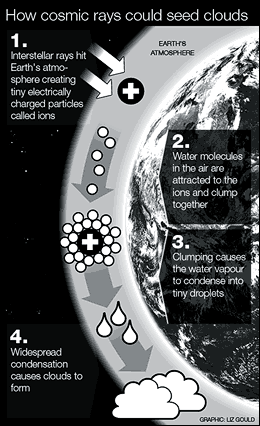
The real question is whether cosmic rays are ionizing molecules in the Earth’s atmosphere attracting other molecules to create the aerosols around which water vapor forms to create cloud droplets. Because as we shall explore in the final post of this series, clouds are  extremely important and the great unknown in the climate change debate.
Serious research is, finally, being done on this possibility that cosmic rays could help or even be responsible for cloud formation .  If this connection is proven  then the entire climate change narrative will virtually collapse.
But the link between sunspot activity and climate is, well shall we say interesting.  In 2010 a Finnish research team did a study on long-term solar activity, long term meaning the last 12,000 years a very good summary of which you can find at the excellent Watts Up With  site.  Among the more interesting conclusions the scientist come to in their study is this:
 The sun spends about 70% of its time at moderate magnetic activity levels, about 15 – 20% of its time in a grand minimum and about 10 – 15% in a grand maximum. Modern solar activity corresponds to a grand maximum.
The graph from their research recreating solar activity over the past 12,000 years bears this out.

Read more at BBN

August 31, 2011

Watching A Green Fiction Unravel

FROM-IBD

Science: Experiments performed by a European nuclear research group indicate that the sun, not man, determines Earth's temperature. Somewhere, Al Gore just shuddered as an unseasonably cool breeze blows by.

The results from an experiment to mimic Earth's atmosphere by CERN, the European Organization for Nuclear Research, tell researchers that the sun has a significant effect on our planet's temperature. Its magnetic field acts as a gateway for cosmic rays, which play a large role in cloud formation.

Consequently, when the sun's magnetic field allows cosmic rays to seed cloud cover, temperatures are cooler. When it restricts cloud formation by deflecting cosmic rays away from Earth, temperatures go up.

Or, as the London Telegraph's James Delingpole delicately put it:

"It's the sun, stupid."

This new finding of 63 scientists from 17 European and U.S. institutes from an experiment that's been ongoing since 2009 is, if we may paraphrase Vice President Joe Biden, a big deal. Which is exactly why the mainstream media, with so much invested in global warming hysteria, is letting last week's announcement from CERN pass like a brief summer shower, ignoring it.

Even CERN's own director general, Rolf-Dieter Heuer, is trying to avoid the meaning of the findings.

He told Germany's Die Welt Online that he's "asked the colleagues to present the results clearly, but not to interpret them. That would go immediately into the highly political arena of the climate change debate."

But, as British science writer Nigel Calder points out, Heuer would have no reservations about entering "'the highly political arena of the climate change debate' provided" his results endorsed man-made warming.

How long the Al Gores, James Hansens, Rolf-Dieter Heuers and other defenders of the indefensible can hang on to their fable isn't altogether clear.

With the help of an eager media, they have spun a nearly believable tale of fright and insulated themselves well from the skeptics.

But their days are few. Truth keeps getting in the way of their indoctrination effort.

And it's not just the CERN research creating a problem for them. They also need to explain why sea levels, like presidential approval numbers and consumer confidence, have fallen. According to NASA, the oceans are down a quarter of an inch this year compared to 2010.

Under the rules of climate change, sea levels, due to melting ice and water that expands as it warms, should be increasing in a way that we're all supposed to believe is a threat. But NASA scientists say that El Nino and La Nina, weather cycles in the Pacific Ocean, have caused sea levels to fall.

Apparently these natural warming and cooling cycles are stronger than the persuasion powers of even Barack Obama. It was the Illinois senator who so humbly proclaimed during the 2008 presidential campaign that his nomination as the Democratic candidate signaled the "the moment when the rise of the oceans began to slow."

Gore never promised he would drain the oceans. But during his propaganda movie "An Inconvenient Truth," he did make the claim that human carbon dioxide output is forcing warming that will push sea levels 20 feet higher "in the near future."

While United Nations estimates are much more conservative, the certainty of rising sea levels is still an article of faith among global warming believers.

So the news out of NASA, coupled with the CERN experiment, has got to be discouraging for the global warming believers.

That is as it should be.

The promoters of the faith had a long run. They've been feted and joined by the media, and conned a good piece of the public into believing their claims of inevitable disaster. They've made wild amounts of money and increased their realm of influence.

But now it's time for reality to intervene. For sound thinking to overcome shallow thought and trendy pursuit. To rely on observable facts. To move beyond the oppressive reign of junk science.

January 20, 2011

Cosmic rays contribute 40 p.c. to global warming: study

FROM-The Hindu

PRISCILLA JEBARAJ

A key belief of climate science theology — that a reduction in carbon emissions will take care of the bulk of global warming — has been questioned in a scientific paper released by the Environment Ministry on Monday.

Physicist and the former ISRO chairman, U.R. Rao, has calculated that cosmic rays — which, unlike carbon emissions, cannot be controlled by human activity — have a much larger impact on climate change than The Intergovernmental Panel on Climate Change (IPCC) claims.

In fact, the contribution of decreasing cosmic ray activity to climate change is almost 40 per cent, argues Dr. Rao in a paper which has been accepted for publication in Current Science, the preeminent Indian science journal. The IPCC model, on the other hand, says that the contribution of carbon emissions is over 90 per cent.

‘Cosmic ray impact ignored'

Releasing Dr. Rao's findings as a discussion paper on Thursday, Environment Minister Jairam Ramesh noted that “the impact of cosmic ray intensity on climate change has thus far been largely ignored by the mainstream scientific consensus.” He added that the “unidimensional focus” on carbon emissions by most Western countries put additional pressure on countries like India in international climate negotiations.

The continuing increase in solar activity has caused a 9 per cent decrease in cosmic ray intensity over the last 150 years, which results in less cloud cover, which in turn results in less albedo radiation being reflected back to the space, causing an increase in the Earth's surface temperature.

While the impact of cosmic rays on climate change has been studied before, Dr. Rao's paper quantifies their contribution to global warming and concludes that “the future prediction of global warming presented by IPCC's fourth report requires a relook to take into the effect due to long term changes in the galactic cosmic ray intensity.”

Policy implications

This could have serious policy implications. If human activity cannot influence such a significant cause of climate change as cosmic rays, it could change the kind of pressure put on countries to reduce carbon dioxide emissions.

Mr. Ramesh emphasised that Dr. Rao's findings would not reduce domestic action on climate change issues, but he admitted that it could influence the atmosphere of international negotiations.

“International climate negotiations are about climate politics. But increasingly, science is becoming the handmaiden of politics,” he said.

In November 2009, Mr. Ramesh had released a report by glaciologist V.K. Raina claiming that Himalayan glaciers are not all retreating at an alarming pace. It had been disputed by many Western scientists, while IPCC chairman R.K. Pachauri dismissed it as “voodoo science.” However, Dr. Raina was later vindicated by the IPCC's own retraction of its claim that the Himalayan glaciers would melt by 2035.

“Since then, Western Ministers have reduced talk about the glaciers to me, they have stopped using it as frequently as a pressure point for India to come on board,” said Mr. Ramesh.

When Mr. Ramesh sent Dr. Rao's paper to Dr. Pachauri, he replied that the next IPCC report was paying special attention to the impact of cloud cover on global warming. The Minister expressed hope that Dr. Rao's findings would be seriously studied by climate researchers.

“There is a groupthink in climate science today. Anyone who raises alternative climate theories is immediately branded as a climate atheist in an atmosphere of climate evangelists,” he said. “Climate science is incredibly more complex than [developed countries] negotiators make it out to be… Climate science should not be driven by the West. We should not always be dependent on outside reports.”

Disputing IPCC claims

According to the latest report by the IPCC, all human activity, including carbon dioxide emissions, contribute 1.6 watts/sq.m to global warming, while other factors such as solar irradiance contribute just 0.12 watts/sq.m.

However, Dr. Rao's paper calculates that the effect of cosmic rays contributes 1.1 watts/sq.m, taking the total contribution of non-human activity factors to 1.22 watts/sq.m.

This means that increased carbon dioxide emissions in the atmosphere are not as significant as the IPCC claims. Of the total observed global warming of 0.75 degrees Celsius, only 0.42 degrees would be caused by increased carbon dioxide. The rest would be caused by the long term decrease in primary cosmic ray intensity and its effect on low level cloud cover.

This means that predicting future global warming and sea level rise is not as simple as the IPCC makes it to be, since it depends not only on human activity, but also significantly on the unpredictability of cosmic ray intensity.

“We conclude that the contribution to climate change due to the change in galactic cosmic ray intensity is quite significant and needs to be factored into the prediction of global warming and its effect on sea level raise and weather prediction,” says the paper.

Keywords: global warming, climate science theology, climate change

December 22, 2009

Study shows CFCs, cosmic rays major culprits for global warming

One of the many blessings of climategate is that it will make it harder for the alarmist to bury less alone attack studies such as this.


FROM-Insiences

WATERLOO, Ont. (Monday, Dec. 21, 2009) - Cosmic rays and chlorofluorocarbons (CFCs), both already implicated in depleting the Earth's ozone layer, are also responsible for changes in the global climate, a University of Waterloo scientist reports in a new peer-reviewed paper.

In his paper, Qing-Bin Lu, a professor of physics and astronomy, shows how CFCs - compounds once widely used as refrigerants - and cosmic rays - energy particles originating in outer space - are mostly to blame for climate change, rather than carbon dioxide (CO2) emissions. His paper, derived from observations of satellite, ground-based and balloon measurements as well as an innovative use of an established mechanism, was published online in the prestigious journal Physics Reports.

"My findings do not agree with the climate models that conventionally thought that greenhouse gases, mainly CO2, are the major culprits for the global warming seen in the late 20th century," Lu said. "Instead, the observed data show that CFCs conspiring with cosmic rays most likely caused both the Antarctic ozone hole and global warming. These findings are totally unexpected and striking, as I was focused on studying the mechanism for the formation of the ozone hole, rather than global warming."

His conclusions are based on observations that from 1950 up to now, the climate in the Arctic and Antarctic atmospheres has been completely controlled by CFCs and cosmic rays, with no CO2 impact.

"Most remarkably, the total amount of CFCs, ozone-depleting molecules that are well-known greenhouse gases, has decreased around 2000," Lu said. "Correspondingly, the global surface temperature has also dropped. In striking contrast, the CO2 level has kept rising since 1850 and now is at its largest growth rate."

In his research, Lu discovers that while there was global warming from 1950 to 2000, there has been global cooling since 2002. The cooling trend will continue for the next 50 years, according to his new research observations.

As well, there is no solid evidence that the global warming from 1950 to 2000 was due to CO2. Instead, Lu notes, it was probably due to CFCs conspiring with cosmic rays. And from 1850 to 1950, the recorded CO2 level increased significantly because of the industrial revolution, while the global temperature kept nearly constant or only rose by about 0.1 C.

In previously published work, Lu demonstrated that an observed cyclic hole in the ozone layer provided proof of a new ozone depletion theory involving cosmic rays, which was developed by Lu and his former co-workers at Rutgers University and the Université de Sherbrooke. In the past, it was generally accepted for more than two decades that the Earth's ozone layer is depleted due to the sun's ultraviolet light-induced destruction of CFCs in the atmosphere.

The depletion theory says cosmic rays, rather than the sun's UV light, play the dominant role in breaking down ozone-depleting molecules and then ozone. In his study, published in Physical Review Letters, Lu analyzed reliable cosmic ray and ozone data in the period of 1980-2007, which cover two full 11-year solar cycles.

In his latest paper, Lu further proves the cosmic-ray-driven ozone depletion theory by showing a large number of data from laboratory and satellite observations. One reviewer wrote: "These are very strong facts and it appears that they have largely been ignored in the past when modelling the Antarctic ozone loss."

New observations of the effects of CFCs and cosmic rays on ozone loss and global warming/cooling could be important to the Earth and humans in the 21st century. "It certainly deserves close attention," Lu wrote in his paper, entitled Cosmic-Ray-Driven Electron-Induced Reactions of Halogenated Molecules Adsorbed on Ice Surfaces: Implications for Atmospheric Ozone Depletion and Global Climate Change.


More...


August 17, 2009

"The Other Side Of The Story"


This Episode broght to you by View Zone


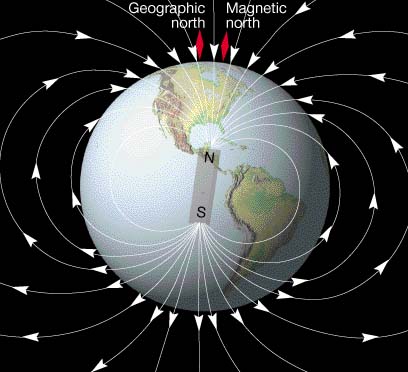
The earth's magnetic field impacts climate: Danish study


COPENHAGEN (AFP) -- The earth's climate has been significantly affected by the planet's magnetic field, according to a Danish study published Monday that could challenge the notion that human emissions are responsible for global warming.

"Our results show a strong correlation between the strength of the earth's magnetic field and the amount of precipitation in the tropics," one of the two Danish geophysicists behind the study, Mads Faurschou Knudsen of the geology department at Aarhus University in western Denmark, told the Videnskab journal.

He and his colleague Peter Riisager, of the Geological Survey of Denmark and Greenland (GEUS), compared a reconstruction of the prehistoric magnetic field 5,000 years ago based on data drawn from stalagmites and stalactites found in China and Oman.

The results of the study, which has also been published in US scientific journal Geology, lend support to a controversial theory published a decade ago by Danish astrophysicist Henrik Svensmark, who claimed the climate was highly influenced by galactic cosmic ray (GCR) particles penetrating the earth's atmosphere.

Svensmark's theory, which pitted him against today's mainstream theorists who claim carbon dioxide (CO2) is responsible for global warming, involved a link between the earth's magnetic field and climate, since that field helps regulate the number of GCR particles that reach the earth's atmosphere.

"The only way we can explain the (geomagnetic-climate) connection is through the exact same physical mechanisms that were present in Henrik Svensmark's theory," Knudsen said.

"If changes in the magnetic field, which occur independently of the earth's climate, can be linked to changes in precipitation, then it can only be explained through the magnetic field's blocking of the cosmetic rays," he said.


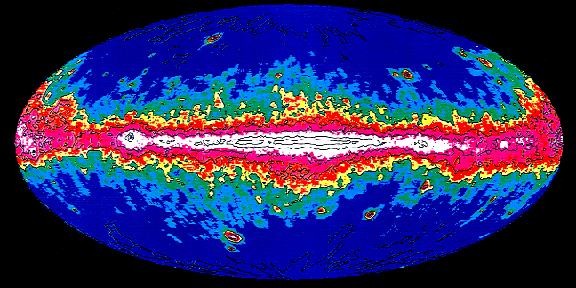
Galactic cosmic rays (GCRs) come from outside the solar system but generally from within our Milky Way galaxy. GCRs are atomic nuclei from which all of the surrounding electrons have been stripped away during their high-speed passage through the galaxy. They have probably been accelerated within the last few million years, and have traveled many times across the galaxy, trapped by the galactic magnetic field. GCRs have been accelerated to nearly the speed of light, probably by supernova remnants. As they travel through the very thin gas of interstellar space, some of the GCRs interact and emit gamma rays, which is how we know that they pass through the Milky Way and other galaxies.

The elemental makeup of GCRs has been studied in detail , and is very similar to the composition of the Earth and solar system. but studies of the composition of the isotopes in GCRs may indicate the that the seed population for GCRs is neither the interstellar gas nor the shards of giant stars that went supernova. This is an area of current study.

Included in the cosmic rays are a number of radioactive nuclei whose numbers decrease over time. As in the carbon-14 dating technique, measurements of these nuclei can be used to determine how long it has been since cosmic ray material was synthesized in the galactic magnetic field before leaking out into the vast void between the galaxies. These nuclei are called "cosmic ray clocks".


The two scientists acknowledged that CO2 plays an important role in the changing climate, "but the climate is an incredibly complex system, and it is unlikely we have a full overview over which factors play a part and how important each is in a given circumstance," Riisager told Videnskab.

Svensmark's Theory Explained


Man-made climate change may be happening at a far slower rate than has been claimed, according to controversial new research.

Scientists say that cosmic rays from outer space play a far greater role in changing the Earth's climate than global warming experts previously thought.

In a book, to be published this week, they claim that fluctuations in the number of cosmic rays hitting the atmosphere directly alter the amount of cloud covering the planet.

High levels of cloud cover blankets the Earth and reflects radiated heat from the Sun back out into space, causing the planet to cool.

Henrik Svensmark, a weather scientist at the Danish National Space Centre who led the team behind the research, believes that the planet is experiencing a natural period of low cloud cover due to fewer cosmic rays entering the atmosphere.

This, he says, is responsible for much of the global warming we are experiencing.

He claims carbon dioxide emissions due to human activity are having a smaller impact on climate change than scientists think. If he is correct, it could mean that mankind has more time to reduce our effect on the climate.

The controversial theory comes one week after 2,500 scientists who make up the United Nations International Panel on Climate Change published their fourth report stating that human carbon dioxide emissions would cause temperature rises of up to 4.5 C by the end of the century.

Mr Svensmark claims that the calculations used to make this prediction largely overlooked the effect of cosmic rays on cloud cover and the temperature rise due to human activity may be much smaller.

He said: "It was long thought that clouds were caused by climate change, but now we see that climate change is driven by clouds.

"This has not been taken into account in the models used to work out the effect carbon dioxide has had.

"We may see CO2 is responsible for much less warming than we thought and if this is the case the predictions of warming due to human activity will need to be adjusted."

Mr Svensmark last week published the first experimental evidence from five years' research on the influence that cosmic rays have on cloud production in the Proceedings of the Royal Society Journal A: Mathematical, Physical and Engineering Sciences. This week he will also publish a fuller account of his work in a book entitled The Chilling Stars: A New Theory of Climate Change.

A team of more than 60 scientists from around the world are preparing to conduct a large-scale experiment using a particle accelerator in Geneva, Switzerland, to replicate the effect of cosmic rays hitting the atmosphere.

They hope this will prove whether this deep space radiation is responsible for changing cloud cover. If so, it could force climate scientists to re-evaluate their ideas about how global warming occurs.

Mr Svensmark's results show that the rays produce electrically charged particles when they hit the atmosphere. He said: "These particles attract water molecules from the air and cause them to clump together until they condense into clouds."

Mr Svensmark claims that the number of cosmic rays hitting the Earth changes with the magnetic activity around the Sun. During high periods of activity, fewer cosmic rays hit the Earth and so there are less clouds formed, resulting in warming.

Low activity causes more clouds and cools the Earth

According to Svensmark:


"Evidence from ice cores show this happening long into the past. We have the highest solar activity we have had in at least 1,000 years.
"Humans are having an effect on climate change, but by not including the cosmic ray effect in models it means the results are inaccurate.The size of man's impact may be much smaller and so the man-made change is happening slower than predicted."


Some climate change experts have dismissed the claims as "tenuous".

Giles Harrison, a cloud specialist at Reading University said that he had carried out research on cosmic rays and their effect on clouds, but believed the impact on climate is much smaller than Mr Svensmark claims.

Mr Harrison said: "I have been looking at cloud data going back 50 years over the UK and found there was a small relationship with cosmic rays. It looks like it creates some additional variability in a natural climate system but this is small."

But there is a growing number of scientists who believe that the effect may be genuine.

Among them is Prof Bob Bingham, a clouds expert from the Central Laboratory of the Research Councils in Rutherford.

He said: "It is a relatively new idea, but there is some evidence there for this effect on clouds."

More...


August 5, 2009

A Copenhagen Consensus


Svensmark has a new paper and it is a doozy: Cosmic ray decreases affect atmospheric aerosols and clouds (full text PDF).


The major conclusion: “A link between the Sun, cosmic rays, aerosols, and liquid-water clouds appears to exist on a global scale…”


This paper confirms 13 years of discoveries that suggest a key role for cosmic rays in climate change. It links observable variations in the world’s cloudiness to laboratory experiments in Copenhagen showing how cosmic rays help generate atmospheric aerosols.


This is important, because it confirms the existence of a sun-earth atmospheric modulation mechanism for clouds and aerosols. It is seen in an event called a Forbush Decrease, which A Forbush decrease is a rapid decrease in the observed galactic cosmic raycoronal mass ejection (CME). It occurs due to the magnetic field of the plasma solar wind sweeping some of the galactic cosmic rays away from Earth. Here is what the Oulu Neutron Monitor plot looked like during such and event on May15th, 2005:

April 2, 2009

Cosmic Connection?


This would be a further validation of the cosmic ray connection to climate as many scientist are now beginning to take interest in. This was primarily put forth by Henrick Svensmark but many scientist have been involved in this theory. Over time I believe his theory will gain more and more acceptance, hopefully before it's too late :)


Did A Decrease In Total Cloud Amount Fuel The 1997/98 El Nino?

This post illustrates that the 1997/98 El Nino may have been fueled by a significant decrease in Total Cloud Amount over the tropical Pacific Ocean in the years (and decade) before the event.....


February 23, 2009

The earth's magnetic field impacts climate: Danish study


Cosmic Rays
Illustration Credit: Simon Swordy (U. Chicago), NASA
Explanation: Have you ever been hit by a beam of high energy particles from above? Surely you have -- it happens all of the time. Showers of high energy particles occur when energetic cosmic rays strike the top of the Earth's atmosphere. Cosmic rays were discovered unexpectedly in 1912. It is now known that most cosmic rays are atomic nuclei. Most are hydrogen nuclei, some are helium nuclei, and the rest heavier elements. The relative abundance changes with cosmic ray energy -- the highest energy cosmic rays tend to be heavier nuclei. Although many of the low energy cosmic rays come from our Sun, the origins of the highest energy cosmic rays remains unknown and a topic of much research. This drawing illustrates air showers from very high energy cosmic rays. Cosmic rays may even be important to Earth's weather -- common lightning may be triggered by passing cosmic rays.

Source


Henrik Svensmark's theory, is not only fascinating, it makes total sense, unlike minuscule amounts of CO2. Many prominent scientist believe that it may be the key to our climate variations. He was going to be the next in my Inquisition series, I'm glad I came across this (below).


The earth's magnetic field impacts climate: Danish study

COPENHAGEN – The earth's climate has been significantly affected by the planet's magnetic field, according to a Danish study published Monday that could challenge the notion that human emissions are responsible for global warming.

"Our results show a strong correlation between the strength of the earth's magnetic field and the amount of precipitation in the tropics," one of the two Danish geophysicists behind the study, Mads Faurschou Knudsen of the geology department at Aarhus University in western Denmark, told the Videnskab journal.

He and his colleague Peter Riisager, of the Geological Survey of Denmark and Greenland (GEUS), compared a reconstruction of the prehistoric magnetic field 5,000 years ago based on data drawn from stalagmites and stalactites found in China and Oman.

The results of the study, which has also been published in US scientific journal Geology, lend support to a controversial theory published a decade ago by Danish astrophysicist Henrik Svensmark, who claimed the climate was highly influenced by galactic cosmic ray (GCR) particles penetrating the earth's atmosphere.

Svensmark's theory, which pitted him against today's mainstream theorists who claim carbon dioxide (CO2) is responsible for global warming, involved a link between the earth's magnetic field and climate, since that field helps regulate the number of GCR particles that reach the earth's atmosphere.

"The only way we can explain the (geomagnetic-climate) connection is through the exact same physical mechanisms that were present in Henrik Svensmark's theory," Knudsen said.

"If changes in the magnetic field, which occur independently of the earth's climate, can be linked to changes in precipitation, then it can only be explained through the magnetic field's blocking of the cosmetic rays," he said.

The two scientists acknowledged that CO2 plays an important role in the changing climate, "but the climate is an incredibly complex system, and it is unlikely we have a full overview over which factors play a part and how important each is in a given circumstance," Riisager told Videnskab.